
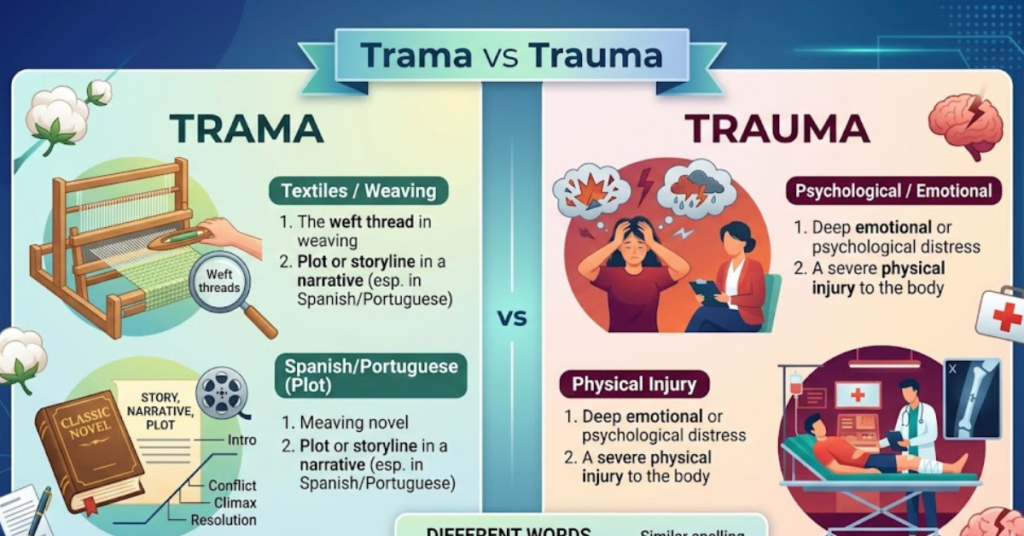
English spelling mistakes are common, especially when words sound similar or are typed quickly. One example that causes a lot of confusion online is trama vs trauma. Many people accidentally type “trama” when they actually mean “trauma,” especially in fast texting, social media posts, or casual writing.
The confusion is understandable because the words look very similar. However, only one of them is considered the standard English spelling for emotional or physical injury. Understanding the difference can help improve your writing clarity and avoid embarrassing mistakes in professional or personal communication.
In this guide, we’ll break down the meaning of both words, explain why people mix them up, and show you how to use the correct spelling confidently.
Trama vs Trauma: What’s the Difference?
The main difference is simple:
- “Trauma” is a real English word.
- “Trama” is usually a misspelling of “trauma.”
In most English-language contexts, “trauma” is the correct spelling.
What Does “Trauma” Mean?
“Trauma” refers to serious emotional, mental, or physical distress caused by a difficult experience or injury.
Examples include:
- Emotional trauma after a stressful event
- Physical trauma from an accident
- Childhood trauma affecting adult behavior
The word is commonly used in psychology, medicine, therapy, and everyday conversations.
What Is “Trama”?
In English, “trama” is generally considered a spelling error when someone intends to write “trauma.”
However, the word does exist in some other languages with different meanings. For example:
- In Spanish and Italian, “trama” can mean plot, storyline, or structure.
But in standard English writing, especially when discussing mental health or injury, “trauma” is the correct word.
Why People Confuse Trama and Trauma
There are several reasons why this mistake happens so frequently.
1. Typing Too Quickly
The letter “u” is often skipped accidentally while typing on phones or keyboards.
For example:
- trauma → trama
This is one of the most common typing errors online.
2. Pronunciation Similarities
When spoken casually, the middle vowel sound in “trauma” can sound soft or rushed, making the missing “u” harder to notice.
3. Autocorrect Limitations
Sometimes autocorrect tools fail to catch the error, especially in social media apps or informal messaging platforms.
What Does Trauma Actually Mean?
To understand why correct spelling matters, it helps to understand the word itself more deeply.
Emotional Trauma
This refers to psychological distress caused by painful experiences.
Examples:
- Abuse
- Loss of a loved one
- Accidents
- Violence
- Natural disasters
Emotional trauma can affect behavior, relationships, and mental health long after an event happens.
Physical Trauma
In medicine, trauma refers to serious bodily injury.
Examples:
- Head trauma
- Chest trauma
- Sports injuries
- Surgical trauma
Doctors and emergency professionals commonly use the term in healthcare settings.
Common Examples of Correct Usage
Seeing words in context makes the difference easier to remember.
Correct Examples Using “Trauma”
- She experienced emotional trauma after the accident.
- Childhood trauma can affect adult relationships.
- The patient was treated for severe physical trauma.
- Therapy helped him process years of trauma.
Incorrect Examples
- She experienced emotional trama.
- The patient suffered head trama.
In English, these examples should use “trauma.”
Is “Trama” Ever Correct?
Yes, but usually not in English mental-health or medical discussions.
“Trama” in Other Languages
In Spanish, Italian, and some other Romance languages, “trama” can refer to:
- A story plot
- Narrative structure
- A woven pattern or framework
For example, in Spanish:
- “La trama de la película” means “the plot of the movie.”
However, this meaning is unrelated to the English word “trauma.”
Why Correct Spelling Matters
Words connected to emotional health and medical topics should always be written carefully and accurately.
Correct spelling helps:
- Improve communication clarity
- Build credibility
- Avoid misunderstandings
- Show professionalism
- Respect sensitive topics
Using “trama” instead of “trauma” in professional or academic writing may make the content appear careless or confusing.
Trauma in Everyday Language
The word “trauma” has become increasingly common in modern conversations, especially online.
People often use it to describe:
- Stressful experiences
- Emotional wounds
- Toxic relationships
- Major life changes
However, experts also encourage using the term responsibly because real trauma can involve serious psychological impact.
Common Grammar and Spelling Mistakes
The confusion around trama vs trauma often appears in casual writing.
Mistake 1: Dropping the “U”
Incorrect:
- He is dealing with past trama.
Correct:
- He is dealing with past trauma.
Mistake 2: Assuming “Trama” Is an English Variant
Unlike words with British and American spelling differences, “trama” is not a standard English variation of “trauma.”
Easy Trick to Remember the Correct Spelling
A simple memory trick can help you avoid this mistake.
Trauma Contains “AU”
Think of:
- Trauma
- Cause
- Pause
These words share similar vowel patterns and pronunciation flow.
Remembering the “au” combination makes the correct spelling easier to recognize.
Trauma in Psychology and Mental Health
In psychology, trauma is a serious topic that goes beyond temporary sadness or stress.
Mental health professionals often discuss:
- Post-traumatic stress disorder (PTSD)
- Childhood trauma
- Emotional recovery
- Trauma therapy
Because the topic is sensitive and important, accurate language matters.
FAQs
Is trama a real word?
“Trama” exists in some languages like Spanish and Italian, but in English it is usually a misspelling of “trauma.”
What is the correct spelling: trama or trauma?
“Trauma” is the correct English spelling when referring to emotional or physical injury.
Why do people type trama instead of trauma?
Most commonly because of typing errors, fast texting, or pronunciation confusion.
What does trauma mean?
Trauma refers to emotional, psychological, or physical harm caused by distressing experiences or injuries.
Is trauma only emotional?
No. Trauma can be emotional, mental, or physical depending on the context.
Conclusion
Understanding the difference between trama vs trauma is simpler once you know that “trauma” is the standard English spelling. While “trama” may exist in other languages, it is usually considered a typo or spelling mistake in English writing related to emotional or physical injury.
Because trauma is an important topic in psychology, healthcare, and everyday communication, using the correct spelling helps ensure clarity and professionalism. Whether you’re writing an article, social media post, academic paper, or personal message, paying attention to small spelling details can make your communication much stronger.
The next time you’re unsure, remember this simple rule: if you’re referring to emotional distress, mental health, or physical injury in English, “trauma” is the correct choice.