
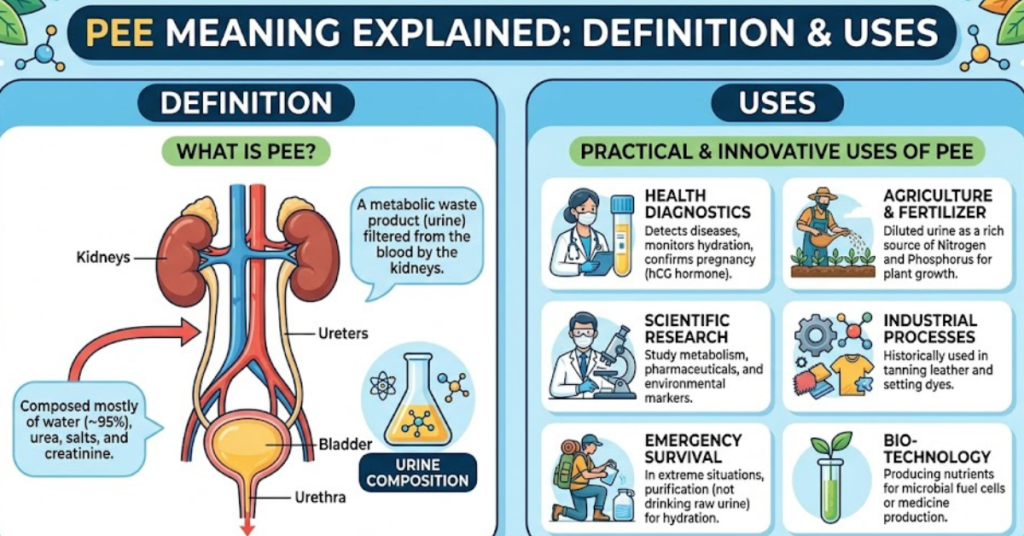
The term Pee Meaning often pops up in everyday conversation, online searches, and even medical discussions, but not everyone fully understands what it refers to. In simple terms, “pee” is a casual word used to describe urine or the act of urination. The pee meaning goes beyond slang—it connects to how the human body removes waste and maintains internal balance.
In this article, we’ll break down the pee meaning, its medical and informal uses, how urine is formed in the body, and what changes in urination might indicate about your health. Let’s explore this common but important topic in a clear and easy way.
Pee Meaning: Definition and Everyday Usage
The pee meaning refers to urine (a liquid waste produced by the kidneys) or the act of urinating. It is commonly used in informal speech, especially in everyday conversations or with children.
Key definitions of “pee”:
- As a noun: Pee means urine (liquid waste from the body)
- As a verb: To pee means to urinate
- In slang: A casual, non-medical term for urination
While doctors typically use the term “urine” or “urination,” “pee” is widely accepted in informal communication.
Medical Term vs Slang: Understanding “Pee”
Although the pee meaning is simple, the context matters.
Formal medical terms:
- Urine
- Urination
- Micturition (scientific term)
Informal/slang usage:
- Pee
- Wee (common in British English)
- Piss (informal and often vulgar depending on context)
In healthcare settings, professionals avoid slang and use precise terminology. However, the word “pee” is helpful when explaining things in a simple, patient-friendly way.
How Pee Is Produced in the Body
Understanding the pee meaning also involves knowing how it is formed. Urine is created through a natural filtration process in the urinary system.
Step-by-step process:
- Blood enters the kidneys
Waste products and excess fluids are filtered out. - Kidneys filter waste
Toxins like urea, salts, and water are separated from useful substances. - Urine formation
The filtered waste becomes urine. - Storage in the bladder
Urine is stored until the body signals it’s time to release it. - Excretion through the urethra
The body removes urine during urination (peeing).
Main organs involved:
- Kidneys
- Ureters
- Bladder
- Urethra
This system plays a vital role in keeping your body clean and balanced.
What the Color of Pee Can Mean
The pee meaning can also extend to health indicators, especially urine color.
Common urine colors and what they may suggest:
- Light yellow: Normal and healthy hydration
- Dark yellow: Mild dehydration
- Amber or honey-colored: Significant dehydration
- Clear: Possibly overhydration
- Pink or red: Could indicate blood or food influence (like beets)
- Brown: May signal liver issues or dehydration
Changes in urine color don’t always mean something serious, but persistent changes should not be ignored.
Changes in Urination: When to Pay Attention
While the pee meaning is simple, urination patterns can reflect health conditions.
Signs that may require attention:
- Burning sensation while peeing
- Frequent urge to urinate
- Pain in lower abdomen or back
- Cloudy or foul-smelling urine
- Blood in urine
Possible causes:
- Urinary tract infection (UTI)
- Kidney stones
- Dehydration
- Diabetes (in some cases)
If symptoms persist, consulting a healthcare professional is important.
Why Understanding Pee Meaning Matters
Knowing the pee meaning is not just about language—it helps you understand your body better. Urination is one of the body’s most essential processes for removing toxins and maintaining fluid balance.
Benefits of healthy urination:
- Removes waste from the bloodstream
- Helps regulate blood pressure
- Maintains hydration balance
- Supports kidney health
Simply put, urine is a window into your overall health.
FAQs About Pee Meaning
1. What is the simple meaning of pee?
Pee means urine or the act of urinating, which is how the body removes liquid waste.
2. Is “pee” a medical term?
No, “pee” is informal slang. Medical terms include urine or urination.
3. Why do we pee?
We pee to remove waste, toxins, and excess water from the body through the kidneys.
4. Is it normal to pee frequently?
It depends on fluid intake and health conditions. Excessive urination may need medical attention.
5. What does dark yellow pee mean?
It usually indicates dehydration and the need to drink more fluids.
Conclusion
The pee meaning is straightforward—it refers to urine or the act of urination, a natural and essential function of the human body. Beyond its casual slang use, understanding pee helps you learn how your kidneys and urinary system keep you healthy.
By paying attention to urination patterns, color, and frequency, you can often catch early signs of dehydration or health issues. In short, pee is more than just a word—it’s an important indicator of your body’s well-being.