A garage door doesn’t usually give much warning before it fails. One day it’s lifting smoothly, and the next, it won’t budge—or worse, it comes crashing down with a loud bang. More often than not, the culprit is a broken spring. These small but mighty components carry the full weight of your garage door, and when they snap, the entire system grinds to a halt.
If you’ve noticed your garage door acting strangely lately—maybe it’s heavier than usual, making odd noises, or refusing to open at all—there’s a good chance a spring issue is to blame. Understanding how these springs work, why they fail, and what steps to take next can save you time, money, and a serious safety headache.
At ProStar Garage Doors, we see broken springs more than almost any other issue. The good news? It’s also one of the most fixable problems, as long as it’s handled correctly and promptly.
Why Garage Door Springs Matter More Than You Think
Garage doors are heavy. Depending on the material and size, a standard residential door can weigh anywhere from 150 to over 400 pounds. Lifting that much weight by hand every day would be exhausting, which is exactly why springs exist.
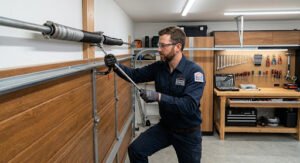
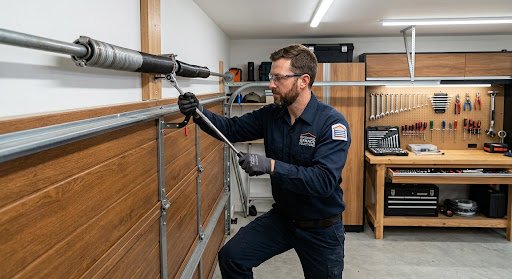
There are two main types of garage door springs: torsion springs, which mount horizontally above the door and twist to store energy, and extension springs, which stretch along the tracks on either side of the door. Both work by counterbalancing the door’s weight, allowing your garage door opener to do its job without straining the motor—or you straining your back.
Because these springs operate under constant tension, they experience wear every single time the door opens and closes. Most springs are rated for around 10,000 cycles, which translates to roughly 7-10 years of typical use. Over time, metal fatigue sets in, and eventually, the spring gives out.
Signs Your Garage Door Spring Is Failing
Catching the warning signs early can prevent a complete breakdown—and potentially avoid damage to your garage door opener, which isn’t designed to lift the door’s full weight on its own.
Watch for these common indicators:
- A visibly loud bang: This is often the sound of a torsion spring snapping. It’s startling, but it’s a clear sign something needs attention.
- The door feels unusually heavy: If you’re lifting manually and it suddenly feels like you’re hoisting a car, the spring may be compromised.
- Uneven movement: A door that opens crookedly or gets stuck partway often points to one spring doing more work than the other.
- Visible gaps in the spring: A clear separation in the coil is a dead giveaway that it has broken.
- The door won’t open at all: In more severe cases, a snapped spring will prevent the opener from lifting the door whatsoever.
Ignoring these signs doesn’t make the problem go away. It just increases the risk of further damage to your garage door system, including the opener, cables, and even the door panels themselves.
Why DIY Spring Repair Is Riskier Than It Looks
There’s no shortage of online tutorials promising a quick fix for garage door springs, but this is one repair best left to trained professionals. Torsion springs, in particular, are wound under extreme tension. Attempting to adjust or replace one without the right tools and experience can result in serious injury.
Beyond the safety risk, there’s also the matter of getting it right. Springs need to be matched precisely to your door’s weight, size, and balance requirements. Install the wrong spring, or install it incorrectly, and you risk uneven wear, opener strain, or another premature failure.
Professional technicians know how to assess your entire system in one visit, ensuring the replacement spring is correctly calibrated and that nothing else is contributing to the problem.
What to Expect From a Spring Repair Visit
When you call in a garage door professional, the process is usually straightforward. A technician will first inspect your current setup, checking the type, size, and condition of both springs, even if only one has failed. This matters because springs are typically installed in pairs and tend to wear at similar rates—so if one has gone, the other likely isn’t far behind.
From there, the technician will recommend either a single or dual spring replacement based on the age and condition of your system. They’ll also check the surrounding components, such as cables, pulleys, and the opener itself, to make sure nothing else was damaged when the spring gave out.
Most spring replacements can be completed within an hour or two, getting your garage door back to smooth, reliable operation the same day.
Trust the Experts at ProStar Garage Doors
A faster, safer way to restore your garage door’s function starts with calling in a trained technician instead of attempting a repair alone. A broken spring might feel like a minor inconvenience at first, but it can quickly escalate into a bigger (and more expensive) problem if left unaddressed. Loose cables, a strained opener motor, or a door that’s completely stuck are all common consequences of waiting too long.
At ProStar Garage Doors, our technicians are equipped to handle spring replacements quickly, safely, and correctly—whether you’re dealing with a torsion spring or an extension spring setup. We carry a wide range of spring sizes and types, so you’re never stuck waiting on a special order while your garage door sits out of commission.
We also take the time to inspect your entire system during every service call, because a spring rarely fails in isolation. Catching related wear and tear early means fewer surprise breakdowns down the road.
Keep Your Garage Door Running Smoothly
A broken spring doesn’t have to mean a long, stressful ordeal. With the right team on the job, you can have your garage door back in working order faster than you’d think—and with far less hassle than tackling it yourself.
If your garage door is showing any of the warning signs mentioned above, don’t wait for a complete breakdown. Reach out to ProStar Garage Doors today, and let our experienced technicians handle the repair safely and efficiently, so you can get back to using your garage without a second thought.
Frequently Asked Questions
How much does it cost to replace a garage door spring?
Costs vary depending on the type of spring, the size of your door, and whether one or both springs need replacing. A professional assessment will give you an accurate quote tailored to your specific setup.
Can I use my garage door if only one spring is broken?
It’s not recommended. Using the door with a broken spring puts extra strain on the opener and remaining spring, increasing the risk of further damage or injury.
How long does a garage door spring replacement take?
Most replacements are completed within one to two hours, depending on the complexity of the job and the type of spring involved.
How often should garage door springs be replaced?
Most springs last between 7 and 10 years with typical use, though this can vary based on how frequently the door is used and how well it’s maintained.