
Loretta McLaughlin Biography: Early Life, Career, Boston Strangler Investigation, Family and Legacy
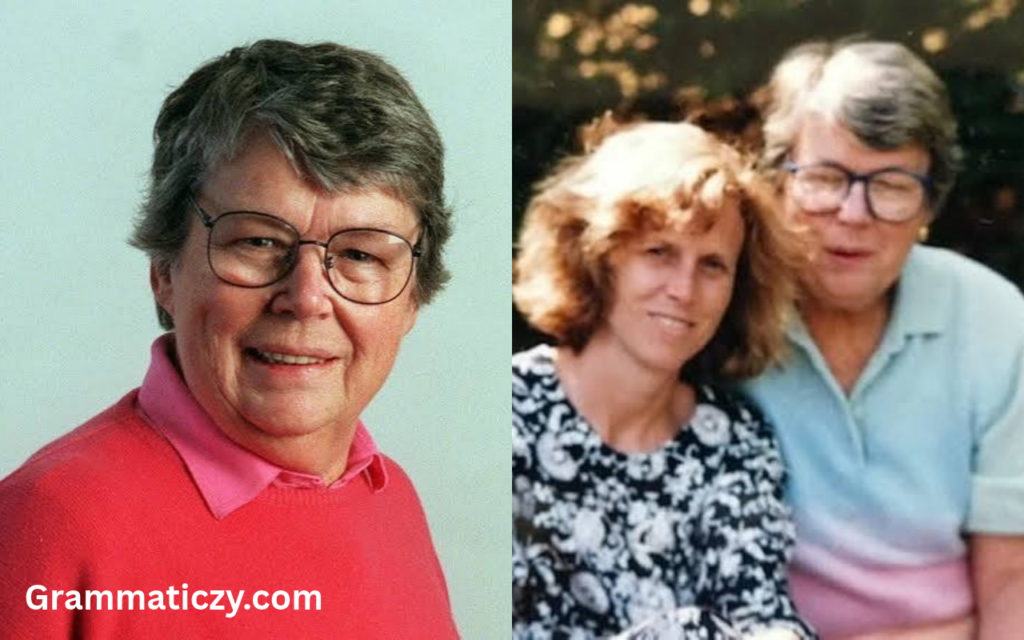
Loretta McLaughlin’s name became permanently connected with one of the most frightening crime stories in Boston history, but reducing her life to the Boston Strangler investigation would leave out much of what made her career remarkable. A journalist who entered the profession when American newsrooms were overwhelmingly dominated by men, McLaughlin built a reputation through persistence, sharp reporting and an unusual ability to recognize important stories before their significance was obvious to everyone else. In 1962, while working for the Boston Record American, she and fellow reporter Jean Cole investigated a series of murders of women and became the first journalists to publish a major series connecting the killings that became known as the Boston Strangler murders.
Her professional journey did not end with that famous crime story. McLaughlin later became an accomplished medical reporter, author and newspaper editor, focusing on subjects including reproductive health, population issues, AIDS and national health policy. In 1992, she became the second woman in the history of The Boston Globe to serve as editorial page editor. Her career therefore represents more than investigative journalism; it reflects the changing role of women in American newsrooms and the growing importance of health journalism in public life.
The renewed interest in McLaughlin following the 2023 Hulu film Boston Strangler, in which Keira Knightley portrayed her, has introduced her story to a new generation. Yet the real Loretta McLaughlin was considerably more complex than the fictionalized character seen on screen. She was a mother, medical journalist, author, editor, mentor and public-health advocate whose professional interests continued to evolve long after the murders that first made her famous.
Loretta McLaughlin Quick Facts
| Fact | Details |
|---|---|
| Full Name | Loretta June McLaughlin |
| Birth Name | Loretta June McDermott |
| Born | 1928 |
| Birthplace | Woburn, Massachusetts, USA |
| Died | November 23, 2018 |
| Age at Death | 90 |
| Profession | Journalist, author, editor, medical reporter |
| Education | Boston University |
| Degree | B.A. in Journalism, 1949 |
| Parents | John McDermott and Anna McDermott |
| Siblings | John, Sylvester “DeeDee,” and Margaret |
| Children | Mark, Ruth and Neil |
| Famous For | Reporting and connecting the Boston Strangler murders |
| Major Employers | Boston Record American, Herald American, Boston Globe |
| Book | The Pill, John Rock, and the Church: The Biography of a Revolution |
| Boston Globe Leadership Role | Editorial Page Editor, 1992–1993 |
| Net Worth | No reliable public estimate available |
| No verified personal account | |
| X/Twitter | No verified personal account |
| No verified personal account |
Early Life and Family Background
Loretta June McLaughlin was born Loretta June McDermott in 1928 in Woburn, Massachusetts. Her parents were John McDermott and Anna McDermott. Her father worked a variety of jobs during the Great Depression and later worked at a shipyard in Quincy, while her mother devoted herself to raising the family. McLaughlin was the second of four children, growing up in circumstances that were far removed from the world of celebrity or privilege.
Her family later moved to South Boston, where McLaughlin attended South Boston High School. The Boston environment would become deeply intertwined with her identity and eventually with her journalism. She was raised in a working-class setting, and people who knew her later connected that background with her instinct for ordinary people and stories that might otherwise be overlooked. Her colleagues remembered that she frequently showed particular concern for people who lacked influence or public visibility.
McLaughlin’s upbringing also coincided with an era in which women had limited professional opportunities, particularly in fields such as newspaper journalism. The news business of the 1950s was overwhelmingly male, and McLaughlin later wrote about the discrimination she experienced when attempting to enter newsrooms. She recalled being told that women were not welcome in certain newsroom environments and remembered being referred to simply as “the girl” at one of her early newspaper jobs.
Education and Boston University Years
McLaughlin attended Boston University on an academic scholarship and graduated in 1949 with a bachelor’s degree in journalism. Her decision to study journalism placed her on a professional path that was still unusual for many women of her generation. Rather than choosing a career considered traditionally suitable for women, she entered a competitive field centered on reporting, investigation, deadlines and public affairs.
Her connection with Boston University remained important throughout her life. Decades after graduation, the university recognized her accomplishments, and she became one of the institution’s notable journalism alumni. Her education gave her a foundation for the newspaper career that followed, but her later professional success came from combining that formal training with curiosity, persistence and an ability to develop sources.
While studying at Boston University, McLaughlin met James J. McLaughlin, another student. The two later married and had three children. Their marriage eventually ended in divorce, and McLaughlin later married John Becker. Her personal life therefore unfolded alongside a demanding professional career, including the period when she was simultaneously raising children and reporting on some of Boston’s most disturbing crimes.
Beginning a Career in Journalism
After graduating in 1949, McLaughlin entered journalism during a period when newspapers remained among the most influential forms of mass communication. She worked at the Boston Record American during the 1950s, gradually establishing herself as a serious reporter. The newsroom culture she encountered was often difficult for women, but she learned to compete in an environment where assignments, professional recognition and authority were frequently shaped by male editors and reporters.
Her approach to reporting was notably persistent. Former colleagues later recalled that McLaughlin had an instinct for getting to the scene and finding the important angle before others. Former Boston Globe editorial page editor Martin Nolan remembered that when reporters from Boston newspapers arrived at fires or murders, McLaughlin was often already there. That instinct for being present where news was happening became one of the defining qualities of her career.
At the same time, McLaughlin was developing the skills that would eventually make her an investigative journalist rather than simply a general assignment reporter. She paid attention to patterns, questioned official assumptions and looked for connections between apparently separate events. Those qualities became crucial when Boston experienced a series of murders in 1962.
Loretta McLaughlin and the Boston Strangler
The turning point in McLaughlin’s early career came with the murders that terrorized Boston during the summer of 1962. After several women had been killed, McLaughlin became convinced that the deaths deserved to be investigated as a possible connected series. Where some people viewed the victims as unrelated cases, she recognized a pattern that could have much wider significance.
McLaughlin worked with fellow Record American reporter Jean Cole, and together they produced what became the first major newspaper series about the murders later associated with the Boston Strangler. Their reporting did more than describe individual crimes. They examined the similarities between cases and raised questions about whether a single perpetrator could be responsible for multiple killings.
The investigation also demonstrated McLaughlin’s willingness to challenge assumptions inside her own newsroom. She later recalled that an editor questioned the value of writing a series about four murdered women because they were not famous or prominent. McLaughlin saw the opposite lesson: their anonymity made their deaths more disturbing and important. Her response reflected one of the principles that became central to her career—ordinary people deserved serious journalism too.
The Investigation’s Historical Significance
The Boston Strangler story was complicated from the beginning. Thirteen women were killed in and around Boston between 1962 and 1964 in murders that became associated with the Boston Strangler. Albert DeSalvo later confessed to eleven of the killings, but he was never convicted of the murders themselves, and questions remained about his confessions.
The uncertainty surrounding the case is important when discussing McLaughlin’s journalism. Her reporting helped popularize the idea that the murders formed a connected series, but the historical record is more complicated than the simple narrative of one confirmed killer. In 2013, DNA evidence from DeSalvo’s remains was matched to evidence from the 1964 murder of Mary Sullivan, one of the victims associated with the case. Nevertheless, questions surrounding the other killings have continued.
What remains particularly significant about McLaughlin’s contribution is her reporting method. She did not need the entire mystery solved before recognizing that the individual cases deserved to be examined together. Her work illustrates the value of investigative journalism in identifying patterns that may be missed when institutions examine events separately. That quality became equally important later in her medical and public-health reporting.
Life as a Working Mother
One of the remarkable aspects of McLaughlin’s Boston Strangler reporting was that she was raising three children at the same time. Her professional responsibilities therefore existed alongside the expectations placed on women to manage family life. According to her Boston Globe obituary, she would put her children to bed and then continue writing late at night at a typewriter on the dining-room table.
This experience later made her an important source of advice for younger working women. Former colleagues remembered her as someone who understood the difficulties of balancing journalism and family responsibilities. She had entered the profession at a time when female reporters were often treated as outsiders, yet she eventually became a senior newsroom leader herself.
Her story therefore belongs not only to the history of investigative reporting but also to the history of women in American journalism. She demonstrated that professional ambition and family responsibilities did not have to be mutually exclusive, even though combining them could be exceptionally demanding. Her example became meaningful to younger women who entered journalism decades after her own career had begun.
Transition Into Science and Medical Journalism
The Boston Strangler investigation was only one stage of McLaughlin’s professional development. During the mid-1970s, she temporarily stepped away from traditional newspaper journalism and worked as a science writer at Harvard University. She also became executive director of public relations at Massachusetts Eye and Ear Infirmary, where she was involved in a major capital campaign.
These positions expanded her understanding of medicine, science and institutional communication. Instead of simply reporting breaking news, she was now working around scientific research and medical organizations. That experience helped prepare her for the medical journalism that would become a major part of the second half of her career.
She eventually returned to newspaper journalism through the Herald American, where she worked as a medical reporter. In 1976, she joined The Boston Globe as a medical specialist. Her career had effectively evolved from crime reporting into science and health journalism, giving her a broad range of expertise that few reporters of her generation possessed.
Reporting on AIDS and Public Health
At The Boston Globe, McLaughlin became an important voice on medical issues, particularly during the emerging AIDS crisis. She recognized the seriousness of the epidemic at a time when public understanding was limited and fear surrounding the disease was widespread. Her reporting and editorial work repeatedly drew attention to the need for research, funding and effective public-health responses.
Her approach to AIDS reporting went beyond describing medical developments. McLaughlin treated public health as a major social and political issue, examining how government decisions could affect people’s lives. Harvard’s archive records that she became a Senior Fellow at the Harvard AIDS Institute and remained involved in public-health advocacy later in her career.
She also advocated for national health insurance and participated in discussions concerning health policy. Her work illustrates how her journalism increasingly moved from discovering individual stories toward examining larger systems. Whether the subject was a murder investigation, a medical breakthrough or a national health crisis, she was interested in the institutions and decisions affecting ordinary people.
Author of The Pill, John Rock, and the Church
McLaughlin’s expertise in medicine and social policy also led her into book writing. In 1982, she published The Pill, John Rock, and the Church: The Biography of a Revolution. The book focused on physician John Rock and examined the development of the birth-control pill alongside the medical, religious and cultural debates surrounding contraception.
The subject was particularly significant because contraception represented one of the most controversial intersections between modern medicine, religion and social change. McLaughlin approached the subject as a journalist and researcher, exploring the people and institutions involved in the development and acceptance of the Pill. The book extended the themes that had increasingly shaped her career: medicine, ethics, public policy and the impact of scientific developments on society.
Her research on John Rock and contraception later became part of the collection preserved by Harvard’s Francis A. Countway Library of Medicine. The archive includes McLaughlin’s research and publication records from 1944 through 1984, providing researchers with material relating to the Boston Strangler investigation, AIDS, John Rock, birth control and other areas of her professional interests.
Becoming Boston Globe Editorial Page Editor
McLaughlin’s professional achievements eventually brought her into senior editorial leadership at The Boston Globe. She joined the editorial pages as an editor and writer and later became deputy editorial page editor. In July 1992, she was named editorial page editor, making her the second woman in the newspaper’s history to hold that position.
The appointment represented a significant moment in a career that had begun when women were frequently excluded from important newsroom positions. McLaughlin had spent decades demonstrating her ability to report difficult stories, understand complicated issues and communicate with readers. Her move into editorial leadership reflected the breadth of experience she had accumulated across journalism and public affairs.
She held the position until December 1993, when she reached the newspaper’s mandatory retirement age of 65. Although her time as editorial page editor was relatively short, the appointment was an important milestone in her professional legacy. It placed a woman who had begun her career facing discrimination in one of the most influential editorial positions at a major American newspaper.
Personal Life, Marriage and Children
McLaughlin’s personal life was closely connected to her professional identity but was generally kept outside the celebrity spotlight. She and her first husband, James McLaughlin, had three children: Mark, Ruth and Neil. The couple eventually divorced, and she later married John Becker, who had worked as a teacher and later in administration at Boston City Hospital. Becker died in 2002.
Her children remained an important part of her life, and her son Mark later worked as a supervisory editor on the Boston Globe copy desk. That connection created an unusual generational link between McLaughlin’s family and the newspaper institution where she had spent so much of her career. She also had four grandchildren.
Colleagues remembered McLaughlin as intellectually energetic and deeply engaged with ideas. Her son Mark described journalism as providing his mother with the mental stimulation she needed—writing, discussion, argument and the constant question of what could be learned next. That description helps explain why she remained connected to journalism and public affairs for so many decades.
Personality, Mentorship and Professional Influence
McLaughlin’s colleagues often described her as direct, confident and demanding of high standards. Former coworkers remembered that she had little patience for shallow journalism, but they also described her as generous toward younger reporters. She frequently shared contacts, advice and professional guidance with colleagues who were still developing their careers.
Her willingness to support younger journalists was particularly meaningful because she understood the obstacles women had faced when she entered the profession. She had personally experienced sexist newsroom attitudes, so her later position of influence gave her an opportunity to help people who might otherwise have struggled to find professional support.
That combination of toughness and mentorship became an important part of her reputation. Former colleagues remembered her not simply as the reporter who helped break the Boston Strangler story but as someone who contributed to the culture of the newsroom. Her influence extended through the people she advised and encouraged, as well as through the stories she personally reported.
Loretta McLaughlin’s Net Worth and Income
There is no reliable publicly documented figure for Loretta McLaughlin’s net worth at the time of her death. Online estimates that assign a precise dollar value to her wealth should therefore be treated cautiously unless they provide verifiable financial documentation. Unlike modern celebrities and public figures, McLaughlin lived most of her professional life before personal wealth became routinely estimated on internet biography websites.
Her primary professional income came from journalism and editorial work. Over her career, she worked for major newspapers, held positions in science writing and institutional public relations, wrote a published book and later participated in fellowships and public-policy work. Her career was long and professionally distinguished, but the available historical sources do not provide enough information to calculate her personal assets or lifetime earnings accurately.
A responsible biography should therefore distinguish between documented career achievements and speculation about personal wealth. McLaughlin’s lasting importance comes from her journalism, medical reporting, editorial leadership and public-health advocacy rather than from an unsupported net-worth number.
Social Media and Online Presence
McLaughlin belonged to a generation of journalists whose careers were built decades before Facebook, Instagram, LinkedIn and X existed. There is no reliable evidence of an official personal Instagram, X/Twitter or LinkedIn account maintained by her. Her public presence today instead comes through archived newspaper articles, historical collections, documentaries, interviews and later media portrayals.
Interest in her work increased considerably after the release of Boston Strangler in 2023. Keira Knightley portrayed McLaughlin, while Carrie Coon played Jean Cole. The film introduced the journalists’ story to viewers who may never previously have encountered the original reporting.
The renewed attention also encouraged people to look beyond the film and examine the real journalist’s career. The Boston Globe subsequently highlighted how McLaughlin’s professional legacy extended far beyond the famous murders, emphasizing her work in medical journalism, women’s issues and the AIDS crisis.
Later Years and Death
After leaving the Boston Globe editorial page, McLaughlin continued to participate in public-policy and health-related work. She became a fellow at the Radcliffe College Institute for Public Policy and a Senior Fellow at the Harvard AIDS Institute. She also organized conferences and continued advocating for national health insurance, demonstrating that retirement from daily newspaper leadership did not end her involvement with public affairs.
Her later years also provided an opportunity for her earlier work to be placed into historical perspective. The Boston Strangler investigation remained the most recognizable part of her public biography, but her later medical and editorial work showed that her interests had always been broader than crime reporting. She remained interested in questions where journalism, science, policy and ordinary people’s lives intersected.
Loretta McLaughlin died at her home in Milton, Massachusetts, on November 23, 2018, at the age of 90. Her death was followed by tributes from colleagues who remembered her as a pioneering reporter, editor, mentor and public-health advocate. Her professional career had lasted for roughly four decades, and her influence continued through journalists she mentored and the historical record she left behind.
Loretta McLaughlin’s Lasting Legacy
McLaughlin’s legacy begins with investigative journalism. Her decision to connect a series of seemingly separate murders demonstrated the importance of recognizing patterns and asking questions that institutions might not yet be asking. Working with Jean Cole, she helped create one of the earliest major journalistic narratives around the Boston Strangler killings, forever associating her name with a pivotal moment in Boston newspaper history.
But her influence extends much further. Her medical reporting, writing about contraception, coverage of AIDS and advocacy concerning health policy demonstrated an ability to move between subjects without losing her central commitment to public-interest journalism. She treated health and science as matters that ordinary readers needed to understand, not simply as specialist topics.
Perhaps most importantly, McLaughlin’s career helped demonstrate what was possible for women in American journalism. She entered a profession in which female reporters could be dismissed or patronized, yet eventually became editorial page editor of one of America’s most respected newspapers. Her journey from a young Boston journalist to an influential newsroom leader reflects decades of professional persistence and intellectual curiosity.
Conclusion
Loretta McLaughlin’s story cannot be fully captured by the phrase “Boston Strangler reporter.” That description identifies the investigation that first brought her national attention, but it does not explain the full arc of her life. She was a journalist who recognized overlooked patterns, a medical reporter who tackled complicated health issues, an author who explored the history of contraception, an editor who broke a barrier for women and a public-health advocate who continued working on issues she believed mattered.
Her career also offers a powerful lesson about journalism itself. Important stories are not always the stories that initially attract the most attention. Sometimes their importance lies precisely in the fact that the people involved are ordinary and overlooked. McLaughlin’s willingness to investigate those stories helped establish the reputation that carried her through the rest of her career.
Today, renewed interest in her life through archives, historical reporting and the Boston Strangler film has ensured that her name remains part of the conversation about investigative journalism. Yet perhaps the most meaningful legacy is not the mystery surrounding a notorious crime but the example of a woman who continued asking questions, challenging assumptions and pursuing knowledge throughout a long professional life. Loretta McLaughlin’s journey remains a reminder that persistence, intellectual curiosity and the courage to take overlooked stories seriously can shape a legacy that lasts far beyond the newsroom.