Roy Orbison Spouse: The Extraordinary Life and Legacy of Barbara Orbison
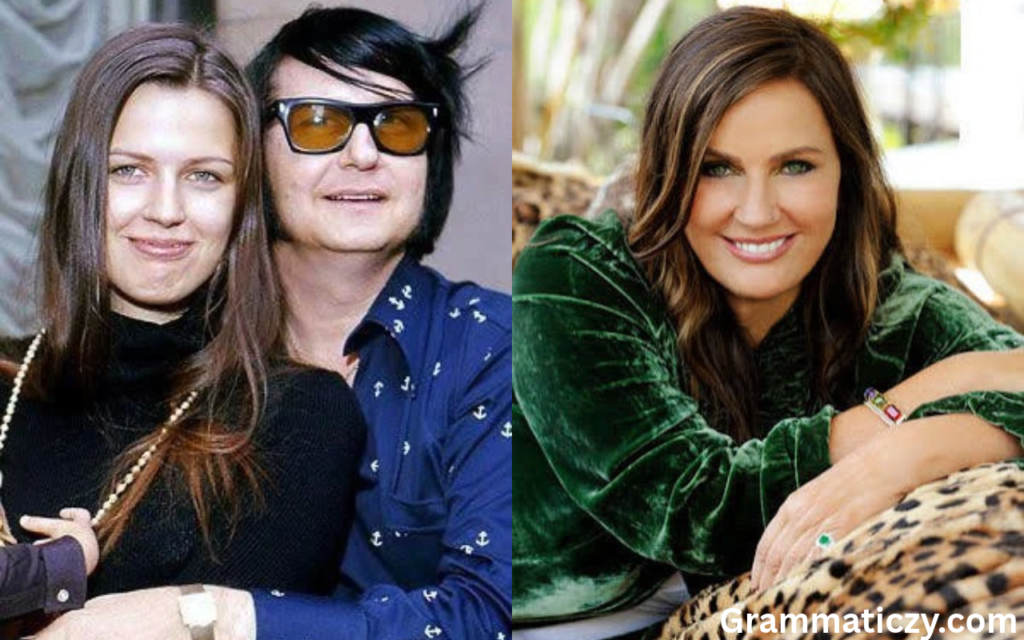
When people search for Roy Orbison spouse, they often expect to find a simple answer: the name of the woman who shared the final 19 years of the legendary singer’s life. But Barbara Orbison’s story is far richer than the phrase “Roy Orbison’s wife” suggests. She was his wife, mother of their children, career manager, music publisher, producer, entrepreneur and, after his death, one of the most important people responsible for keeping his music alive. Her influence became particularly visible during the extraordinary career revival Roy experienced in the 1980s and continued long after his death in 1988.
Barbara’s life also unfolded against an unusually dramatic background. She met Roy during his 1968 tour of Britain, when his career was between major periods of success. Within a year they were married, beginning a partnership that would eventually combine family life with the demanding business of managing a major recording artist. Over the following decades, Barbara helped shape projects associated with Roy’s music, built her own publishing company and developed businesses independent of her husband’s fame.
What makes her biography particularly compelling is what happened after Roy died. Barbara did not simply retreat from public life. She worked to preserve and expand his musical legacy, overseeing major archival projects and continuing her own career in music publishing. Even today, the official Roy Orbison organization continues to remember her as an important part of the story surrounding the singer and his enduring catalog.
Who Was Roy Orbison’s Spouse?
Roy Orbison’s second wife was Barbara Anne Marie Wellhöner Jakobs Orbison, widely known as Barbara Orbison. Born in Germany, she met the American singer while he was touring in Britain in 1968. The official Roy Orbison biography says that Barbara was 17 when they met at a nightclub in Leeds, while other contemporary reporting, including the Los Angeles Times, described her as 18. They married on March 25, 1969, in Hendersonville, Tennessee.
Their meeting came at a particularly difficult point in Roy Orbison’s personal history. His first wife, Claudette, had died in a motorcycle accident in 1966, and two of his sons from that first marriage died in a house fire in 1968. Roy was therefore entering his relationship with Barbara after experiencing losses that had permanently changed his personal life. Contemporary reporting later described Barbara as someone who brought renewed happiness and stability into his life.
Barbara eventually became much more than Roy’s romantic partner. She was deeply involved in the business side of his career, particularly during his 1980s comeback. The official Roy Orbison site describes her as his manager and producer, while BMI characterized her as both a music publisher and a steward of her husband’s legacy. That combination of personal partnership and professional responsibility became the defining feature of their relationship.
Barbara Orbison’s Early Life and Background
Barbara was born in Bielefeld, Germany, on January 10. There is some inconsistency among later official and secondary sources concerning her birth year: the official Roy Orbison website currently commemorates her birth in 1951, while the Los Angeles Times and BMI published accounts give 1950. Because of that discrepancy, a responsible biography should acknowledge the conflicting records rather than present one year as unquestionably established.
Compared with Roy Orbison, whose childhood, schooling and early musical development have been extensively documented, relatively little reliable information is publicly available about Barbara’s childhood and formal education. Her biography becomes much better documented from the point at which she encountered Roy during his British tour. That meeting quickly changed the direction of her life, taking her from Germany into an international entertainment world centered around music, touring and recording.
The environment Barbara entered was extraordinary. Roy Orbison was already an internationally successful recording artist whose voice and emotionally intense songs had made him famous in both America and Britain. His catalog included “Only the Lonely,” “Crying,” “Running Scared,” “In Dreams” and “Oh, Pretty Woman,” and his reputation as a vocalist was enormous. Barbara therefore did not meet an unknown musician at the beginning of a career; she met an established performer whose personal and professional life was already highly complicated.
Meeting Roy Orbison in Leeds
The meeting between Barbara and Roy has become one of the best-known stories in the Orbison family history. The official Roy Orbison site places their meeting in Leeds on July 24, 1968, during Roy’s British tour. Barbara later recalled that their relationship developed remarkably quickly and that they decided to marry at an early stage.
The timing was significant because Roy had been experiencing both professional and personal upheaval. His earlier commercial dominance had faded somewhat, even though he remained an important touring artist. At the same time, his private life had been marked by profound tragedy. The Los Angeles Times reported that Barbara herself later described the 1970s as a period in which Roy was essentially rebuilding his life.
Their romance moved rapidly toward marriage. On March 25, 1969, Roy and Barbara married in Hendersonville, Tennessee. Their relationship would ultimately last until Roy’s death nearly two decades later, and Barbara later became one of the principal figures responsible for managing the professional legacy he left behind.
Marriage, Children and Family Life
Roy and Barbara built their family between Nashville and Malibu, eventually raising three sons in the broader family: Barbara’s sons with Roy were Roy Kelton Orbison Jr. and Alexander “Alex” Orbison, while Wesley Orbison was Roy’s son from his first marriage. The official Roy Orbison site describes Barbara as the mother of Alex and Roy Jr., while BMI lists all three sons among her surviving family members.
Their family life existed alongside the constant demands of Roy’s profession. Touring, recording, songwriting, publishing and business commitments meant that their marriage was not a conventional private domestic life. Barbara gradually became involved in the practical side of Roy’s career, developing knowledge and experience that would later become particularly valuable during his comeback years.
A surviving family photograph from Malibu in 1988 captures Roy and Barbara together with their sons shortly before Roy’s death. The official archive identifies the family members as Alex Orbison, Roy Orbison Jr., Roy Orbison and Barbara Orbison. That image has become part of the visual record of the family’s final period together.
Barbara Orbison and Roy’s 1980s Comeback
The 1980s transformed Roy Orbison’s career, and Barbara played an important role behind the scenes. During this decade, younger musicians and major established artists increasingly recognized Orbison’s influence. He collaborated with artists such as Emmylou Harris and k.d. lang, appeared in major music projects and became part of the Traveling Wilburys alongside George Harrison, Bob Dylan, Tom Petty and Jeff Lynne.
Barbara was also involved in the creation of the celebrated television special “Roy Orbison and Friends: A Black and White Night.” The production featured major performers including Bruce Springsteen, Elvis Costello, Jackson Browne, Bonnie Raitt, k.d. lang and Tom Waits. BMI credits Barbara with dreaming up and helping produce the special, which became one of the most respected filmed performances associated with Orbison.
Her contribution during this period demonstrates why describing her only as Roy Orbison’s spouse leaves out an important part of her story. She was involved in career management at a time when Roy’s music was being rediscovered by a new generation. The Los Angeles Times described her as a catalytic force behind much of the activity that restored attention to Roy’s career during the 1980s.
Barbara as Roy Orbison’s Manager
Barbara’s work as Roy’s manager was one of the most important professional aspects of their relationship. Managing a major recording artist involves far more than arranging appearances. It can include coordinating recordings, negotiations, publishing, media projects, licensing, collaborations and the long-term positioning of an artist’s catalog.
During Roy’s final years, these responsibilities became particularly significant because his artistic reputation was growing again. He had been inducted into the Rock and Roll Hall of Fame in 1987, and his collaborations with some of the biggest names in popular music placed him firmly back at the center of the music world. Barbara was closely involved in this period of renewed visibility.
The partnership also demonstrated how closely Roy trusted Barbara professionally. She understood his work, his catalog and the importance of presenting his music to new audiences. When Roy died suddenly in December 1988, Barbara already possessed the experience necessary to continue managing the complicated business surrounding his recordings and reputation.
Roy Orbison’s Death and Barbara’s New Mission
Roy Orbison died of a heart attack on December 6, 1988, at the age of 52. His death came only months after his career had reached one of its most remarkable periods of renewed recognition. He had been working with the Traveling Wilburys, completing material for what became Mystery Girl and appearing in the acclaimed A Black and White Night concert special.
For Barbara, Roy’s death transformed her responsibilities. She was no longer simply managing the career of a living artist; she was responsible for protecting the work of someone whose catalog was suddenly an estate. A 1989 Los Angeles Times report stated that Roy’s estate was valued at $625,000 at the time and that Barbara was named executor, with responsibility for overseeing matters connected with royalties and the possibility of a biography.
The value of an artist’s legacy, however, cannot be understood solely through the estate valuation at one moment in time. Recordings, publishing rights, licensing opportunities, trademarks and future releases can acquire new commercial and cultural significance over decades. Barbara’s subsequent work demonstrated precisely how much potential remained in Roy Orbison’s catalog.
Preserving Roy Orbison’s Musical Legacy
Barbara spent more than two decades managing and developing the music empire associated with Roy Orbison. One of her most significant projects was the 2008 box set “Roy Orbison: The Soul of Rock and Roll,” a four-CD collection containing 107 songs and covering material from the earliest recordings through his later career. The official Orbison site identifies Barbara as the producer of the project alongside her son Roy Kelton Orbison Jr.
BMI also highlighted Barbara’s broader publishing achievements. Her publishing interests, together with Orbison Music LLC, accumulated numerous BMI awards, and BMI reported that the catalog had surpassed 16 million performances. Her work therefore extended beyond maintaining Roy’s public image; she was actively involved in the professional administration and development of music rights.
Barbara also helped keep Roy’s story visible through stage and tribute projects. She co-produced the stage production “Only the Lonely: The Roy Orbison Story,” which toured England during the 1990s, and continued supporting tribute recordings and other projects celebrating his work. Her strategy was clearly oriented toward making sure Roy Orbison remained part of contemporary music culture rather than becoming merely a figure from the past.
Still Working Music and Barbara’s Independent Career
Barbara’s own career became increasingly prominent through Still Working Music, her Nashville publishing company. The company worked with songwriters across generations and became a respected presence within the music publishing industry. This was significant because it established Barbara as a businesswoman with professional achievements independent of her marriage to Roy Orbison.
One particularly notable success involved Taylor Swift. Still Working Music received BMI’s 2010 Country Song of the Year honor for Swift’s “You Belong With Me.” BMI reported that Still Working Music and Orbison Music LLC had accumulated 21 BMI awards over the years, demonstrating that Barbara’s publishing activities had become commercially significant within the songwriting industry.
This chapter of Barbara’s career also helps explain why she was respected by people in the music business. Her professional identity was not simply based on being the widow of a famous singer. She became a publisher who worked with songwriters and music rights, developed a catalog and participated in the business structures that help songs remain commercially active over many years.
Pretty Woman Perfume and Entrepreneurship
Barbara also pursued entrepreneurship outside music publishing. In 2009, she created Pretty Woman Perfume, drawing inspiration from Roy Orbison’s iconic song “Oh, Pretty Woman.” The official Roy Orbison website says Barbara was personally involved in the fragrance’s development, from the scent itself and bottle design to international marketing, sales and promotion.
The business was a natural extension of the cultural power of the Orbison name. “Oh, Pretty Woman” had become one of the most recognizable songs of the 1960s, and its title carried an identity of its own. By turning that phrase into a fragrance brand, Barbara demonstrated an understanding of how music-related intellectual property could extend into consumer products.
More importantly, the perfume illustrated her entrepreneurial character. Barbara was not content simply to administer an existing estate. She created a product, developed its branding and participated in its commercial presentation. Her career therefore crossed music management, publishing, production, branding and retail entrepreneurship.
Barbara Orbison’s Charitable Work
Barbara also connected Roy’s legacy with charitable causes. In 1990, she organized a major tribute concert for Roy at the Universal Amphitheatre in Los Angeles, with proceeds benefiting homeless people. The Los Angeles Times reported that the event featured a remarkable lineup of performers and was organized as a benefit for homelessness.
The event demonstrated how Barbara viewed Roy’s music as something capable of contributing to causes beyond entertainment. She connected the memory of her late husband with an issue affecting vulnerable people in Los Angeles, turning a musical tribute into a fundraising opportunity.
Her philanthropic work also included support for Orbison House, a 21-unit residence associated with services for mentally impaired homeless people in Los Angeles. The Los Angeles Times reported that Barbara funded the project, adding a significant humanitarian dimension to her post-Roy career.
Barbara Orbison’s Final Years
Barbara remained active in music and business well into the final years of her life. She continued overseeing Roy’s legacy and working through the publishing and entertainment ventures she had developed. Her professional activity showed that the responsibility she assumed following Roy’s death had become a central part of her own identity.
In 2011, Barbara was undergoing treatment for pancreatic cancer in Los Angeles. She died on December 6, 2011, exactly 23 years after Roy Orbison died. BMI reported that she was 60, while the Los Angeles Times reported her age as 61, reflecting the same birth-year discrepancy found in later sources.
The coincidence of their deaths occurring on the same date became one of the most poignant details of the Orbison family story. The official Roy Orbison organization continues to commemorate both Roy and Barbara on December 6, emphasizing the unusual connection between the dates of their deaths.
Barbara Orbison’s Legacy Today
Barbara’s influence remains visible through the continued preservation of Roy Orbison’s catalog. The official Roy Orbison organization continues to publish archival material, celebrate anniversaries and release information about projects connected with his recordings. In 2026, the site continued commemorating Barbara’s birthday and describing her role as Roy’s wife, manager and entrepreneur.
Her sons also became involved in continuing the family’s work. The official biography states that Orbison Productions continued through Wesley Orbison, Roy Orbison Jr. and Alex Orbison after Barbara’s death. This created a direct line between the work Barbara undertook and the next generation of the Orbison family.
That continuing family involvement is important because musical legacies can easily become fragmented after an artist dies. Roy Orbison’s recordings have instead remained part of popular culture through reissues, archival releases, documentaries, tribute performances and continued interest in his songwriting and vocal style. Barbara’s years of work helped establish the foundation for that continuity.
Barbara Orbison Net Worth and Income Sources
There is no dependable public record establishing Barbara Orbison’s exact personal net worth, so precise figures frequently published on celebrity biography websites should be treated cautiously. Her financial interests were spread across several professional areas, including music publishing, management, Roy Orbison’s estate, production projects and her Pretty Woman Perfume business.
Roy Orbison’s estate was reported by the Los Angeles Times in January 1989 at approximately $625,000, including a Malibu property valued at $350,000. That historical figure should not be confused with Barbara’s personal wealth, nor should it be treated as a modern valuation of the Orbison catalog.
Barbara’s later publishing achievements suggest that her professional interests became considerably broader than the assets reported immediately after Roy’s death. Still Working Music represented successful songwriters and generated award-winning publishing activity. However, without audited financial records or a documented estate accounting, assigning Barbara a specific net-worth figure would be speculation rather than biography.
Did Barbara Orbison Have Social Media Accounts?
Barbara Orbison died in 2011, long before Instagram had become a central platform for celebrity communication. There is therefore no verified personal Instagram, X/Twitter or LinkedIn profile that can responsibly be presented as her own current social-media account.
Her legacy is instead represented through official Roy Orbison channels and archival websites. These sources regularly share photographs, anniversary messages, family memories and information about Roy’s music. In January 2026, the official website published a birthday tribute to Barbara describing her as Roy’s devoted wife and a pioneering entrepreneur and music executive.
For readers researching Roy Orbison spouse Barbara Orbison, official archival sources are consequently much more valuable than unverified social profiles. They provide historical photographs and information about her role in Roy’s career while helping distinguish genuine family archives from unrelated fan accounts.
Conclusion: The Woman Behind an Enduring Musical Legacy
Barbara Orbison’s story cannot be reduced to being the wife of a famous singer. She was an important figure in Roy Orbison’s personal life, but she was also his manager, producer, mother to his children, music publisher and entrepreneur. Their marriage began in 1969 after a rapid romance that started during Roy’s British tour, and their partnership lasted until his death in 1988.
After Roy’s death, Barbara transformed grief into a long-term mission of preservation and growth. She helped develop major archival projects, maintained his musical estate, supported tribute productions, built Still Working Music and created Pretty Woman Perfume. She also used Roy’s legacy in charitable efforts, including a major benefit concert for homeless people in Los Angeles.
Perhaps the most remarkable part of her story is that Barbara’s own professional identity became stronger with time. She began as a young German woman who met one of America’s most distinctive singers in Leeds and eventually became an established figure in the Nashville music business. Her journey crossed continents, family tragedy, music management, publishing, entrepreneurship and philanthropy.
Barbara Orbison died on December 6, 2011, exactly 23 years after Roy, but the work she carried forward did not end with her. The Orbison family continues to preserve and promote Roy’s music, while official archives continue to remember Barbara as a crucial part of that story.
The enduring lesson from Barbara Orbison’s life is that a legacy is not preserved automatically. It requires dedication, organization, creativity and people willing to carry meaningful work forward. Roy Orbison gave the world an unforgettable voice and a remarkable catalog of songs; Barbara devoted much of her later life to ensuring that those songs continued to be heard. Her story is therefore not merely an appendix to Roy Orbison’s biography—it is an important story of its own, one that illustrates how love, perseverance and professional purpose can combine to create a legacy that survives generations.