
Bruce Welch Biography: The Shadows, Early Life, Music Career, Songs, Personal Life, Net Worth and Legacy
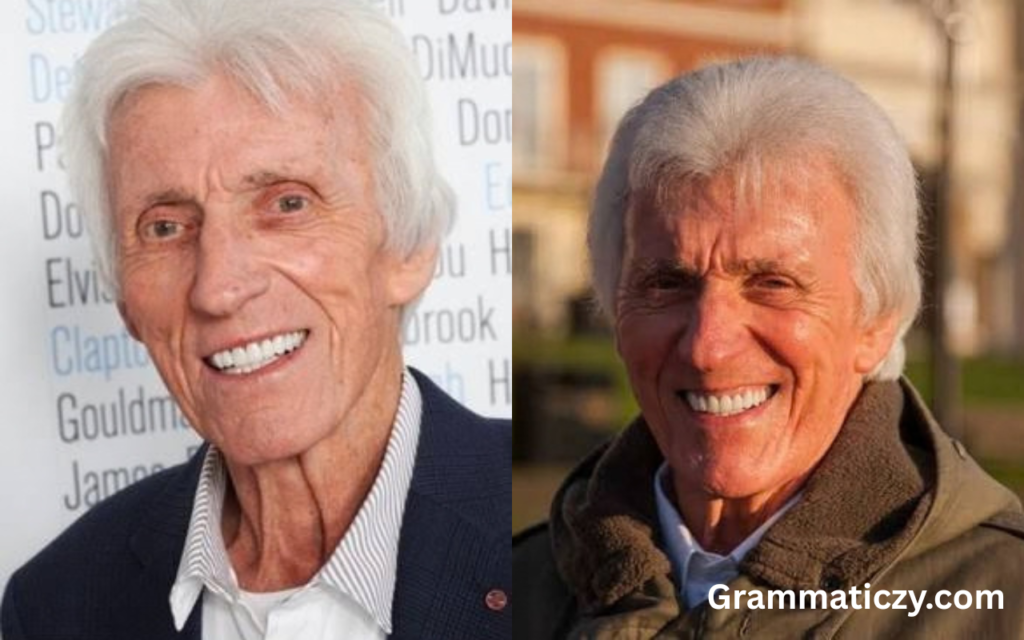
Bruce Welch is a name woven deeply into the history of British guitar music. Long before modern guitar heroes filled stadiums and social media transformed musicians into global brands, Welch helped establish a new musical language with a guitar in his hands and a remarkable partnership beside him. Born Bruce Cripps on November 2, 1941, in Bognor Regis, West Sussex, he became one of the founding members of The Shadows, the legendary British instrumental rock group associated with Cliff Richard. His career eventually expanded beyond performing into songwriting, record production, music publishing and mentoring, giving him a professional life that has lasted for more than six decades.
What makes Bruce Welch’s journey particularly fascinating is that his greatest achievements were not limited to one band or one period. His friendship and musical partnership with Hank Marvin began while both were young musicians in the Newcastle area, and together they helped create a guitar sound that became internationally recognizable. Welch later worked as a songwriter and producer for artists including Cliff Richard and Olivia Newton-John, demonstrating that his abilities extended far beyond the stage. His credits continue to appear on archival and modern compilation releases, showing how deeply his work remains connected to popular music history.
Although much of Welch’s fame belongs to the golden age of British rock and roll, his story has never really disappeared. The Shadows’ recordings continue to be reissued, guitarists continue to study their distinctive style, and Welch’s contributions continue to be documented in music archives. In 2004, his career received formal national recognition when he was appointed an Officer of the Order of the British Empire for services to music. More than simply a guitarist from another era, Bruce Welch represents an important chapter in the development of British popular music.
Bruce Welch Quick Facts
| Fact | Details |
|---|---|
| Full name | Bruce Cripps |
| Professional name | Bruce Welch |
| Date of birth | November 2, 1941 |
| Age | 84 years old as of September 2026 |
| Birthplace | Bognor Regis, West Sussex, England |
| Raised | Newcastle upon Tyne / County Durham area |
| Profession | Guitarist, songwriter, producer, singer and businessman |
| Best known for | Founding member of The Shadows |
| Musical style | Instrumental rock, pop/rock |
| Main instruments | Guitar and vocals |
| Years active | 1958–present |
| Parents | Stan Cripps and Grace Welch |
| Known musical partner | Hank Marvin |
| Associated artists | The Shadows, Cliff Richard, Olivia Newton-John |
| Major honor | OBE for services to music, 2004 |
| Spouse | Jilly Hamilton, according to published biographical information |
| Net worth | No independently verified public figure |
| Official/public website | Bruce Welch Tribute website |
| No reliably verified official personal account located | |
| X/Twitter | No reliably verified official personal account located |
| No reliably verified personal account located |
The basic details of Welch’s birth, professional identity, musical occupations and connection with The Shadows are well documented. AllMusic identifies him as a guitarist, songwriter and producer born in Bognor Regis in 1941, while biographical records also identify his work as a singer and music-publishing businessman.
One detail worth treating carefully is Bruce Welch’s net worth. Various celebrity websites publish estimates, but there is no dependable public financial statement establishing a precise figure. His career involved recording royalties, songwriting, publishing, production, performances and other music-related work, meaning that an exact personal fortune cannot responsibly be calculated from publicly available information. It is therefore more accurate to discuss his income sources than to present an uncertain number as fact.
His social-media situation is similarly different from that of today’s musicians. Welch became famous decades before Instagram, Facebook and X existed, and there is no reliably verified personal account that should be presented as his official social profile. His continuing public presence instead comes largely through The Shadows’ recordings, archival releases, fan communities, music publications and historical material.
Early Life and Family Background
Bruce Welch was born Bruce Cripps on November 2, 1941, in Bognor Regis, Sussex. His parents were Stan Cripps and Grace Welch, and the family later moved to the North East of England. Welch’s mother died when he was only six years old, after which he was raised by his Aunt Sadie. His formative years were therefore spent largely around Newcastle and County Durham rather than in the town where he was born.
The Newcastle environment became enormously important to his future. Welch attended Rutherford Grammar School, where he met another young musician named Brian Rankin, who would eventually become internationally famous under the stage name Hank Marvin. Northumbria University has specifically documented the Newcastle connection between Marvin and Welch, noting that the two musicians grew up in the city and met while studying at Rutherford Grammar School.
Music quickly became more than a hobby for the two friends. While still teenagers, Welch and Marvin became involved in skiffle, a British style influenced by folk, blues and early American popular music. They performed with The Railroaders and began developing the practical experience that would later prove invaluable. Their decision to leave the North East and pursue a professional musical career in London represented a major turning point, transforming youthful ambition into a serious attempt to enter the entertainment industry.
Meeting Hank Marvin and Discovering a Musical Direction
The friendship between Bruce Welch and Hank Marvin became one of the most important partnerships in British guitar history. Their early musical connection was built long before fame arrived, giving them an understanding of each other’s playing that would eventually become central to The Shadows’ sound. They were young musicians learning their craft together, experimenting with guitars and searching for opportunities in an industry that was still developing in Britain.
In 1958, Welch and Marvin went to London in pursuit of a professional career. Their early experience was far from glamorous. According to biographical accounts, the pair struggled financially and played in coffee bars while searching for their breakthrough. Eventually they became involved with a group backing a young singer who was then still establishing himself professionally: Cliff Richard. That opportunity changed the direction of their lives.
The group that became The Shadows initially operated under the name The Drifters before changing its identity. Welch and Marvin joined the developing lineup in 1958, and their guitar partnership quickly became one of its defining characteristics. The combination of Marvin’s lead guitar and Welch’s rhythm work produced a tightly interlocked sound that helped establish a new template for British instrumental rock.
Bruce Welch and The Shadows
The Shadows became one of Britain’s most influential instrumental groups, initially achieving enormous exposure as Cliff Richard’s backing band before developing their own independent identity. Their success helped demonstrate that an instrumental group could become a major commercial force even without relying on a conventional lead vocalist. AllMusic describes The Shadows as one of the quintessential British instrumental groups and emphasizes their importance in the development of British rock and roll.
Welch’s contribution was particularly distinctive because rhythm guitar became a central component of the group’s sound rather than merely functioning as background accompaniment. AllMusic describes him as the first rhythm guitarist in England to achieve stardom in rock and roll. He also sometimes played acoustic guitar and contributed vocals, demonstrating that his role within the group was broader than the simple label of rhythm guitarist might suggest.
The Shadows’ influence spread well beyond Britain. Their clean guitar tones, melodic instrumental arrangements and carefully constructed performances became an important reference point for aspiring musicians. Welch and Marvin’s work helped popularize the idea that electric guitar could carry an entire melody without requiring a singer to dominate the arrangement. That legacy remains one of the clearest reasons Welch’s name continues to matter in discussions about early British guitar music.
The Shadows and Cliff Richard Connection
Bruce Welch’s career cannot be separated completely from Cliff Richard, because The Shadows originally became widely known through their role as Richard’s backing group. The relationship placed Welch in the middle of the emergence of one of Britain’s earliest major rock-and-roll stars. Their recordings and live appearances helped introduce American-influenced rock music to British audiences through a distinctly British presentation.
Welch’s contribution went beyond performing on stage. His later production and songwriting credits show that he developed a sophisticated understanding of recording and arrangement. AllMusic lists him as producer, arranger, guitarist and composer across numerous Cliff Richard releases, including I’m Nearly Famous, Every Face Tells a Story, Green Light and later compilation projects.
The professional relationship between Welch and Richard also lasted well beyond the earliest Shadows years. Even as The Shadows moved through different periods of activity, Welch continued contributing to Richard’s music. This demonstrates how his career evolved from that of a young rhythm guitarist into that of a multi-skilled music professional capable of contributing creatively both in front of and behind the recording console.
Songwriting and Record Production
One of Bruce Welch’s most important achievements outside The Shadows was his work as a songwriter and producer. His songwriting credits appear across recordings by numerous artists, and his production work shows that he understood how songs needed to be shaped for the recording studio as well as the concert stage. This second dimension of his career significantly expanded his influence.
Welch was particularly important during the early recording career of Olivia Newton-John. Her official biography states that she recorded Bob Dylan’s “If Not for You” in 1971, with Bruce Welch and John Farrar serving as co-producers. Welch’s involvement therefore belongs to an important early stage of Newton-John’s international recording career.
His production credits continued across subsequent projects, while his songwriting catalog became another lasting source of recognition. AllMusic lists Welch as a composer and producer on numerous recordings spanning several decades, including releases connected with The Shadows, Cliff Richard and Olivia Newton-John. The continued appearance of these credits on modern compilations illustrates the durability of the material he helped create.
Bruce Welch and Olivia Newton-John
Bruce Welch’s professional connection with Olivia Newton-John developed alongside a personal relationship. The two became romantically involved after meeting during the period when Newton-John was still establishing herself in the music industry. Their relationship eventually led to an engagement, although they did not marry. Welch’s involvement with her career was both personal and professional during these formative years.
Their musical collaboration became especially significant through If Not for You. Newton-John’s official website confirms that Welch and John Farrar co-produced her recording of the title song in 1971. The project formed part of the early foundation of her international career, making Welch an important figure in the development of her recorded sound during that period.
The relationship eventually ended, but Welch’s professional connection with Newton-John remained part of his legacy. His songwriting and production credits continued to appear on her catalog, while Newton-John went on to become an internationally recognized singer and actress. Their shared history illustrates how Welch’s career frequently crossed paths with major figures in popular music.
Career Changes and Musical Reinvention
The music industry changed dramatically during the 1960s and 1970s. New genres, recording techniques and performers were emerging rapidly, and musicians who had established themselves during the first British rock-and-roll boom faced the challenge of adapting to a changing marketplace. Welch responded by expanding his work rather than remaining dependent on a single role within The Shadows.
One of the major developments was his involvement with Marvin, Welch & Farrar. The trio explored vocal harmonies and a different musical approach from the classic Shadows instrumental format. Although the project did not replace The Shadows’ commercial identity, it demonstrated Welch’s willingness to experiment creatively and explore different sides of his musicianship.
Welch also developed his identity as a producer and songwriter. His catalog shows work with Cliff Richard, Olivia Newton-John and other performers, while he remained involved in different Shadows projects over the years. This ability to move between performing, arranging, composing and producing helped him maintain a remarkably long professional career.
Shadowmania and the Preservation of The Shadows’ Legacy
In 1998, Bruce Welch launched Shadowmania, a one-day event featuring tribute bands performing The Shadows’ music, with Welch’s own band appearing as the headline act. The event proved successful and became an annual occasion, continuing through 2012 except in years when Welch’s touring commitments prevented him from participating.
Shadowmania was significant because it showed how strong The Shadows’ musical following remained decades after their original breakthrough. The event provided a space where musicians could recreate the group’s famous guitar style while fans could experience the music in a live setting. Welch’s direct involvement also gave the celebration an authentic connection to the original group.
The project reflected a broader aspect of Welch’s later career: preservation. Rather than allowing the music to exist only as old recordings, he helped create opportunities for musicians and audiences to keep engaging with it. The continuing interest in Shadows tribute bands and guitar-based performances suggests that the musical language Welch helped establish remains meaningful to later generations.
Awards, Recognition and Major Achievements
Bruce Welch’s contribution to music received one of its most significant official acknowledgments in 2004, when he was appointed an Officer of the Order of the British Empire, commonly known as an OBE. The honor recognized his services to music and provided formal national recognition of a career that had already stretched across several decades.
His achievements, however, cannot be reduced to a single award. He helped establish The Shadows as one of the most recognizable instrumental groups in British music, worked with Cliff Richard across numerous recordings and developed a substantial career as a songwriter and producer. His credits also connect him to Olivia Newton-John’s early recording work, giving his professional legacy a reach that extended beyond British instrumental rock.
Another measure of his continuing importance is the survival of his work in modern music catalogs. AllMusic’s current database includes Bruce Welch as a composer, guitarist and producer on releases appearing as recently as 2026. These modern listings do not necessarily indicate that Welch is recording new music today; rather, they demonstrate that his compositions and historical recordings continue to be repackaged, reissued and discovered by listeners.
Personal Life and Family
Bruce Welch has generally kept his private life less visible than many contemporary entertainers. His early family history was marked by the death of his mother when he was a child and his upbringing by his Aunt Sadie. Those circumstances formed part of the background from which he entered adolescence in Newcastle and eventually discovered music.
His best-known romantic relationship was with Olivia Newton-John, whom he became engaged to during the early 1970s period of their personal and professional association. Although they did not marry, their relationship remains one of the more documented personal chapters of Welch’s biography because it overlapped with their creative work in the recording industry.
Later biographical information identifies Welch with Richmond in southwest London and reports his marriage to Jilly Hamilton in September 2024 in a private family ceremony. Because details of his private routine are not extensively documented by authoritative sources, it is more responsible to focus on the parts of his personal history that are publicly established rather than filling the gaps with speculation.
Bruce Welch Net Worth and Income Sources
There is no independently verified public figure for Bruce Welch’s net worth. Online celebrity-finance websites sometimes publish estimates, but those figures are generally based on calculations that are not supported by audited statements, public tax records or verified asset disclosures. For that reason, a precise dollar amount should not be presented as an established fact.
Welch’s potential income sources have been considerably broader than live performances alone. His professional record includes songwriting, publishing, producing, arranging, guitar performance and vocals. Royalties from compositions and recordings can continue generating income long after a song’s original release, particularly when older recordings are reissued or licensed for compilations and other media.
His catalog demonstrates the potential breadth of those long-term revenue streams. AllMusic lists Welch as a composer or producer on recordings associated with The Shadows, Cliff Richard and Olivia Newton-John across multiple decades. Modern catalog activity also indicates that his work continues to have a commercial life, although the actual amount of income generated from those activities is private and cannot be reliably calculated from public information.
Social Media and Public Presence
Bruce Welch belongs to a generation of musicians whose careers were built through radio, records, television, concert halls and music magazines rather than social-media platforms. As a result, his online presence is relatively different from that of younger artists who maintain daily Instagram, TikTok or X updates. His legacy is primarily preserved through music archives, official or fan websites, interviews and recordings.
There does not appear to be a reliably verified personal Instagram, X/Twitter or LinkedIn account that should be confidently presented as belonging to Welch. This distinction matters because numerous fan pages and unofficial profiles can exist around long-established musicians. Without reliable verification, assigning a particular social account to him would risk misleading readers.
His continuing connection with audiences instead comes through the music itself. Recordings by The Shadows remain available through modern catalogs, while archival projects and historical publications continue to discuss the band’s influence. AllMusic’s database, for example, continues to document Welch’s credits across recent releases and reissues, demonstrating that his digital-era presence is largely driven by the lasting relevance of his recorded work.
Bruce Welch’s Influence on Guitar Music
Bruce Welch occupies an unusual place in guitar history because his contribution was centered on rhythm guitar at a time when lead guitarists often received most of the attention. His playing with The Shadows demonstrated that rhythm guitar could become a recognizable artistic component of a band’s sound. The interaction between Welch’s rhythm playing and Hank Marvin’s lead work became one of the defining characteristics of the group.
The importance of The Shadows went beyond their own records. Their music became part of the foundation of British instrumental rock, and their sound influenced guitarists who came after them. Northumbria University’s research into the group’s Newcastle roots emphasizes how Marvin and Welch’s local beginnings eventually developed into international success, providing an important example of the regional origins of British popular music.
Welch’s influence also exists through his songwriting and production. A musician who only performs on stage leaves one kind of legacy, while a songwriter and producer can have work continue through other artists. Welch’s credits with Cliff Richard and Olivia Newton-John show precisely that kind of broader influence. His career therefore represents not one musical role but several interconnected contributions to the recording industry.
Recent Career and Current Status
As of September 2026, Bruce Welch is 84 years old, having been born in November 1941. Contemporary music databases continue to list his historical compositions and production credits, including appearances in releases and compilations issued in 2025 and 2026. This indicates that his catalog remains active within the music industry even though that should not be confused with evidence of a new major recording career.
The continuing presence of The Shadows’ music is perhaps the most important current development connected with Welch. The band’s recordings remain part of retrospective collections, and modern publications continue examining their role in British music history. In 2023, Northumbria University highlighted renewed research into the band’s Geordie roots, including archival work involving Marvin and Welch’s early years in Newcastle.
There is no strong, independently verified evidence in the sources reviewed of a major new Bruce Welch studio album or extensive 2026 tour. His current legacy is instead being carried forward through catalog releases, archival projects, historical writing and continuing interest in The Shadows. At this stage of his life, the enduring value of the work he created decades ago is arguably the clearest measure of his continuing presence in popular music.
Bruce Welch’s Enduring Legacy
Bruce Welch’s career tells the story of a young guitarist who transformed early musical ambition into a lifelong profession. From his childhood in the North East and his teenage friendship with Hank Marvin to the formation of The Shadows, he became part of a generation that helped establish British rock music on the international stage. The journey was built through persistence, collaboration and a willingness to learn every side of the music business.
His legacy is especially powerful because it extends across performance, songwriting and production. He helped create The Shadows’ distinctive sound, contributed to Cliff Richard’s recordings and played a role in Olivia Newton-John’s early recording career. He later helped preserve The Shadows’ musical heritage through Shadowmania, demonstrating that his connection to the music was not simply historical but also active in maintaining its cultural memory.
As Bruce Welch’s recordings continue to circulate and his contributions remain part of the history of British guitar music, his story offers a lasting lesson about artistic longevity. Success may begin with a single opportunity, but a meaningful career is built through adaptation, craftsmanship and the ability to keep creating value in different ways. From a teenager experimenting with skiffle in the North East to an OBE-recognized musician, songwriter and producer, Bruce Welch’s journey demonstrates how passion can develop into a legacy that continues long after the original spotlight has faded.