Nicola Duffett Biography: Early Life, Career, EastEnders, Family Affairs and Life Today
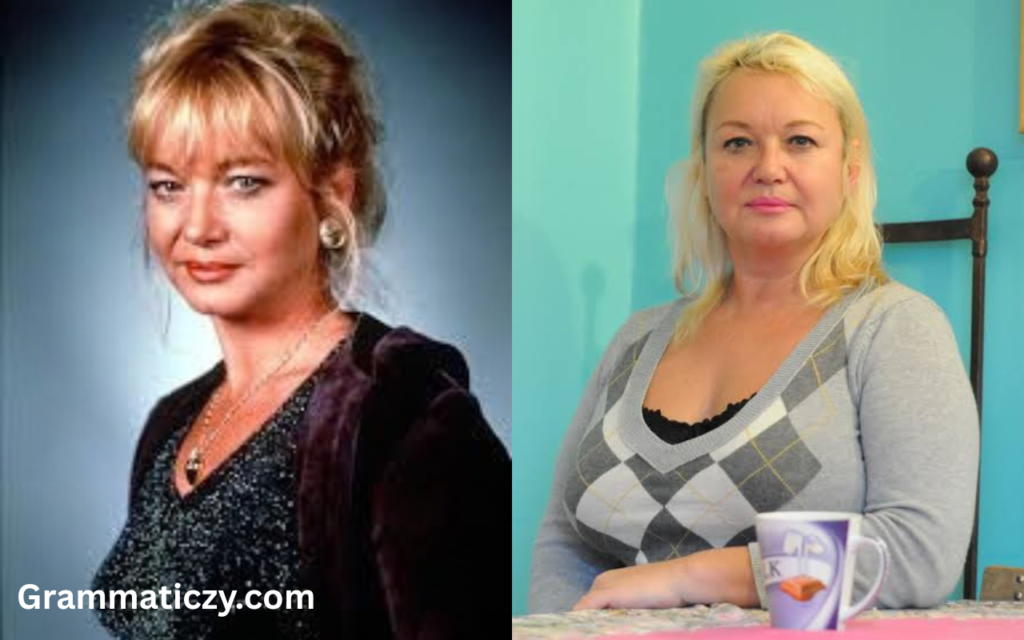
Nicola Duffett has built the kind of acting career that reveals its depth gradually. To many British television viewers, she is instantly recognizable as Debbie Bates from EastEnders or Cat MacKenzie from Family Affairs, yet those two soap roles represent only part of a career that has moved through acclaimed cinema, theatre, television drama and popular continuing series. Born in Portsmouth in 1963, Duffett entered professional acting around the end of the 1980s and has remained active for decades. Her filmography includes the celebrated Merchant Ivory production Howards End, while her later television work has taken her into programmes such as Torchwood, Collateral, Deep Water, Endeavour, Agatha Raisin and Coronation Street.
What makes Nicola Duffett’s story particularly interesting is the longevity behind the familiar television roles. She has experienced the unusual trajectory of leaving one iconic soap character behind, creating another memorable soap identity, continuing to work in theatre and film, and then eventually returning to the character that first brought her widespread recognition. Her brief EastEnders return in December 2025, roughly 30 years after Debbie Bates was killed off, demonstrated just how strongly some television characters can remain connected with audiences and the history of a long-running programme.
Nicola Duffett at a Glance
| Fact | Details |
|---|---|
| Full name | Nicola T. P. Duffett |
| Born | 22 January 1963 |
| Age | 63 in 2026 |
| Birthplace | Portsmouth, Hampshire, England |
| Nationality | British |
| Profession | Actress |
| Years active | Late 1980s/1990 onward |
| Best known for | Debbie Bates in EastEnders and Cat MacKenzie in Family Affairs |
| Notable film | Howards End |
| Other notable work | Torchwood, Collateral, Deep Water, Endeavour, Coronation Street |
| Children | Public biographical sources report three |
| Parents | Public biographies identify her father as Jack Duffett and mother as Susie |
| Sister | Kim is identified in biographical databases |
| Net worth | No reliable publicly verified figure |
| Official social media | No clearly verified major public account established from reliable sources |
Early Life and Family Background
Nicola T. P. Duffett was born on 22 January 1963 in Portsmouth, Hampshire, England. Portsmouth is a city with a particularly strong naval identity, and that background was reflected in Duffett’s own family history. Public biographical sources identify her father as Jack Duffett, while other records identify her mother as Susie and a sister named Kim. However, detailed information about her childhood is relatively limited compared with the extensive documentation of her professional career.
An especially interesting part of Duffett’s childhood was her family’s connection with Malta. A profile published by The Times of Malta reported that her father served in the British Navy and was posted to Malta during the late 1970s. Duffett spent time there during her teenage years, giving her an experience that was quite different from the conventional image of a British acting career beginning and developing entirely within the United Kingdom. Her memories of Malta remained significant enough for her to discuss them publicly years later.
Acting, however, eventually became the defining direction of Duffett’s professional life. While detailed records of her formal education and specialist acting training are not widely available from authoritative sources, biographical databases place her first professional screen appearances around 1989. ElCinema, for example, identifies her debut as an appearance in the miniseries Shadow of the Noose.
The Beginning of Nicola Duffett’s Acting Career
Duffett’s early career developed at a time when British actors could move between television drama, film, theatre and continuing series. Rather than becoming famous overnight through one blockbuster production, she accumulated experience through individual performances and supporting roles. This gradual progression would become a defining feature of her career.
One of her earliest important film opportunities arrived with Howards End, James Ivory’s 1992 adaptation of E. M. Forster’s novel. Duffett played Jacky Bast, the mistress of Leonard Bast, in a production featuring Anthony Hopkins, Emma Thompson, Helena Bonham Carter and Vanessa Redgrave. The film became a major critical and awards success, receiving nine Academy Award nominations and winning three Oscars, including Best Actress for Emma Thompson.
Being part of Howards End was therefore an important early milestone. Duffett was not the film’s central star, but the production placed her within an exceptionally respected piece of British cinema. The role also demonstrated something that would continue throughout her career: she was comfortable contributing to ensemble productions in which character actors helped establish the wider emotional and social world of a story.
Nicola Duffett in EastEnders
For television audiences, Nicola Duffett’s breakthrough came with EastEnders. She played Debbie Bates, a character who became romantically involved with Nigel Bates, portrayed by Paul Bradley. Duffett’s original run lasted from 1993 to 1995, and the role became one of the most recognizable parts of her career. TVMaze lists 132 episodes for her EastEnders appearances, including her later return in 2025.
Debbie’s storyline eventually took a tragic turn. She married Nigel in 1994, but her life was cut short when she was killed in a hit-and-run accident in 1995. The storyline gave Duffett’s character a definitive ending, which also meant that the actress moved on to new opportunities rather than remaining permanently tied to Walford.
The importance of Debbie Bates to Duffett’s career became even clearer decades later. In December 2025, EastEnders brought the character back through Nigel’s memories as he experienced the effects of dementia. Duffett reprised the role herself, allowing the programme to connect its current storyline with its 1990s history.
Leaving Debbie Bates Behind
Duffett’s departure from EastEnders represented a significant career transition. Soap actors can become strongly identified with their characters, and leaving a successful programme can involve the challenge of establishing a new professional identity. In Duffett’s case, the next major stage of her career would prove that she was capable of creating another completely different television character.
Her post-EastEnders work allowed her to move away from the image of Debbie Bates. Rather than simply repeating the same type of role, Duffett continued to work across different formats. Her filmography includes Shooting Fish, Food of Love, Spider, Dustbin Baby, Made in Dagenham, Stuart: A Life Backwards and other productions.
This period is important because it shows the breadth of her ambitions as a performer. Duffett was not limited to the world of Albert Square. Her career included cinema, theatre and television, and the variety of those projects helped establish her as a character actress whose identity could extend beyond a single famous soap role.
Family Affairs and Cat MacKenzie
In the late 1990s, Duffett entered another long-running British soap drama, Family Affairs. She became associated with Cat MacKenzie, also known through variations of the character’s name including Cat Matthews and Cat Webb. IMDb records Duffett in 259 episodes of the series between 1999 and 2005.
Cat represented a very different opportunity from Debbie Bates. Instead of simply returning to the type of character audiences already knew, Duffett became central to another continuing drama and developed a new television identity. Family Affairs provided her with years of storylines and the opportunity to explore comedy, relationship drama, conflict and emotional material over an extended period.
The programme ended in December 2005, bringing Duffett’s long association with Cat to a close. By then, she had achieved something valuable in the British television industry: she had become recognizable for more than one major soap role. That distinction helped make her career considerably more varied than a simple EastEnders biography might suggest.
Nicola Duffett’s Theatre Career
Theatre has also been an important part of Duffett’s professional life. Her stage credits include work at established British venues, demonstrating that her experience was not confined to television cameras. Among her theatre work are productions at Chichester Festival Theatre and the Open Air Theatre in Regent’s Park.
Duffett played Titania in A Midsummer Night’s Dream and Helen of Troy in Troilus and Cressida at the Open Air Theatre. She also appeared in Simon Gray’s Simply Disconnected at Chichester Festival Theatre and worked on Coming Up by James Martin Charlton at the Warehouse Theatre. These roles placed her within a theatrical tradition very different from the daily production demands of soap television.
Her theatre work adds another dimension to her reputation as an actress. Performing Shakespeare, in particular, requires control over language, timing, characterisation and physical performance. For an actress primarily remembered by many viewers for television soaps, these stage credits reveal a considerably wider professional range.
Film Career Beyond Howards End
Duffett’s connection with cinema continued after Howards End. Her filmography includes Mad Dogs and Englishmen, Shooting Fish, Food of Love, Spider, Pollyanna, Stuart: A Life Backwards, Dustbin Baby, Made in Dagenham, My Name Is Lenny and other projects.
Her appearance in Made in Dagenham in 2010 is another notable entry in this list. The film, centred on the 1968 Ford sewing machinists’ strike and the campaign for equal pay, featured Duffett as Eileen. The project gave her another opportunity to work within a major British feature film alongside a prominent ensemble cast.
These supporting performances illustrate an important aspect of character acting. A performer does not necessarily need to play the central protagonist to make a production more convincing. Actors such as Duffett contribute texture, personality and realism to the fictional world around the main characters, often making even relatively brief appearances memorable.
Television Roles After Family Affairs
After Family Affairs, Duffett continued building an extensive television résumé. Her credits include Torchwood, The Coroner, Collateral, Deep Water, Endeavour, Agatha Raisin, Waterloo Road, Casualty and Holby City.
Her appearance in Torchwood came in the episode “Random Shoes”, where she played Bronwen Jones. She later appeared as Amy Penketh in The Coroner. These roles demonstrate how Duffett continued to move between genres, from science fiction and mystery to crime and character drama.
In 2018, she appeared in the BBC Two drama Collateral as Alice Stone, while in 2019 she appeared in ITV’s Deep Water as Jackie. TVMaze records three episodes of Deep Water for her and two episodes of Collateral.
Coronation Street and Lucie Fernsby
Duffett later became part of another major British soap when she appeared in Coronation Street as Lucie Fernsby. The role connected her to the storyline involving Yasmeen Metcalfe and the aftermath of Yasmeen’s abusive relationship with Geoff Metcalfe. Her character served as a supportive presence during Yasmeen’s time in prison.
The casting was another example of Duffett’s ability to enter established television worlds without relying on the character identity that had originally made her famous. She had already demonstrated this with Family Affairs, and Coronation Street added another major British soap to her résumé.
Interestingly, Duffett had previously appeared on Coronation Street in another role. Her later appearance as Lucie Fernsby therefore represented a return to the programme rather than her first connection with it. This kind of repeated involvement is not unusual for experienced British character actors, particularly those with long careers across television drama.
Personal Life and Family
Nicola Duffett has generally kept her private life less prominent than her professional work. Public biographical databases report that she has three children and have linked her romantically or matrimonially with Andrew C. Easton, Ian Henderson and Shane Williams. Because these details come from secondary biographical databases rather than extensive recent interviews with Duffett herself, they are best treated as publicly reported biographical information rather than a complete account of her private life.
Her family history has nevertheless surfaced in interviews. Her father’s naval career and the family’s connection with Malta were subjects she discussed publicly, providing a rare glimpse into the environment surrounding her early years.
The available public record suggests that Duffett has maintained a distinction between her professional visibility and her personal life. While audiences have followed her characters for decades, relatively little of her everyday life has been turned into celebrity media content. That makes her career more notable for the work itself than for constant personal publicity.
Nicola Duffett’s Acting Style and Career Longevity
One of the strongest characteristics of Duffett’s career is adaptability. Her résumé moves from period cinema to British soap opera, Shakespearean theatre, modern television drama and guest appearances in genre programmes. This range is reflected in the diversity of productions attached to her name, including Howards End, EastEnders, Family Affairs, Torchwood, Collateral and Deep Water.
Long-term television acting requires a different kind of endurance from a short film project. Soap performers frequently work under intense production schedules, learn scripts quickly and maintain character continuity across hundreds of episodes. Duffett’s 259 credited Family Affairs episodes and 132 EastEnders episodes illustrate the scale of her continuing-drama experience.
Her career also demonstrates that professional reinvention can happen without abandoning one’s earlier achievements. Debbie Bates remained part of her public identity, but Duffett went on to create Cat MacKenzie and then a succession of different characters. Her later return to EastEnders did not erase that evolution; instead, it connected different chapters of her career.
Nicola Duffett’s Return to EastEnders in 2025
One of the biggest recent moments in Duffett’s career came in December 2025, when she returned to EastEnders as Debbie Bates. The character appeared as part of Nigel Bates’ storyline as his dementia symptoms intensified and his memories increasingly transported him back into the past.
The episode aired on 23 December 2025 and featured Debbie alongside other characters from Nigel’s memories. According to the reported storyline, Debbie and Nigel slow-danced in the Queen Vic, creating an emotional link between Nigel’s present circumstances and his earlier life.
The return was significant because Debbie had originally died in 1995. Rather than changing the established history of the character, the programme used memory and imagination to bring her back. This allowed Duffett to revisit one of the most important roles of her career without undoing the original storyline.
Net Worth and Sources of Income
There is no reliable, publicly verified figure for Nicola Duffett’s current net worth. Numerous celebrity websites publish estimated fortunes for actors, but these numbers are generally not supported by audited financial statements, verified tax information or direct disclosures from the individual. It would therefore be misleading to present a specific dollar or pound amount as fact.
Duffett’s professional income has principally been connected with acting across television, film and theatre. Her résumé includes long-running television contracts, individual drama appearances, feature films and stage productions. IMDb also identifies her as a producer, although acting remains the central occupation associated with her public career.
The length of her career clearly represents substantial professional experience, but career longevity alone cannot establish personal wealth. Salaries, residual payments, property holdings, investments and other financial arrangements are generally private. For that reason, a responsible biography should distinguish documented employment from speculative celebrity net-worth calculations.
Social Media and Public Profile
Nicola Duffett does not appear to have a clearly verified and widely documented official Instagram, X/Twitter or LinkedIn presence in the principal sources reviewed for her biography. There are social-media accounts that may use her name, but without reliable verification it would be inappropriate to identify them as belonging to the actress.
This relatively limited digital footprint contrasts with the modern celebrity model in which actors frequently maintain highly visible personal accounts. Duffett’s public identity has instead been built largely through her performances and through interviews or coverage connected with individual productions.
For readers searching for “Nicola Duffett Instagram” or “Nicola Duffett social media,” caution is therefore important. A similarly named account should not automatically be assumed to belong to the actress simply because its username appears plausible.
Awards, Recognition and Professional Achievements
Duffett does not have a publicly documented career dominated by major individual acting awards. Her recognition has instead come through sustained employment and memorable performances in significant British productions. Her association with EastEnders and Family Affairs remains central to her television legacy, while her film and theatre work demonstrates the breadth of her professional achievements.
Her involvement in Howards End is particularly notable because the film itself became a landmark Merchant Ivory production. The British Film Institute describes it as a major adaptation of E. M. Forster’s novel, while production material records its multiple Academy Award successes. Duffett’s role as Jacky Bast placed her within a film that has retained a strong reputation decades after its release.
Her television legacy is perhaps even more personal. Debbie Bates became sufficiently memorable that EastEnders brought Duffett back to the character three decades later. That kind of return illustrates the lasting cultural presence that long-running British television can create for both characters and performers.
Nicola Duffett’s Career Legacy
Looking across Nicola Duffett’s career, the central theme is versatility. She has not followed a single straight path from one television series to another. Instead, her work has repeatedly shifted between film, theatre, soap opera and television drama, allowing her to develop a broad body of character work.
Her two major soap roles provide a useful illustration of this evolution. Debbie Bates and Cat MacKenzie were very different characters, and Duffett successfully became associated with both. The fact that viewers remember both roles demonstrates that her television career cannot be reduced to a single performance.
Her continuing work also shows the value of persistence in acting. Film and television careers rarely move in a perfectly predictable upward line. There are periods of major exposure, quieter supporting roles, theatre work and unexpected returns. Duffett’s career encompasses all of these phases while maintaining a connection with British audiences.
Conclusion
Nicola Duffett’s journey through British entertainment is a story of longevity, reinvention and versatility. From her early screen work and her role in the acclaimed Howards End to her breakthrough as Debbie Bates in EastEnders, she established herself as a performer capable of moving comfortably between different worlds. Her years as Cat MacKenzie in Family Affairs then gave her another major television identity, while later appearances in Torchwood, Collateral, Deep Water, Endeavour, Agatha Raisin and Coronation Street continued to expand her résumé.
Perhaps the most fitting chapter in her recent story was the 2025 return to EastEnders. Three decades after Debbie Bates’ original story ended, Duffett once again appeared as the character, this time within Nigel Bates’ memories as his dementia storyline unfolded. The return connected the actress’s present with one of the earliest major chapters of her television career and demonstrated how enduring television characters can remain.
Nicola Duffett’s career ultimately offers a valuable lesson about the nature of creative work. Recognition can come from one role, but longevity comes from continuing to learn, adapt and accept new challenges. Her journey from Howards End to EastEnders, Family Affairs, theatre, contemporary television drama and eventually back to Debbie Bates shows how an actor can evolve without losing the connection to the performances that first captured an audience’s attention. As her body of work continues to be rediscovered by new viewers, Nicola Duffett’s story remains a reminder that perseverance and versatility can create a lasting place in the history of British television and film.