Clementine Churchill Biography: The Extraordinary Life of Winston Churchill’s Wife, Humanitarian, and Political Confidante
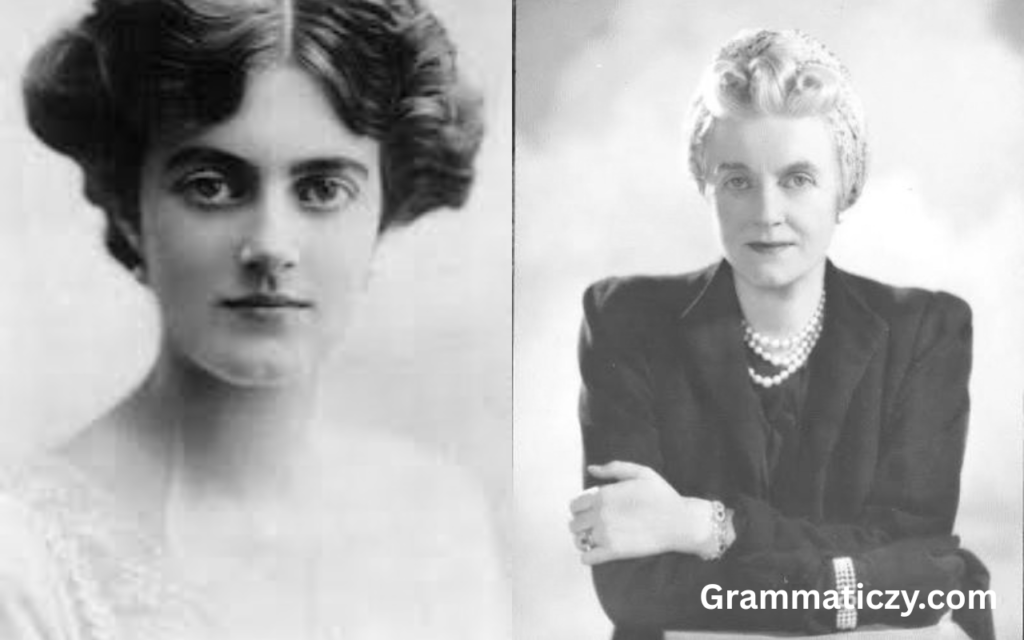
Clementine Churchill lived in the shadow of one of the most famous political figures of the twentieth century, yet her own life was remarkable enough to stand independently. Born Clementine Ogilvy Hozier in London in 1885, she grew up amid family uncertainty, developed a strong intellectual character, and eventually became the wife and trusted confidante of Winston Churchill. Their marriage lasted from 1908 until Winston’s death in 1965, spanning two world wars, political crises, personal tragedies, and enormous changes in British society.
What makes Clementine’s story especially compelling is that she was not simply a political wife who remained behind the scenes. She developed an important public role through charitable and humanitarian work, particularly during the two World Wars. During the First World War, she helped organise canteens for munitions workers. During the Second World War, she chaired the British Red Cross Aid to Russia Fund, a campaign that eventually raised millions of pounds and sent huge quantities of medical and other supplies to the Soviet Union.
Her correspondence also reveals a woman who could be affectionate without being submissive. Clementine advised Winston, criticised him when necessary, managed aspects of family life and Chartwell, and maintained her own interests and public responsibilities. The Churchill Archives Centre preserves extensive collections of her correspondence, photographs and papers, providing an unusually detailed record of her life.
Clementine Churchill Facts and Personal Details
| Detail | Information |
|---|---|
| Full Name | Clementine Ogilvy Hozier |
| Married Name | Clementine Spencer-Churchill |
| Born | April 1, 1885 |
| Birthplace | Grosvenor Street, London, England |
| Died | December 12, 1977 |
| Age at Death | 92 |
| Father | Sir Henry Montague Hozier |
| Mother | Lady Henrietta Blanche Ogilvy |
| Husband | Winston Churchill |
| Marriage Date | September 12, 1908 |
| Children | Diana, Randolph, Sarah, Marigold, and Mary |
| Profession | Humanitarian, charity organiser, public figure |
| Major Humanitarian Role | Chairman, Red Cross Aid to Russia Fund |
| Major Honour | Dame Grand Cross of the Order of the British Empire |
| Life Peerage | Baroness Spencer-Churchill of Chartwell |
| Net Worth | No reliable historical figure establishes an exact personal net worth |
| No personal account | |
| X/Twitter | No personal account |
| No personal account |
Clementine was born at 75 Grosvenor Street in London on April 1, 1885. Genealogical records identify her as the daughter of Colonel Sir Henry Montague Hozier and Lady Henrietta Blanche Ogilvy. She later became Clementine Spencer-Churchill after marrying Winston Churchill in 1908.
It is important to treat modern celebrity-style information about Clementine with caution. She lived decades before the internet and social media, so there are no authentic personal Instagram, Facebook, X or LinkedIn profiles belonging to her. Likewise, websites that publish an exact contemporary “net worth” figure are generally presenting an estimate rather than a figure established by reliable historical financial records.
Her historical significance instead comes from her humanitarian service, family correspondence, public responsibilities and relationship with Winston Churchill. The Churchill Archives Centre specifically identifies Clementine’s papers as an important source for understanding both her own busy life and the relationship between the two Churchills.
Early Life and Family Background
Clementine’s childhood was considerably more complicated than the glamorous surroundings of her aristocratic connections might suggest. Her mother, Lady Henrietta Blanche Ogilvy, came from the family of the Earl of Airlie, while her father, Sir Henry Hozier, had a military background. When Clementine was still young, her parents separated, leaving her mother responsible for Clementine and her siblings under difficult financial circumstances.
The instability of her early home life appears to have had an important effect on Clementine’s character. She experienced periods in which the family’s financial situation was far removed from the comfortable image associated with Britain’s upper classes. Sources describing her upbringing in England and France emphasise the contrast between her aristocratic family connections and the practical difficulties she experienced during childhood.
This background helps explain why Clementine later developed such a strong interest in social welfare and practical humanitarian work. She had personally experienced uncertainty and understood that social position did not automatically guarantee security. Her early experiences became part of the foundation for a woman who would eventually devote significant energy to helping people affected by war.
Education and Intellectual Development
Clementine was educated initially by governesses before attending Berkhamsted Girls’ School in Hertfordshire. She also studied in Paris at the Sorbonne and became well educated in European languages and culture. Historical sources describe her as well read and fluent in French and German, abilities that broadened her outlook beyond British society.
Her education was especially significant because women of her generation faced considerably narrower educational and professional expectations than women in Britain today. Clementine developed an intellectual curiosity that extended beyond conventional social accomplishments. She became interested in politics, international affairs and social questions, subjects that later became central to her life alongside Winston.
Her time in France was also important in developing her independence. Moving between countries and social environments exposed her to different cultures and ways of thinking. Rather than simply preparing for marriage and domestic life, her education gave her a broader understanding of the world at a time when Europe itself was moving toward enormous political transformation.
Meeting Winston Churchill
Clementine and Winston Churchill first met in 1904, but their relationship did not immediately develop into a romance. Their decisive second meeting occurred in 1908 at a dinner party, where they were seated together. Winston, who was already an established politician, was impressed by Clementine’s intelligence and personality as well as her appearance.
Their courtship was surprisingly brief. After getting to know each other through social occasions and correspondence, Winston proposed to Clementine at Blenheim Palace in August 1908. She accepted, and the couple married on September 12, 1908, at St Margaret’s Church in Westminster.
The marriage created one of the most consequential partnerships in modern British political history. Winston would eventually become prime minister and Britain’s wartime leader, while Clementine developed into a trusted private adviser and public humanitarian. Their personalities were very different, but that difference often strengthened rather than weakened their relationship.
Marriage to Winston Churchill
Clementine and Winston Churchill remained married for 56 years. Their relationship was affectionate but certainly not free of arguments. Winston was famously ambitious and strong-willed, while Clementine could be equally firm when she believed something needed to be said. The National Trust describes her as private but far from timid and notes that she was willing to stand up to her husband during disagreements.
Their surviving correspondence gives historians a particularly valuable window into their relationship. The Churchill Archives Centre preserves letters exchanged between Clementine and Winston from the beginning of their engagement through much of their marriage. These documents demonstrate that their relationship was not simply a public partnership but an ongoing private conversation involving affection, political concerns, family matters and criticism.
Winston himself recognised the importance of Clementine to his life. According to the National Trust, he acknowledged that Clementine had helped make his life and work possible. She was therefore not merely an observer of his political career. She was one of the people closest to him, and her judgement sometimes offered a perspective that differed from the advice he received from political colleagues.
Children and Family Life
Clementine and Winston had five children: Diana, Randolph, Sarah, Marigold and Mary. Their family life contained periods of happiness but also extraordinary tragedy. Their third daughter, Marigold, died from septicaemia in 1921 at only three years old, a devastating loss for both parents.
Their children grew into very different personalities and careers. Randolph became a writer and politician, Sarah became an actress, and Mary eventually played an important role in preserving and explaining the Churchill family legacy. Mary married Christopher Soames, who later had a notable parliamentary and diplomatic career.
Clementine’s family responsibilities were particularly demanding because Winston’s political career often consumed enormous amounts of his time. Chartwell became an important family environment, and Clementine’s papers contain material relating not only to her personal correspondence but also to the management of the Churchill household and estate.
Clementine Churchill During the First World War
The First World War gave Clementine an opportunity to demonstrate organisational abilities that would later become one of the defining features of her public life. She became involved in organising canteens for munitions workers through wartime welfare efforts associated with the YMCA.
Her work placed her in direct contact with people whose lives were being transformed by industrial warfare. Munitions production was essential to Britain’s military effort, and workers in factories faced exhausting conditions and significant risks. Welfare facilities such as canteens were therefore more than social conveniences; they provided practical support to a workforce operating under enormous pressure.
The First World War also created difficulties for Winston Churchill after the Gallipoli campaign. Clementine’s role was not simply to comfort him privately. The National Trust records that she advised him to serve in the trenches after the political consequences of Gallipoli. This illustrates the unusual combination of personal loyalty and independence that characterised their marriage.
Her Humanitarian Work During the Second World War
The Second World War became the defining period of Clementine Churchill’s humanitarian career. While Winston Churchill was leading Britain through the war, Clementine developed her own extensive programme of public service. She worked with organisations connected with women’s welfare and maternity services and became involved in the Young Women’s Christian Association wartime appeal.
Her most significant responsibility came in 1941 when she became chairman of the British Red Cross Aid to Russia Fund. The campaign was created after Germany invaded the Soviet Union, and Britain sought to provide humanitarian assistance to the Soviet population. Clementine became one of the campaign’s most prominent public advocates.
The scale of the campaign was remarkable. Churchill Archives Centre records that the fund raised more than £1 million by Christmas 1941 and ultimately reached £7.5 million by June 1947. During its first 14 months, almost 300,000 tons of supplies were sent to Russia, including drugs, X-ray units, surgical equipment, blankets and clothing.
Building the Aid to Russia Fund
Clementine’s success depended heavily on her ability to communicate with very different sections of British society. The fund attracted contributions from wealthy donors, public figures, ordinary workers and schoolchildren. This broad participation transformed the campaign into a national humanitarian effort rather than a narrowly elite charity project.
One particularly interesting feature of her work was the personal attention she attempted to give to donors. Churchill Archives Centre notes that Clementine tried to acknowledge contributions personally, resulting in thousands of letters and reproduced versions of her thank-you messages. These documents survive in the archives today and provide tangible evidence of the enormous scale of the public response.
The campaign also required Clementine to operate within complicated international circumstances. Aid to the Soviet Union had humanitarian significance, but it also existed within the larger Allied struggle against Nazi Germany. Her work therefore connected charity, international relations, public communication and wartime logistics in a way that was highly unusual for a woman outside formal government office.
Clementine Churchill’s Visit to the Soviet Union
In 1945, Clementine travelled to the Soviet Union to see the results of the humanitarian programme she had helped organise. The trip demonstrated how far her public role had expanded. She was no longer simply raising money in Britain; she was personally visiting the country that had received the aid.
During her visit, Clementine met Joseph Stalin in Moscow. Churchill Archives Centre records a note of their April 7, 1945 meeting, which lasted approximately 20 minutes and took place in Stalin’s Kremlin office. The meeting reflected the unusual diplomatic access created by her humanitarian position.
Her humanitarian service was formally recognised by the Soviet Union when she received the Order of the Red Banner of Labour. She also received recognition connected with the Soviet Red Cross, while her British wartime work later contributed to her being made a Dame.
Clementine Churchill as Winston Churchill’s Adviser
One of Clementine’s most important but difficult-to-measure contributions was the advice she gave Winston privately. She did not have an official political office, but her position gave her access to conversations and circumstances that allowed her to observe his behaviour closely. She could therefore offer him a perspective that political colleagues might not provide.
During the Second World War, for example, Clementine criticised Winston when she believed his treatment of colleagues had become too harsh. Historical accounts preserve examples of her warning him that being excessively sarcastic or overbearing could damage his relationships with subordinates.
This relationship reveals something important about Clementine’s personality. Loyalty did not mean unquestioning agreement. She could support Winston’s larger goals while still challenging his behaviour. That combination of affection and independence became one of the most distinctive features of their marriage.
Awards, Honours, and Public Recognition
Clementine’s humanitarian activities brought her several important honours. Her wartime service was recognised through British honours, and after the Second World War she was appointed a Dame. The International Churchill Society notes that she was particularly associated with recognition for her Aid to Russia work.
Her Soviet recognition was equally notable. The Order of the Red Banner of Labour reflected the Soviet government’s appreciation for the humanitarian assistance organised through the fund. Clementine’s 1945 visit therefore became both a personal milestone and an international recognition of her charitable work.
In 1965, after Winston Churchill’s death, Clementine was created Baroness Spencer-Churchill of Chartwell and entered the House of Lords as a life peer. She sat as a crossbencher, although declining health and increasing deafness limited her regular parliamentary participation.
Clementine Churchill’s Later Life
Winston Churchill died on January 24, 1965, ending a marriage that had lasted more than half a century. For Clementine, his death meant not only the loss of her husband but also the end of an extraordinary personal partnership that had shaped almost seven decades of her life.
She nevertheless continued to live within the historical world that the two of them had created. Her life peerage formally recognised her own public standing, while Chartwell and the Churchill archives remained closely associated with the family’s history. Her papers continued to preserve evidence of her own activities rather than simply Winston’s career.
Her later years were not financially effortless. Historical accounts indicate that she eventually sold several of Winston’s paintings to help support herself. This is one reason an exact modern-style “Clementine Churchill net worth” figure is misleading: her financial circumstances changed over time and are better understood through historical records than through speculative celebrity wealth estimates.
Clementine Churchill’s Death
Clementine Churchill died on December 12, 1977, at the age of 92. She died at her London home at 7 Princes Gate, bringing to an end a life that had stretched from the late Victorian era into the modern age.
Her death came almost thirteen years after Winston Churchill’s passing. By then, she had outlived several members of her immediate family and had experienced an extraordinary combination of public recognition and personal grief. Her later years therefore reflected both the endurance of the Churchill legacy and the losses that accompanied it.
Clementine was ultimately buried at St Martin’s Church in Bladon near Woodstock, close to Blenheim Palace. Her final resting place connects her once again with the Churchill family history, but the surviving evidence of her own correspondence and humanitarian activities ensures that her identity is not limited to being Winston Churchill’s wife.
Clementine Churchill’s Legacy
Clementine Churchill’s legacy rests on several different achievements. She was a wife, mother, political confidante, organiser, humanitarian and public figure. Each of those roles contributed something different to twentieth-century British history, and together they explain why historians continue to study her life.
Her Red Cross Aid to Russia Fund remains perhaps her clearest independent public achievement. Raising millions of pounds during wartime and helping organise enormous quantities of humanitarian supplies required persistence, communication skills and organisational ability. Churchill Archives Centre’s records show the extraordinary scale of the campaign and the personal effort Clementine invested in it.
Her surviving letters may ultimately be just as important as her public honours. They reveal the private woman behind the public image: affectionate, intelligent, occasionally frustrated, politically aware and willing to challenge the man beside her. The Churchill Archives Centre continues to preserve these records, allowing future generations to examine Clementine’s life in her own documentary context.
Final Thoughts on Clementine Churchill
Clementine Churchill’s life cannot be reduced to a simple description of “Winston Churchill’s wife.” She entered marriage with an already-developed personality, education and worldview, and over the following decades she built a substantial record of public service. Her humanitarian work during two world wars demonstrated that she could turn personal determination into practical results on an international scale.
Her relationship with Winston was equally distinctive. She supported him through some of the most difficult moments of his political career, but she was not afraid to challenge him when she believed he was behaving badly or making a mistake. Their surviving correspondence provides evidence of a relationship based on affection, disagreement, trust and mutual dependence.
Perhaps the most enduring lesson from Clementine Churchill’s journey is that influence does not always require a formal title or an official position. She operated largely outside elected political office, yet her humanitarian campaigns, personal counsel and wartime service left a lasting historical record. Her story is a reminder that resilience can grow from difficult beginnings, that service can take many forms, and that a person can contribute meaningfully to history without always standing at the centre of the photograph.