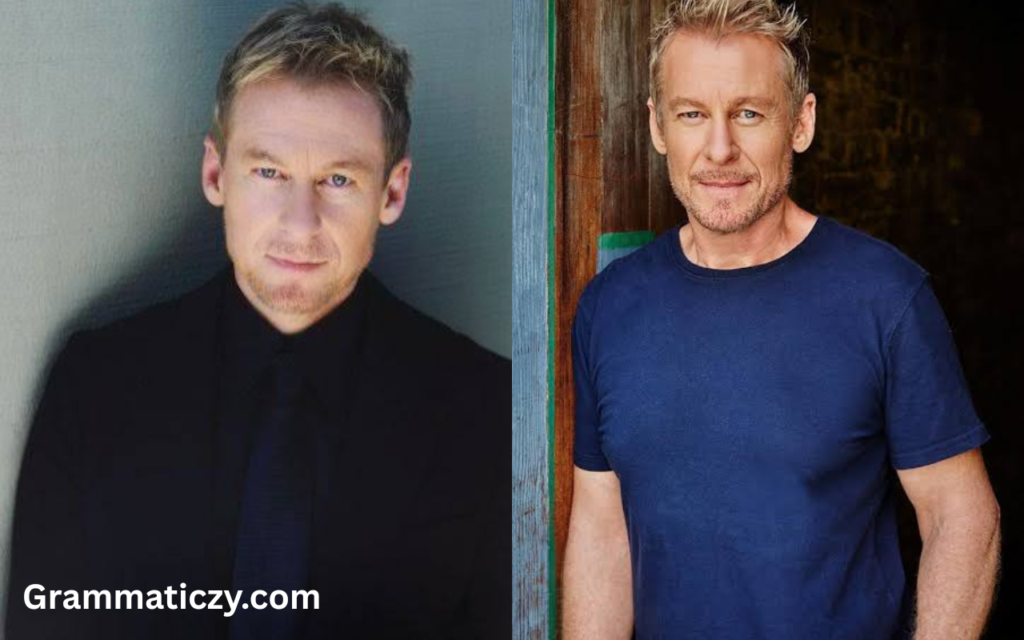
Richard Roxburgh is one of those rare actors whose career cannot be defined by a single famous role. To international audiences, he may be remembered as the flamboyant Duke in Moulin Rouge!, Count Dracula in Van Helsing, or a villain in Mission: Impossible 2. Australian audiences, however, know him just as strongly for his theatre work, Blue Murder, Rake, Hawke, and his many other television and stage performances. Behind those recognizable characters is an actor whose career was built on serious theatrical training, persistence, versatility, and a willingness to move between very different forms of storytelling.
Roxburgh’s journey is particularly compelling because acting was not his original career plan. He studied economics at the Australian National University before changing direction and entering the National Institute of Dramatic Art, commonly known as NIDA. He was accepted on his second attempt, graduated in 1986, and soon began working with the Sydney Theatre Company. From there, his career expanded from Australian theatre and television into international cinema, directing, writing, and major stage productions.
Richard Roxburgh Quick Facts
| Fact | Details |
|---|---|
| Full Name | Richard Roxburgh |
| Date of Birth | January 23, 1962 |
| Age | 64 years old in 2026 |
| Birthplace | Albury, New South Wales, Australia |
| Nationality | Australian |
| Profession | Actor, director, writer and producer |
| Education | Australian National University; National Institute of Dramatic Art |
| Father | John Roxburgh |
| Mother | Mary Roxburgh |
| Siblings | Youngest of six children |
| Wife | Silvia Colloca |
| Marriage | 2004 |
| Children | Three children are widely reported |
| Best Known For | Rake, Moulin Rouge!, Van Helsing, Mission: Impossible 2, The League of Extraordinary Gentlemen |
| Famous TV Character | Cleaver Greene in Rake |
| Notable Stage Roles | Hamlet, Estragon in Waiting for Godot, Cyrano de Bergerac, Marc in Art |
| Net Worth | Public estimates vary; no independently verified figure is available |
| Current Work | Film, television and theatre projects, including Careless |
| Social Media | No clearly verified major personal social-media account established in the reliable sources reviewed |
Early Life and Family Background
Richard Roxburgh was born in Albury, New South Wales, Australia, in 1962. He grew up as the youngest of six children in a family environment far removed from the glamorous world of international entertainment. His father, John Roxburgh, worked as an accountant, and his mother was Mary Roxburgh. Growing up in a large family helped give him an early experience of different personalities and relationships, something that would later become valuable in his acting career.
Roxburgh’s interest in performance developed while he was young. Theatre gradually became more than a casual interest, and his early exposure to acting eventually encouraged him to think seriously about performing as a profession. His path was not completely straightforward, however. Rather than immediately entering drama school, he first went to university and pursued economics, following a more conventional academic direction.
That early academic choice is an important part of Richard Roxburgh’s biography because it demonstrates how dramatically his professional ambitions eventually changed. He completed a Bachelor of Economics at the Australian National University in 1984 before deciding that acting was where his real interests lay. Instead of remaining on the career path he had initially chosen, he took the considerable risk of starting again in a highly competitive profession.
Education and NIDA Training
After university, Roxburgh auditioned for Australia’s National Institute of Dramatic Art. His first attempt was unsuccessful, but he returned for a second audition and gained admission. He graduated from NIDA in 1986, an achievement that became the foundation for one of Australia’s most enduring acting careers. His experience is a useful reminder that rejection at an early stage does not necessarily predict the outcome of a career.
NIDA’s rigorous theatrical training became particularly important because Roxburgh would eventually move comfortably between classical theatre, Australian television, Hollywood blockbusters and contemporary drama. In later discussions about his career, he has acknowledged that the training he received at NIDA continued to influence his craft long after graduation. His education was therefore not simply a qualification but a lasting influence on how he approached performance.
Immediately after NIDA, Roxburgh entered professional theatre and began working with the Sydney Theatre Company. The Sydney Theatre Company notes that his first professional role with the company came in 1987, when he appeared in Pericles. That early stage experience gave him a platform from which he could develop his reputation as a serious dramatic actor before his film career became internationally known.
Beginning of His Acting Career
Roxburgh’s early professional career involved a combination of theatre and screen work. Rather than becoming famous overnight, he gradually established himself through Australian productions and stage performances. His work with the Sydney Theatre Company and Belvoir St Theatre allowed him to tackle demanding dramatic material and work alongside some of Australia’s most respected performers.
One of the major early highlights came in 1994, when Roxburgh played Hamlet in a celebrated production at Sydney’s Belvoir St Theatre. The production featured Cate Blanchett as Ophelia and Geoffrey Rush as Horatio, placing Roxburgh among a remarkable group of Australian theatrical talent. His performance further established his reputation as an actor capable of carrying major classical roles.
His television breakthrough followed soon afterward. In the 1995 miniseries Blue Murder, Roxburgh portrayed real-life New South Wales police detective Roger Rogerson. The role brought him major critical attention and helped establish him as a powerful screen actor. His performance won both an Australian Film Institute Award and a Logie Award, marking an important transition from respected theatre performer to nationally recognized television star.
Breakthrough With Blue Murder
Blue Murder became one of the defining early projects in Richard Roxburgh’s career because it demonstrated how effectively he could transform himself into a complex real-world character. Playing Roger Rogerson required more than delivering dialogue convincingly; it required Roxburgh to create a believable personality around a controversial and morally complicated figure.
The success of the miniseries helped audiences recognize Roxburgh as an actor capable of handling darker and more serious material. His performance was not based on traditional heroic qualities. Instead, he was portraying a deeply complicated character, something that would become a recurring feature of his career.
The acclaim surrounding Blue Murder also helped open doors to significant film opportunities. Roxburgh continued working in Australian cinema throughout the 1990s, appearing in films such as Thank God He Met Lizzie, Oscar and Lucinda, In the Winter Dark, and Doing Time for Patsy Cline. His performance in Doing Time for Patsy Cline earned him another AFI Award for Best Actor.
Hollywood Movies and International Fame
The next major transformation in Richard Roxburgh’s career came when Hollywood began to recognize his talent. In 2000, he appeared in John Woo’s Mission: Impossible 2, starring alongside Tom Cruise. Roxburgh played Hugh Stamp, giving international audiences one of their first major opportunities to see him in a Hollywood action blockbuster.
Only a year later, he appeared in Baz Luhrmann’s visually extravagant Moulin Rouge!. Roxburgh played the Duke of Monroth opposite Nicole Kidman and Ewan McGregor. His performance required a different kind of screen presence from his earlier crime dramas, combining theatrical arrogance, romantic obsession and villainous intensity.
Roxburgh then entered a particularly memorable period in his international career. He played Sherlock Holmes in The Hound of the Baskervilles, Professor Moriarty in The League of Extraordinary Gentlemen, and Count Dracula in Van Helsing. The unusual sequence meant that Roxburgh portrayed three iconic literary characters associated with the same Victorian-era fictional universe across different productions.
Count Dracula and Memorable Villain Roles
For many international moviegoers, Richard Roxburgh remains particularly recognizable as Count Dracula in Van Helsing. The 2004 film gave him the opportunity to embrace a much larger-than-life performance, combining horror, theatricality and dark humor. Rather than playing Dracula as a quiet or restrained villain, Roxburgh brought an energetic and flamboyant quality to the character.
His success in villainous roles was not simply a coincidence. Roxburgh possesses a theatrical presence that allows him to create characters who can dominate a scene even when they are not physically aggressive. His voice, expressions, posture and timing all contribute to a distinctive screen presence, making him particularly effective in roles that require authority or menace.
At the same time, Roxburgh never allowed Hollywood villainy to become the entire definition of his career. He continued returning to Australian theatre and television, where he could work on more intimate and character-focused projects. That balance between commercial cinema and serious performance work became one of the most important characteristics of his professional life.
Directing Romulus, My Father
Richard Roxburgh expanded his creative career when he moved behind the camera to direct Romulus, My Father. Released in 2007, the film was based on Raimond Gaita’s memoir and starred Eric Bana. It was a major opportunity for Roxburgh to demonstrate that his storytelling abilities extended beyond acting.
The film was highly regarded in Australia and won multiple awards. The ABC’s Rake biography describes Romulus, My Father as a major achievement and notes that the film became one of the significant Australian productions associated with Roxburgh’s directing career.
Directing also exposed Roxburgh to a different side of filmmaking. In an ABC interview, he discussed how difficult directing could be and reflected on the compromises involved in bringing a film from script to screen. His comments revealed a filmmaker who understood both the excitement and pressure involved in controlling a large production.
Rake and Cleaver Greene
Perhaps no television role has become more closely associated with Richard Roxburgh than Cleaver Greene in Rake. Roxburgh co-created and produced the Australian comedy-drama and played its central character, a brilliant but self-destructive criminal barrister. The character allowed him to combine many aspects of his performance style: sharp comedy, dramatic intensity, arrogance, vulnerability and emotional unpredictability.
Cleaver Greene was deliberately complicated. He was highly intelligent but frequently irresponsible, professionally gifted but personally chaotic, and capable of both selfish behavior and unexpected compassion. Roxburgh’s performance prevented the character from becoming a simple comedy figure and instead turned him into one of Australia’s most memorable television antiheroes.
The series became a major part of Roxburgh’s professional identity. His performance earned major awards recognition, including the AACTA Award for Best Lead Actor and a Logie Award for Most Outstanding Actor. Rake ultimately ran for four seasons in Australia, continuing until 2016.
Theatre Career and Major Stage Performances
Despite his international film success, theatre has remained central to Richard Roxburgh’s career. His stage work includes major productions of Hamlet, Uncle Vanya, Waiting for Godot, Cyrano de Bergerac and The Present. These roles demonstrate that he has never treated theatre as simply a starting point before moving permanently into film.
His performance as Estragon in Waiting for Godot earned him the Helpmann Award for Best Male Actor in a Play in 2014. It was his second win in that category, following his earlier Helpmann Award for Toy Symphony in 2008.
Another important stage milestone came with The Present, the Sydney Theatre Company production adapted by Andrew Upton. Roxburgh starred alongside Cate Blanchett, and the production transferred to Broadway in New York during the 2016–17 season. The Broadway run demonstrated that his theatre reputation could travel successfully beyond Australia.
Personal Life, Wife and Family
Richard Roxburgh married Italian actress Silvia Colloca in 2004. The couple met while working on Van Helsing, the Hollywood production in which Roxburgh played Count Dracula. Their relationship developed during the production, and they subsequently built a family together.
Roxburgh and Colloca have three children, although they have generally kept their family life away from the intense public attention often associated with celebrity relationships. This relative privacy has allowed Roxburgh’s professional achievements to remain the main focus of his public identity.
His approach to fame is also consistent with his broader personality. In interviews, Roxburgh has spoken critically about aspects of celebrity culture and acknowledged that he can be extremely demanding of himself. Rather than presenting himself as someone who is constantly seeking attention, he has often emphasized the work itself and the relationships developed through real-life interaction.
Personality, Work Ethic and Acting Philosophy
One of the most revealing things about Richard Roxburgh is how seriously he takes his craft. In an ABC interview, he described himself as “terribly hard on myself,” reflecting a tendency toward self-criticism even after achieving considerable professional success. That attitude helps explain why he has continued challenging himself with theatre, television, film and directing rather than settling into one familiar type of role.
His working style appears to be strongly influenced by his theatrical background. Stage acting demands concentration, preparation and the ability to maintain a character without the safety of multiple takes. Those skills have clearly carried over into Roxburgh’s screen performances, particularly when he plays characters with complicated emotional or psychological motivations.
Roxburgh’s career also suggests that he values creative variety. His work includes Shakespearean drama, crime stories, comedy, horror, action films, biographical dramas and television satire. He has also written, produced and directed. That variety has allowed him to remain creatively active for decades while avoiding a career built around one narrow image.
Awards and Professional Recognition
Richard Roxburgh has received significant recognition throughout his career. His early awards success came with Blue Murder, for which he received both an AFI Award and a Logie Award. He subsequently won the AFI Award for Best Actor for Doing Time for Patsy Cline, further strengthening his reputation within Australian cinema.
His television work continued to generate recognition. His portrayal of Bob Hawke earned him another major Australian acting award, while his work in Rake resulted in both AACTA and Logie recognition. His theatre career has been similarly successful, with two Helpmann Awards for Best Male Actor in a Play.
The significance of these awards is that they span different forms of performance. Roxburgh has not built his reputation around only film or only television. Recognition from the theatre community, television industry and Australian film organizations reflects the breadth of his contribution to the performing arts.
Recent Career and Projects
Richard Roxburgh has continued working well into his sixties, demonstrating that his career remains active rather than simply resting on his earlier Hollywood successes. His recent projects have included television, film and stage work, reinforcing the same versatility that has characterized his career since the 1980s.
In 2024, Roxburgh appeared in the Stan thriller series Prosper. He also played journalist Peter Greste in the feature film The Correspondent, directed by Kriv Stenders. The film opened the 2024 Adelaide Film Festival, adding another significant Australian dramatic role to Roxburgh’s recent body of work.
His recent theatre career has also remained strong. In 2026, he starred as Marc in Yasmina Reza’s Art, alongside Damon Herriman and Toby Schmitz. ABC described the production as a new Australian staging of Reza’s acclaimed play, with Roxburgh playing the abrasive Marc at the center of the friendship conflict.
At the same time, Roxburgh has remained connected to screen projects. Channel 4 announced in January 2026 that production had begun on the four-part thriller Careless, a Stan original made in association with Channel 4 and other production partners, with Roxburgh among the leading cast members.
Richard Roxburgh’s Lasting Legacy
Richard Roxburgh’s career is remarkable because it has never followed a single straight line. He began with economics, changed direction toward acting, faced rejection from drama school, entered Australian theatre, became a television star, moved into Hollywood films, directed an acclaimed Australian movie, co-created Rake, appeared on Broadway and continued returning to the stage.
His story also demonstrates the value of refusing to become trapped by an early success. After playing villains in major Hollywood productions, Roxburgh could easily have remained associated primarily with dramatic antagonists. Instead, he continued exploring comedy, biography, literary adaptations, theatre and character-driven television.
Perhaps the most important lesson from his career is that longevity comes from reinvention. Roxburgh’s path from Albury and the Australian National University to NIDA, Sydney Theatre Company, Hollywood, Broadway and contemporary Australian productions shows what can happen when talent is combined with persistence and a willingness to keep developing. As Richard Roxburgh continues to work across film, television and theatre, his journey remains a powerful reminder that rejection does not have to define a person, changing direction can lead to unexpected opportunities, and a lasting career is built one challenging performance at a time.