
Kyran Bracken Biography: The England Rugby Star Who Became a World Cup Winner
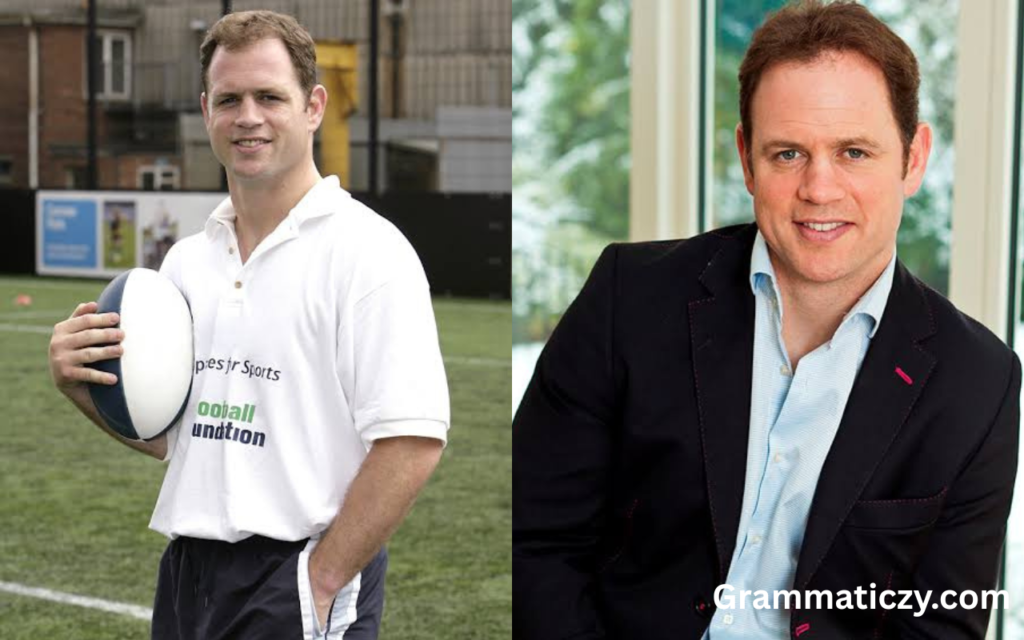
Kyran Bracken’s career is a story of persistence, reinvention and sporting excellence. Born in Dublin and raised in England, he developed from a talented schoolboy athlete into one of England’s most respected scrum-halves, eventually earning 51 international caps and becoming part of the England team that lifted the Rugby World Cup in 2003. His route to that historic achievement was not always smooth. Injuries, fierce competition for the England No. 9 shirt and periods away from the international starting lineup repeatedly tested his determination. Yet Bracken continued to adapt, eventually creating a career that extended far beyond rugby.
What makes Kyran Bracken especially fascinating is what happened after his rugby career. Rather than simply disappearing from public life, he moved into television, motivational speaking, events and charitable work. In 2007, he surprised audiences by winning Dancing on Ice, demonstrating that the discipline and competitive instinct developed during his rugby years could be transferred into a completely different sporting environment. His later life has also remained closely connected to rugby through his sons, with Charlie and Jack developing professional careers of their own.
Kyran Bracken Early Life and Family Background
Kyran Paul Patrick Bracken was born on November 22, 1971, in Dublin, Ireland. Although his birthplace was Ireland, his formative years were spent in England, particularly in Liverpool. This combination of Irish heritage and English upbringing became an interesting part of his identity as he developed into an England international. His sporting environment encouraged competition from an early age, and rugby eventually became the sport through which he would make his name. His official British & Irish Lions profile lists Stonyhurst College in Lancashire among his schools and identifies Bristol, Saracens, Waterloo and the Barbarians among his rugby affiliations.
Sport was clearly part of Bracken’s family environment. His mother, Jane, represented Ireland in hockey, giving him an early example of what competitive sport demanded. Bracken’s own athletic interests were initially broader than rugby, and his early sporting development included football as well. That background helps explain why he became comfortable with competition and physical performance long before professional rugby eventually became his career.
His childhood and teenage years also gave him an important mixture of discipline and opportunity. He attended St Edward’s College and later Stonyhurst College, where rugby became an increasingly important part of his life. The transition from school sport to higher-level rugby was gradual, but Bracken’s determination eventually carried him into university and then into the professional game. His early experiences helped establish the work ethic that would later become essential during difficult periods of his England career.
Education and Academic Ambitions
One of the most interesting aspects of Kyran Bracken’s background is that rugby was not originally his only professional ambition. He studied law at the University of Bristol, and his academic career gave him a potential future outside professional sport. At a time when rugby union was undergoing major changes, having a serious academic qualification was particularly valuable because the professional structure of the game was still developing.
Studying law required concentration, discipline and long-term commitment, qualities that were also highly useful on the rugby field. Bracken eventually qualified as a solicitor, meaning that he had created a conventional professional pathway before rugby became the dominant part of his working life. His later decision not to return to a traditional legal career after retirement demonstrates how dramatically his professional priorities changed.
His academic background also contributed to the versatility that has characterized his life. Bracken was never simply an athlete whose identity disappeared after retirement. His education, communication skills and sporting experience later became useful in public speaking and business events. That ability to combine different skills helped him build a second career rather than treating retirement as the end of his professional journey.
Kyran Bracken Rugby Career Begins at Bristol
Bracken’s senior rugby career began with Bristol, where he played from 1992 until 1996. During those seasons he established himself as a talented scrum-half and began developing the technical qualities required at the highest level. According to the Guardian’s career record, he made 47 appearances for Bristol and scored seven tries.
The scrum-half position demands exceptional awareness. The player must distribute the ball quickly, communicate constantly, read defensive structures and make rapid decisions around the breakdown. Bracken developed a reputation for those qualities while playing club rugby, and Bristol became the foundation from which he eventually reached the England setup.
His rise was particularly significant because rugby union was approaching a major transformation. The professional era was arriving, changing the financial and competitive landscape of the sport. Bracken was therefore developing as a player at exactly the moment when elite rugby was becoming a full-time profession. His move to Saracens in 1996 would place him directly inside that new era.
England Debut and the Challenge of International Rugby
Kyran Bracken made his England debut against New Zealand in 1993. Reaching international rugby was a major achievement, but his introduction to Test rugby was far from comfortable. He suffered a serious ankle injury early in his England career, forcing him to spend time away from the game. Such an injury could have disrupted the progress of a less determined player, but Bracken eventually returned to competition.
International rugby also brought intense competition for the scrum-half position. Bracken frequently found himself competing with other high-quality players, particularly Matt Dawson. Even when he was not England’s automatic first choice, he remained a valuable member of the squad because of his experience and ability to influence matches from the bench or starting lineup.
His international career therefore became a long test of persistence. Between 1993 and 2003, he collected 51 England caps and scored three tries. He also captained England on three occasions. His career statistics reveal how long he remained at the highest level despite injuries and selection challenges.
Saracens and the Professional Rugby Era
In 1996, Bracken joined Saracens from Bristol. The move was important not only for his personal career but also for the history of the club. Saracens have described him as one of the major signings made during the club’s transition into fully professional rugby under owner Nigel Wray. He arrived alongside prominent international players including Michael Lynagh and Philippe Sella.
Bracken remained with Saracens until 2006 and made 128 appearances for the club. His decade-long association with the team established him as an important figure in its development during the early professional era. He was part of the Saracens side that won the Tetley’s Bitter Cup in 1998, giving him significant club silverware alongside his later international success.
For Bracken, Saracens offered stability during a period when professional rugby was evolving rapidly. The club gave him the opportunity to play alongside established stars while also helping him develop into a senior figure. His longevity at Saracens says much about the respect he earned as a player and teammate.
British and Irish Lions Experience
Another major milestone came when Bracken became involved with the British & Irish Lions. He initially missed selection for the 1997 tour of South Africa, with Matt Dawson and Austin Healey selected ahead of him. However, an injury to Rob Howley opened the door, and Bracken was called up as a replacement.
Although Bracken did not play in the three Test matches against South Africa, he did make one appearance for the Lions against Northern Free State and scored a try. Being part of a Lions tour was nevertheless a prestigious achievement because selection draws from the best players representing England, Ireland, Scotland and Wales.
His Lions experience also reflects the competitive nature of his era. Even elite international players could find themselves competing against several outstanding scrum-halves for limited places. Bracken’s ability to remain within that conversation demonstrated the quality and consistency he had developed during his club and England career.
The Road to the 2003 Rugby World Cup
The 2003 Rugby World Cup became the defining chapter of Kyran Bracken’s sporting life. By then, he was an experienced international with a decade of England rugby behind him. England had developed into one of the world’s strongest teams, and the squad under coach Clive Woodward entered the tournament with genuine championship ambitions.
Bracken appeared four times during England’s World Cup campaign. His 50th England cap came in the quarter-final against Wales, an especially memorable landmark because it arrived during a tournament that would ultimately deliver the biggest prize in international rugby. He then earned his final England cap in the semi-final victory over France.
England went on to defeat Australia in the final in Sydney, with Jonny Wilkinson’s famous drop goal in extra time securing the Webb Ellis Cup. Bracken was an unused substitute for the final, but he was an official member of the victorious squad and therefore a Rugby World Cup winner. His international career had reached its ultimate destination after years of injuries, competition and perseverance.
Retirement From International Rugby
Bracken announced his retirement from international rugby in March 2004, several months after England’s World Cup triumph. He was 32 years old and had accumulated 51 England caps. His final appearance came from the bench in the 2003 World Cup semi-final against France.
His decision was rooted in the realization that his desire to continue playing for England was no longer as strong as it had been. Bracken described himself as “battle-weary” after more than a decade of international rugby. The comments reflected the enormous physical and emotional demands of elite sport, particularly after years of injuries and selection pressure.
Importantly, his international retirement did not immediately mean the end of his rugby career. He continued playing for Saracens until 2006. That final period allowed him to remain involved in professional rugby while gradually preparing for a life beyond the pitch.
Winning Dancing on Ice
One of the most unexpected developments in Bracken’s post-rugby career came in 2007, when he participated in ITV’s Dancing on Ice. For a former rugby player, competitive ice skating was an unusual challenge. Rugby had rewarded strength, speed and physical confrontation, while ice dancing demanded balance, timing, flexibility and performance.
Bracken embraced the challenge and ultimately won the competition with professional skating partner Melanie Lambert. During the semi-final, he received a score of 29.5 out of 30, which at the time represented the highest score in the show’s history.
The victory became an important part of his public identity. Instead of being remembered solely as a former rugby player, Bracken demonstrated that he could master an entirely different discipline. His success also reflected the adaptability that had been visible throughout his sporting career: he was willing to enter unfamiliar territory and learn from scratch.
Life After Rugby and Public Speaking
After retiring from rugby, Bracken chose not to return to his previous legal career. Instead, he developed a new professional identity around public speaking, events and entertainment. The Guardian’s retrospective on England’s 2003 World Cup squad noted that he built a profile in public speaking and events management following retirement.
His background makes him a natural speaker for corporate and sporting audiences. He can draw on experiences from international rugby, the British & Irish Lions, leadership, injury, competition and his unexpected transition into television. Those experiences give his presentations a combination of sporting stories and lessons about resilience.
This second career has also allowed Bracken to remain connected with the sporting world without returning to full-time professional competition. His experience has become a form of professional capital, allowing him to discuss teamwork, leadership, performance and overcoming setbacks with audiences outside rugby.
Kyran Bracken’s Family and Sons in Rugby
Family has become an increasingly important part of Bracken’s later story because his sons have followed him into rugby. His three sons, Charlie, Jack and Lachlan, have all been involved in the sport. Charlie developed as a scrum-half with Saracens, while Jack has pursued a different path as a winger.
Jack’s emergence has been particularly striking. In October 2025, he made his Premiership debut for Saracens against Bristol and scored twice in a 50–17 victory. BBC Sport identified him specifically as the son of England World Cup-winning scrum-half Kyran Bracken.
Charlie has also continued developing at Saracens. In January 2026, he scored for Saracens in a Premiership Rugby Cup victory over Newcastle Red Bulls. The Bracken family’s connection to the club has therefore continued into another generation, creating a remarkable link between Kyran’s professional career and his sons’ emerging rugby journeys.
Health, Concussion and the Reality of Professional Rugby
Bracken’s post-playing life has also involved speaking openly about the physical consequences of professional rugby. He has discussed experiencing multiple concussions during his playing career and the symptoms that followed. His experiences have contributed to the broader conversation surrounding player welfare and head injuries in rugby.
The subject is particularly important because rugby has historically celebrated physical toughness. Players were often expected to continue despite pain or injury, while modern sport has become increasingly focused on long-term health. Bracken’s willingness to discuss his experiences provides a more honest picture of what professional athletes can face after retirement.
His story therefore carries an important lesson beyond trophies and international appearances. Sporting success can come with physical costs, and acknowledging those costs does not diminish an athlete’s achievements. Instead, it can help future generations understand why player welfare must remain central to professional sport.
Kyran Bracken’s Charitable Work and Influence
Bracken has also maintained connections with charitable organizations. His post-rugby activities have included involvement with Wooden Spoon, a charity associated with rugby that supports disadvantaged and vulnerable children and young people. His public profile has helped him contribute to fundraising and awareness activities beyond the sporting arena.
Charity work provides another way for former athletes to use their public recognition. Instead of relying solely on past achievements, Bracken has been able to use his World Cup-winning status and public-speaking career to support causes that extend beyond professional sport.
This part of his career also reinforces the broader picture of Bracken as someone who has repeatedly reinvented himself. Rugby gave him recognition, television expanded his audience, speaking gave him a new professional platform, and charitable involvement provided opportunities to use that platform for wider purposes.
Kyran Bracken Net Worth and Sources of Income
Kyran Bracken’s exact net worth is not publicly verified, so claims that assign a precise figure to his wealth should be treated cautiously. Unlike some entertainers and business personalities, Bracken has not publicly released a detailed account of his personal assets, investments or annual income.
His professional income has come from several stages of his career. During his playing years, his earnings came from professional rugby with Bristol and Saracens, while his later income has included public speaking, events, media appearances and entertainment projects. His transition from rugby into these areas has allowed him to maintain a professional profile long after his retirement from international competition.
Rather than focusing on an unreliable net-worth estimate, Bracken’s financial story is better understood as one of diversification. He built a successful sporting career, created a second career in entertainment and public speaking, and continued developing commercial and charitable opportunities after leaving professional rugby.
Kyran Bracken’s Social Media and Public Profile
Bracken has maintained a public presence beyond traditional media, particularly through professional and sporting networks. His online activity connects him with rugby, events, business and public-speaking audiences, reflecting the different areas in which he has worked since retiring from the sport.
Social media has also become an important way for former athletes to remain connected with fans. For Bracken, it provides an opportunity to discuss rugby-related subjects, share appearances and maintain relationships with the sporting community without being an active international player.
His online presence is therefore best viewed as an extension of his post-rugby career. He is no longer simply an England scrum-half from the 2003 generation; he is a former World Cup winner, speaker, television personality, father and rugby mentor whose public identity has continued evolving.
Kyran Bracken’s Legacy
Kyran Bracken’s legacy is built on much more than the medal he received after England won the 2003 Rugby World Cup. His 51 England caps, British & Irish Lions experience and decade with Saracens established him as an important figure in English rugby during one of the sport’s most transformative periods.
Yet his story becomes even more compelling when viewed beyond statistics. He dealt with injuries, faced competition from outstanding players, experienced the uncertainty of international selection and eventually made the difficult decision to leave England rugby. Instead of allowing retirement to close his public career, he created new opportunities through television, speaking, events and charitable work.
Perhaps the most meaningful continuation of his legacy is happening through his children. Charlie and Jack have followed their father into professional rugby, but they are also building identities of their own. Kyran’s influence has given them valuable insight into the pressures of elite sport, while their achievements demonstrate that the Bracken family’s rugby story is far from finished.
Kyran Bracken’s journey ultimately offers a powerful lesson about perseverance and reinvention. A player who once competed for England’s No. 9 shirt went on to become a World Cup winner, television champion, public speaker and mentor to another generation of rugby players. His career shows that success is rarely a straight line and that setbacks can become part of a much larger story. As Kyran Bracken continues to influence rugby through his family, public work and charitable involvement, his journey stands as a reminder that resilience, adaptability and passion can create a legacy that extends far beyond the sporting field.