
Judy Cornwell Biography: The Remarkable Life and Career of the Actress Behind Daisy
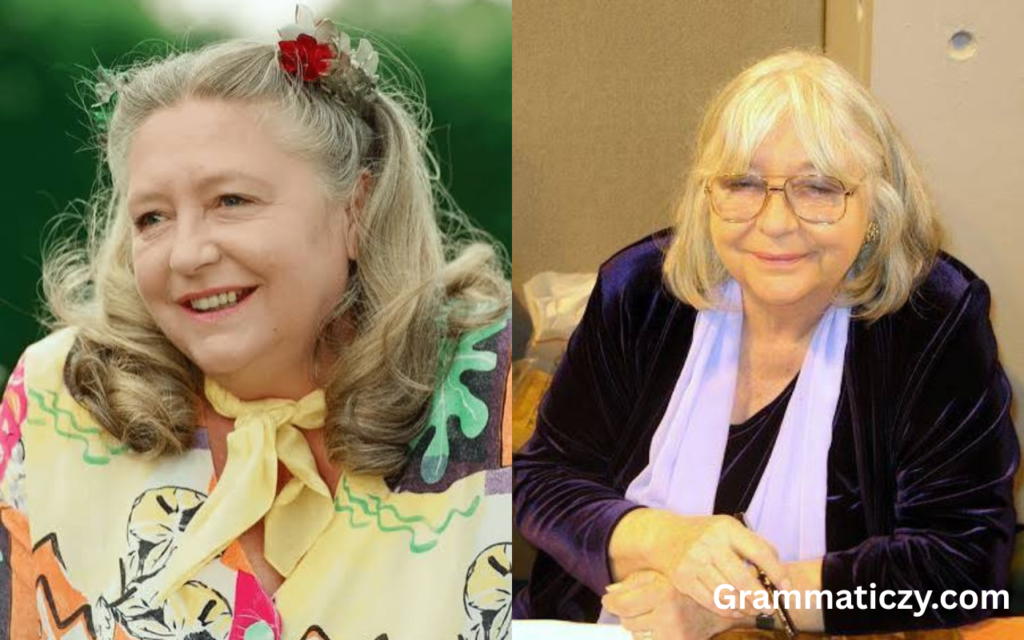
Few British television characters have remained as instantly recognizable as Daisy from Keeping Up Appearances. Warm, cheerful, romantic and seemingly unconcerned with the social ambitions that consumed her sister Hyacinth, Daisy brought a wonderfully different energy to one of Britain’s most beloved sitcoms. Behind that familiar character, however, was an actress whose career had already covered theatre, cabaret, radio, film and serious dramatic work. Judy Cornwell was never simply a sitcom performer; she was a versatile British actress, comedian, novelist and memoirist whose professional journey stretched across more than half a century.
Born in Hammersmith, London, in 1940, Cornwell grew up against the backdrop of wartime Britain before spending part of her childhood in Australia. She eventually returned to Britain and began building a career in entertainment, initially working as a dancer and comedian before developing into a respected actress. Her path took her from variety and cabaret performances to repertory theatre, television, film and eventually the Royal Shakespeare Company. Her later literary career added another dimension to her creative identity, with several novels and the warmly received memoir Adventures of a Jelly Baby.
Judy Cornwell’s Early Life and Family Background
Judy Valerie Cornwell was born on February 22, 1940, in Hammersmith, London. Her childhood unfolded during an extraordinary period in British history, and the experiences of those early years later became part of the story she told in her memoir. Her father served in the Royal Air Force, while biographical sources identify her parents as Irene McCullen Cornwell and Darcy Nigel Barry. Her family later emigrated to Australia, giving Cornwell an upbringing that crossed two countries and cultures.
Her family also had a connection with entertainment through her grandmother, Sarah Bonner, who was a music-hall singer. That background is an interesting part of Cornwell’s story because performance was not completely foreign to her family. She attended a convent school and later Saint Michael Boarding School in Heacham, Norfolk, as well as Lewes County Grammar School for Girls according to published biographies. These formative experiences gave her a mixture of traditional education and exposure to different environments before she entered professional entertainment.
Cornwell later revisited these years in Adventures of a Jelly Baby, her 2005 autobiography. The memoir describes her childhood during the war, her family’s time in Australia and her eventual return to Britain. Rather than presenting her life simply as a sequence of celebrity achievements, the book explores the uncertainty, humor and hard work involved in building a career in show business. It provides an important context for understanding the woman behind the familiar television roles.
How Judy Cornwell Began Her Acting Career
Judy Cornwell’s professional journey began unusually early. Before becoming known primarily as an actress, she worked as a dancer and comedian during her teenage years. Her early career included pantomime, cabaret, musical revues and variety entertainment. This background helped her develop the physical timing and comic instincts that would later become particularly valuable in television comedy.
Her early experiences were far removed from the polished image many viewers associate with established television performers. Cornwell had to learn the entertainment business from the ground up, performing in environments where timing, confidence and audience awareness mattered enormously. Her memoir recalls this period with characteristic humor, describing the people she encountered and the unusual situations that came with working behind the scenes in British entertainment.
That foundation eventually allowed Cornwell to transition into acting. Her screen career began in the late 1950s, with her first film credit appearing in 1959. She also moved into television and theatre, gradually establishing herself as a dependable character actress. Rather than achieving instant fame through one breakthrough, she developed her reputation through years of varied work and increasingly demanding roles.
Judy Cornwell’s Theatre and Stage Career
Theatre was an important part of Cornwell’s professional education. Her work in repertory helped her develop as a serious actress and gave her opportunities to play characters very different from the light comic roles for which television audiences would eventually know her. She also appeared in productions such as Oh! What a Lovely War, demonstrating that her talents extended well beyond sitcom performance.
One of the strongest indicators of Cornwell’s theatrical range was her association with the Royal Shakespeare Company. Her work with the company represented a significant stage achievement because it placed her within one of Britain’s most respected theatrical traditions. The experience also helped establish that the performer behind Daisy possessed considerable dramatic and classical acting ability.
Her stage career continued to remain important even after she became famous on television. In later years, Cornwell toured in productions featuring Agatha Christie’s Miss Marple, including A Murder Is Announced. In 2016, she announced plans to retire from touring after completing her Miss Marple work, bringing an important chapter of her stage career toward its conclusion.
Judy Cornwell’s Film Career
Although television and theatre eventually became the dominant parts of her career, Judy Cornwell also built an interesting film résumé. Her early screen work included appearances in films such as Two for the Road, the 1967 romantic drama starring Audrey Hepburn and Albert Finney. The role gave Cornwell the opportunity to appear alongside major international stars during an important period in British cinema.
Her film credits continued through the 1960s and 1970s, including productions such as Dr. Terror’s House of Horrors, Jules Verne’s Rocket to the Moon, Wuthering Heights and Who Slew Auntie Roo?. These roles showed how comfortably she could move between comedy, literary adaptations and darker material. Her filmography may not be as extensive as her television work, but it adds considerable depth to her overall career.
In 1985, Cornwell appeared as Anya Claus in Santa Claus: The Movie. She later played Mrs. Musgrove in the 1995 adaptation of Jane Austen’s Persuasion, a production that remains one of the more highly regarded titles in her filmography. Her film work demonstrates that even while television became increasingly important, she continued to accept roles that allowed her to work across different genres.
Judy Cornwell and Keeping Up Appearances
For all the variety in her career, there is no question that Judy Cornwell became internationally famous because of one particular character: Daisy in Keeping Up Appearances. The BBC sitcom ran from 1990 to 1995 and centered on Patricia Routledge’s unforgettable Hyacinth Bucket, a woman determined to impress the people around her and climb socially. Cornwell played Daisy, one of Hyacinth’s sisters, providing a relaxed and affectionate contrast to Hyacinth’s relentless pursuit of status.
Daisy’s personality was fundamentally different from Hyacinth’s. She was friendly, warm and considerably less interested in appearances. Her marriage to Onslow, played by Geoffrey Hughes, created another source of comedy because their untidy, unconventional home life was almost the exact opposite of the respectable image Hyacinth desperately wanted to project. Cornwell understood that Daisy’s humor worked best when she played the character naturally rather than trying to compete with Hyacinth’s larger personality.
Cornwell appeared throughout the show’s five-season run, helping make Daisy one of its most memorable supporting characters. Her comic timing and understated reactions were particularly effective because the sitcom often depended on contrasts between personalities. Hyacinth’s exaggerated social ambitions became even funnier when placed beside Daisy’s more relaxed attitude. Decades after the original broadcasts, Daisy remains one of Cornwell’s most recognizable performances.
Why Daisy Became Such a Beloved Character
One reason Daisy worked so well was that she did not feel like a simple comic stereotype. Cornwell gave her warmth and humanity, allowing viewers to see her as more than a device for creating jokes. Daisy’s relationship with Onslow, her affection for her family and her relaxed approach to life created an emotional balance within the series.
The character also benefited from Cornwell’s extensive experience in live performance. Her early work as a dancer, comedian and stage performer had taught her how important timing could be. A pause, facial expression or reaction could transform an ordinary line into something memorable. That instinct became especially valuable in an ensemble sitcom where much of the humor came from characters reacting to one another.
Interestingly, Cornwell later explained that the popularity of Keeping Up Appearances had an unexpected effect on her private life. Because she appeared relatively naturally as Daisy, without the heavy disguise that could make her less recognizable in other roles, people began identifying her in public. Her sudden loss of anonymity was one of the consequences of becoming part of such a successful television programme.
Judy Cornwell’s Other Television Roles
Although Daisy became her signature role, Judy Cornwell continued working in a wide range of television productions. Her credits include Dixon of Dock Green, Bergerac, Rumpole of the Bailey, Doctor Who, The Bill, Heartbeat, The Royal and Midsomer Murders. She also appeared in EastEnders, where she played Queenie Trott, a character very different from Daisy.
Her appearance in Doctor Who is another interesting part of her television history. She appeared in the classic-era serial Paradise Towers, demonstrating once again how easily she could move between different styles of television. From science fiction and crime drama to traditional British comedy, her résumé covers an unusually broad range of genres.
Cornwell also appeared in literary and period productions. Her performance in the television adaptation of W. Somerset Maugham’s Cakes and Ale has been highlighted in biographical accounts, while her later work in Persuasion showed her continuing connection with literary drama. These roles make it difficult to categorize her simply as a sitcom actress.
Judy Cornwell as a Novelist and Writer
Judy Cornwell’s creativity was not restricted to performance. She became a published novelist, beginning with Cow and Cow Parsley in 1985. She subsequently wrote Fishcakes at the Ritz, The Seventh Sunrise and Fear and Favour. Bibliographic records list these works as part of her published literary output.
Her fiction added another layer to a career already defined by storytelling. According to published biographical material, her novels explored subjects including women’s lives and religious faith. Writing allowed Cornwell to create characters and situations without depending on the limitations of casting, production schedules or stage performance.
Her literary career also demonstrated that her interest in storytelling was much deeper than entertainment alone. Whether she was acting in a sitcom, performing Shakespeare or writing fiction, she was ultimately exploring character, relationships and human behavior. That consistency helps explain why her career remained creatively diverse for so many years.
Adventures of a Jelly Baby
In 2005, Judy Cornwell published Adventures of a Jelly Baby: A Memoir. The book is one of the most useful sources for understanding her life because it brings together her childhood memories, professional experiences and observations about the entertainment industry. The published edition runs to more than 400 pages and covers a remarkable range of experiences.
The memoir begins with her childhood in wartime Britain and continues through the family’s move to Australia before returning to her professional years in Britain. Cornwell writes about becoming a dancer and comedian, learning her craft as a young actress and working with many different performers. The book also explores the unpredictable backstage world that audiences rarely see.
One of the most appealing aspects of the memoir is its mixture of humor and honesty. Cornwell does not present show business as an effortless road to fame. Instead, she describes the accidents, rivalries, friendships and strange experiences that can accompany a life in theatre and television. For fans of Keeping Up Appearances, the memoir offers an opportunity to see the real performer behind Daisy.
Judy Cornwell’s Marriage and Family Life
Judy Cornwell married John Kelsall Parry on December 18, 1960. The couple have one son, and their marriage has remained one of the longest-standing relationships in Cornwell’s life. Public biographical sources have reported that they lived in Brighton, where Parry worked as a reporter for The Argus.
The longevity of their marriage is particularly notable when considered alongside Cornwell’s demanding professional life. Acting careers can involve touring, rehearsals, long filming schedules and extended periods away from home. Cornwell nevertheless maintained a family life alongside a career that moved repeatedly between theatre, television and film.
Cornwell has generally kept her private life away from the intense public attention that surrounds many modern celebrities. Her memoir provides glimpses into her experiences, but she has not built her public identity around constant personal exposure. That relative privacy has allowed audiences to focus primarily on her work and the characters she created.
Judy Cornwell’s Personality and Life Beyond Acting
The available interviews and writing suggest a personality marked by humor, curiosity and a strong affection for performance. Cornwell’s career began in entertainment at a time when performers were expected to develop broad skills rather than specialize immediately in one medium. Her ability to dance, sing, perform comedy and act gave her a practical versatility that remained valuable throughout her career.
Her memoir also reveals an ability to laugh at the unpredictable side of show business. Rather than treating celebrity as the central measure of achievement, she has often emphasized the people, experiences and stories encountered along the way. That perspective gives her career a more personal dimension.
Her continued interest in theatre, literature and storytelling suggests that creativity has been a defining part of her identity. Even after becoming closely associated with Daisy, she continued to explore different forms of performance and writing. That refusal to be completely defined by one role is one of the strongest themes in her professional story.
Judy Cornwell’s Net Worth and Sources of Income
Judy Cornwell’s exact net worth is not publicly documented through reliable financial records. Some entertainment websites have published estimates of approximately $10 million, but such figures should be treated cautiously because there is no independently verified public statement from Cornwell confirming that amount.
Her long career would have provided several potential sources of income. These include television and film acting, theatre performances, touring productions, book royalties and other professional work. Her involvement in Keeping Up Appearances is particularly significant because the programme has enjoyed decades of continuing interest through reruns and international audiences.
Nevertheless, it would be misleading to present any precise net-worth number as established fact. Celebrity wealth estimates frequently combine assumptions about earnings, property and royalties without access to private financial information. The more reliable conclusion is that Cornwell built a substantial and unusually long entertainment career across several professional fields.
Judy Cornwell’s Social Media Presence
Unlike many contemporary actors, Judy Cornwell does not appear to have a clearly verified and widely recognized official Instagram, X/Twitter or LinkedIn account. This is worth mentioning because numerous profiles using celebrity names can appear online without actually being managed by the person concerned.
Cornwell’s relationship with audiences was established long before social media existed. Television broadcasts, theatre performances, film appearances and books were the primary ways audiences encountered her work. Her career therefore represents an earlier model of celebrity in which an actor could become internationally recognizable without maintaining a daily digital presence.
Today, her strongest online presence comes indirectly through the continuing popularity of her work. Fans discuss Keeping Up Appearances, share clips and revisit her older performances, ensuring that Daisy and the wider body of Cornwell’s work remain visible to new generations.
Judy Cornwell’s Later Career and Recent Status
One of the most important later chapters in Cornwell’s acting career was her work as Miss Marple. Her stage appearances in Agatha Christie productions demonstrated that she remained interested in challenging theatrical roles even after decades of television success. Her performance in A Murder Is Announced was among the projects associated with this later period.
In 2016, Cornwell indicated that she intended to retire from touring after completing her work as Miss Marple. This was not simply the end of an acting career but the conclusion of a remarkable stage journey that had begun when she was a young performer. By then, she had accumulated decades of experience across virtually every major area of British entertainment.
As of 2026, there is no major, reliably documented new acting project that appears to represent a return to regular screen work. Her contemporary legacy is instead being carried through the continuing popularity of her older productions. Keeping Up Appearances remains especially important because new viewers continue discovering the series and appreciating the performances of Cornwell, Patricia Routledge and the rest of the ensemble.
Judy Cornwell’s Legacy
Judy Cornwell’s legacy cannot be reduced to one famous sitcom character, even though Daisy remains her most recognizable role. Her career represents the breadth of the British acting tradition: variety entertainment, cabaret, repertory theatre, classical stage work, radio, television, cinema and literature. Few performers manage to move so comfortably between such different creative environments.
Her greatest lesson may be the value of versatility. Cornwell did not build her career around a single formula. She moved from dancing to comedy, from comedy to acting, from television to theatre and from acting into fiction and memoir. Each stage added another dimension to her artistic identity.
Daisy may have introduced Judy Cornwell to millions of viewers, but her wider body of work explains why she remained professionally interesting for so long. The warmth of Daisy, the theatrical discipline behind her performances and the storytelling found in her books all form parts of the same creative personality.
Conclusion
Judy Cornwell’s life is a compelling example of how a lasting career is built through patience, adaptability and genuine commitment to one’s craft. From her childhood in wartime Britain and Australia to her early days as a dancer and comedian, from repertory theatre and the Royal Shakespeare Company to film and television, she repeatedly demonstrated a willingness to learn and evolve.
Her portrayal of Daisy in Keeping Up Appearances gave her a place in British television history, but it was the decades of work before and after that role that truly define her professional achievement. Her novels and memoir further demonstrate that she was not simply an actress who happened to write, but a storyteller who found several ways to communicate with audiences.
Perhaps that is the most enduring message of Judy Cornwell’s journey. Fame may come from one unforgettable role, but a meaningful artistic legacy is built from everything that surrounds it: discipline, curiosity, resilience, creativity and the courage to keep exploring. As audiences continue to rediscover her performances, Judy Cornwell’s career remains a reminder that the most rewarding journeys are rarely straightforward—and that a lifetime of passion can turn individual performances into a legacy that lasts for generations.