Valerie Singleton Biography: The Remarkable Life and Career of a British Broadcasting Icon
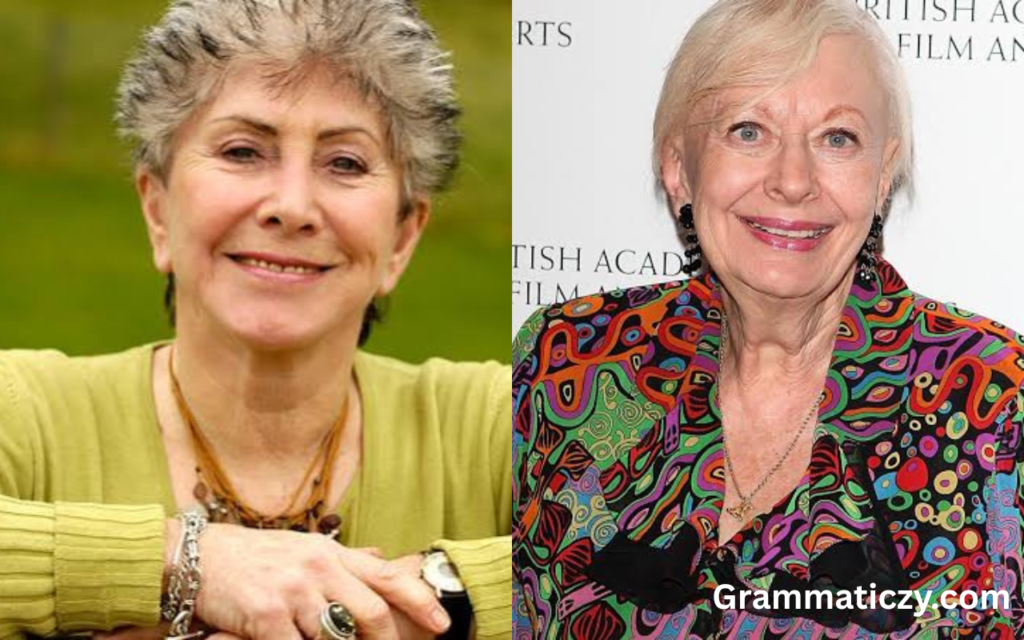
For more than six decades, Valerie Singleton has remained one of the most recognisable names in British broadcasting. Long before social media turned presenters into instant celebrities, Singleton built a reputation through professionalism, curiosity and an unmistakable on-screen presence. To millions of viewers, she was the composed and adventurous face of Blue Peter, but her career extended far beyond children’s television. She went on to become a respected presenter of Nationwide, The Money Programme and BBC Radio 4’s PM, successfully moving between entertainment, journalism, consumer affairs and financial broadcasting.
Born in Hitchin, Hertfordshire, in 1937, Singleton entered broadcasting after first exploring dance, acting and theatre. Her journey from a young performer to a BBC continuity announcer and eventually one of Britain’s best-known television presenters was anything but predictable. She trained at the Royal Academy of Dramatic Art, worked as an actress and voice-over artist, and then found her defining opportunity when she joined Blue Peter in 1962. Her story is therefore not simply that of a television personality, but of a performer who repeatedly reinvented herself as the broadcasting industry changed around her.
Valerie Singleton Quick Facts
| Fact | Details |
|---|---|
| Full name | Valerie Singleton |
| Born | April 9, 1937 |
| Age | 89 in 2026 |
| Birthplace | Hitchin, Hertfordshire, England |
| Nationality | British |
| Profession | Television presenter, radio presenter, broadcaster, former actress |
| Education | Arts Educational School; Royal Academy of Dramatic Art |
| Father | Dennis Singleton OBE |
| Mother | Eileen Singleton LRAM, née Reed |
| Siblings | Brother Michael is mentioned in biographical sources |
| Best known for | Blue Peter |
| Other major programmes | Nationwide, The Money Programme, PM |
| Blue Peter career | Regular presenter, 1962–1972 |
| Honour | OBE, 1994 |
| Marital status | Never married |
| Children | None |
| Known interests | Animals, travel, broadcasting and writing |
| Estimated net worth | No reliable authoritative figure publicly established |
| No verified official personal account identified | |
| X/Twitter | No verified official personal account identified |
| No verified official personal profile identified |
The net-worth and social-media details above are deliberately presented cautiously because there is no authoritative public financial statement or verified personal social-media presence establishing those details.
Early Life and Family Background
Valerie Singleton was born on April 9, 1937, in Hitchin, Hertfordshire, into a family whose background combined military discipline, advertising and the arts. Her father, Dennis Singleton, was a former Royal Air Force Wing Commander who later became an advertising executive at J. Walter Thompson. Her mother, Eileen Singleton, was musically talented and held an LRAM qualification. The combination of her father’s structured military background and her mother’s artistic interests gave Singleton an unusually varied family environment in which performance and discipline existed side by side.
Her childhood was also shaped by frequent movement. Because her father served in the RAF, the family lived in different parts of England, and Singleton attended a number of schools. In later reflections, she described herself as lively and sometimes difficult to contain within conventional school environments. She was not naturally suited to sitting quietly and following rigid expectations, but that energetic personality would eventually become one of her strengths as a performer.
The young Singleton found an outlet in the performing arts. She studied dance at the Arts Educational School in London and began appearing professionally at a remarkably young age. At twelve, she appeared as a young dancer in Cinderella at the Finsbury Park Empire, and at sixteen she danced in Aladdin at the King’s Theatre in Edinburgh. She was also associated with the Ovaltineys, gaining early experience in entertainment before she had even reached adulthood.
Education at RADA and the Beginning of Show Business
Singleton’s ambition eventually moved beyond dance. She entered the Royal Academy of Dramatic Art, better known as RADA, where she spent two years and won a scholarship during her first term. RADA provided rigorous training in acting and performance, placing her among a generation of aspiring performers who would go on to become important names in British entertainment. Her education helped develop the voice control, timing and confidence that later became essential to her broadcasting career.
After leaving RADA, she worked in repertory theatre and took on acting opportunities. Her early professional experience included work at the New Theatre in Bromley, while she also participated in touring theatre productions. This period was important because it taught her how to work under pressure, memorise material and communicate directly with audiences—skills that would later make the transition to television considerably easier.
Singleton also appeared on television during the 1950s. In 1959, she featured in five episodes of the BBC sitcom The Adventures of Brigadier Wellington-Bull. Alongside acting, she became a prominent voice-over commentator for television commercials and documentaries. Her voice was increasingly becoming an asset in its own right, helping establish the professional identity that would eventually earn her a reputation as one of the leading female voice-over artists of her era.
Joining the BBC and Finding Blue Peter
Singleton joined BBC television as an in-vision continuity announcer in 1962. The position placed her directly inside the BBC’s broadcasting operation and allowed her to learn the practical demands of live television. Soon afterwards, she auditioned for Blue Peter. She was not originally selected; Anita West received the position first. However, West left after only a few months, and Singleton was subsequently offered the opportunity that would change her professional life.
Singleton joined Blue Peter in September 1962 and became one of its defining early presenters. For the next decade, she appeared regularly on the programme, helping establish its mixture of adventure, education, demonstrations, interviews, animals, crafts and outside broadcasts. The show was designed to feed children’s curiosity rather than simply entertain them, and contemporary television commentary emphasised how the programme encouraged young viewers to become actively involved with the subjects it presented.
Her Blue Peter years established the public image that would remain with her for the rest of her career. Singleton was authoritative but approachable, sophisticated but willing to participate in adventurous assignments. She worked alongside presenters including Christopher Trace, John Noakes and Peter Purves, and the combination of Singleton, Noakes and Purves became one of the programme’s most memorable presenting teams.
Valerie Singleton’s Adventures on Blue Peter
One reason Singleton became such a memorable Blue Peter presenter was her willingness to participate in activities far beyond a conventional television studio. She was not simply the presenter who introduced filmed reports. She became directly involved in adventures, demonstrations and assignments, helping establish the idea that a television presenter could be both narrator and participant.
Among the most notable episodes of her career was the 1971 Blue Peter Royal Safari, when she accompanied Princess Anne to Kenya. The assignment produced a documentary that proved sufficiently successful to inspire the later Blue Peter Special Assignments series. The Kenya trip therefore became more than another television feature; it helped expand Singleton’s role into a format in which she could operate as a solo presenter and reporter.
Her work also reflected the adventurous spirit of early Blue Peter. She participated in activities involving travel, animals, sport and unusual challenges, helping demonstrate that educational television could be energetic and entertaining. The programme’s approach was particularly distinctive because it encouraged children to learn through experience rather than simply listen to adults explain subjects to them.
Leaving Regular Blue Peter and Moving Into Adult Broadcasting
Singleton eventually left regular Blue Peter presenting in 1972 after approximately a decade with the programme. However, her connection with the show did not disappear immediately. She continued making appearances and worked on Blue Peter Special Assignments, a spin-off factual series that ran during the 1970s and early 1980s. The programme took viewers to different locations and introduced them to history, culture and people through a documentary-style format.
The transition from children’s television into adult broadcasting was an important moment in Singleton’s career. Instead of allowing herself to become permanently associated with one successful programme, she deliberately moved into more serious subjects. Her work on Nationwide placed her in the world of consumer journalism and current affairs, where the emphasis was increasingly on explaining real-world issues rather than simply presenting entertainment.
According to biographical sources, she presented Nationwide’s Consumer Desk with Richard Stilgoe between 1973 and 1975 and later served as one of the programme’s main presenters. She subsequently worked on Tonight, further strengthening her reputation as a versatile BBC broadcaster capable of handling journalism and current-affairs programming.
The Money Programme and Financial Journalism
Another significant chapter came when Singleton moved into financial broadcasting. She became associated with BBC Two’s The Money Programme, presenting the series from around 1980 through the late 1980s. The programme dealt with business, finance and economic issues, requiring presenters to make complicated information understandable to ordinary viewers.
This phase of her career demonstrated how far she had travelled from her early days as a dancer and actress. Financial television required a different kind of authority. Viewers expected accuracy and clarity, while the presenter had to communicate information that could otherwise appear intimidating or overly technical. Singleton’s calm delivery and experience interviewing people made her well suited to this role.
Her move into financial broadcasting also strengthened the argument that Singleton should be remembered as a serious journalist and broadcaster rather than solely as a children’s television presenter. The diversity of her work became one of the strongest features of her professional legacy.
Valerie Singleton and BBC Radio 4’s PM
Radio became another major part of Singleton’s broadcasting career. She was a regular presenter of BBC Radio 4’s PM for roughly a decade, beginning in the early 1980s and continuing into the early 1990s. The programme’s news and current-affairs format gave her another opportunity to demonstrate her ability to interview, explain and communicate without the visual tools available in television.
Working on PM also reinforced the credibility she had developed through Nationwide and The Money Programme. Radio required strong vocal technique, careful timing and the ability to create an immediate relationship with listeners. Singleton’s earlier experience as a voice-over artist and television presenter made her particularly adaptable to the medium.
Her broadcasting career therefore covered an unusually broad spectrum. She had worked in children’s television, current affairs, consumer journalism, financial programming, radio and documentary-style reporting. Few presenters could claim such a varied portfolio while remaining recognisable to several generations of British audiences.
Awards, OBE and Recognition
Singleton’s contribution to broadcasting was formally recognised in 1994 when she was appointed an Officer of the Order of the British Empire, or OBE, for services to children’s television. The honour reflected the importance of her work on Blue Peter and the broader impact she had made during her years in broadcasting.
Her public recognition did not end with the OBE. In 2001, she became the subject of This Is Your Life, where she was surprised by Michael Aspel during an appearance connected with Gloria Hunniford’s Open House. The programme brought together friends, colleagues and people associated with different stages of her career, providing a retrospective celebration of her broadcasting achievements.
Singleton has also remained closely associated with Blue Peter retrospectives and reunions. In 2018, she appeared at the Edinburgh Fringe with former presenters including Peter Purves, Janet Ellis, Peter Duncan, Mark Curry and Tim Vincent in Once Seen in Blue Peter. Such appearances underline the enduring affection audiences continue to have for the programme’s classic presenters.
Valerie Singleton’s Personal Life
Away from television, Singleton’s personal life has often attracted attention precisely because it differed from the conventional family image associated with her public career. She has never married and has no children. Over the years she has spoken openly about relationships and about the gap between her private personality and the rather formal image viewers developed from watching her on television.
She has also discussed relationships with well-known figures from the entertainment industry, including actor Albert Finney and broadcaster Pete Murray, to whom she was engaged from 1967 to 1971. Her candid interviews have occasionally addressed subjects that were very different from the wholesome public image created by Blue Peter.
Rather than viewing these personal experiences simply through the lens of celebrity gossip, they provide a useful insight into Singleton’s character. Her later interviews reveal a woman who has been willing to reflect on love, independence, ageing, career choices and the complicated difference between the person the public thinks it knows and the private individual behind the camera.
Valerie Singleton’s Love of Animals
Animals have been an important part of Singleton’s life from childhood through her broadcasting years. Animal stories were naturally associated with Blue Peter, where pets became some of the programme’s most memorable recurring personalities. Singleton’s affection for animals therefore became part of both her professional and personal identity.
In a recent profile, The Times reported on Singleton’s life with two rescued cats, Daisy and Philly. The cats had been rescued as feral kittens from a railway track near Sherborne station in 2013. They eventually became part of Singleton’s home after a neighbour who had initially taken them in moved away.
The story offers a gentle glimpse into Singleton’s life away from television. She has spoken affectionately about the cats’ different personalities and the practical responsibilities involved in caring for them. Their presence also reflects something that has remained consistent throughout her life: a genuine fascination with animals and the natural world.
Valerie Singleton as a Travel Writer
Broadcasting was not the only creative field Singleton explored after her most prominent BBC presenting years. She also developed an interest in travel writing. Her experience travelling for television had already taken her to a wide range of locations, and writing provided another way to communicate those experiences.
Travel writing was a natural extension of her broadcasting personality. Throughout Blue Peter, she had demonstrated an ability to make places interesting by focusing on the people, history and experiences behind them. In written form, that same curiosity could be applied without the limitations of a television schedule.
This later work also demonstrates that Singleton never defined herself entirely by one programme. Even after becoming permanently associated with Blue Peter, she continued exploring different forms of communication. Her career was therefore less about preserving a particular celebrity image and more about continuing to work creatively.
Valerie Singleton in Recent Years
Singleton’s continued public appearances demonstrate that her connection with audiences has survived long after her most active television years. In October 2025, she appeared as a guest on The Peter Purves Podcast, hosted by her former Blue Peter colleague and longtime friend Peter Purves. The episode revisited her extraordinary career, from dance and acting to BBC continuity announcing, voice-over work and her years on Blue Peter.
The reunion was particularly meaningful because Purves and Singleton shared one of the most recognisable eras in Blue Peter history. Their conversations provide an opportunity to look back at the programme not simply through archival clips, but through the memories of people who were actually there. It also demonstrates how professional relationships formed decades ago can continue long after the cameras have stopped rolling.
Her recent media appearances have generally focused on memories, broadcasting history and aspects of her life away from celebrity culture. At an age when many people from her generation have disappeared from public view, Singleton remains an engaging figure for audiences interested in classic British television and the history of broadcasting.
Valerie Singleton’s Net Worth and Income
There is no authoritative public source that establishes Valerie Singleton’s current net worth. Various celebrity websites may publish numerical estimates, but without access to verified financial records, property information or confirmed income statements, those figures should not be presented as fact. A responsible biography should distinguish between documented career achievements and speculation about personal wealth.
Singleton’s professional income over the decades would have come from numerous broadcasting activities. These included BBC television presenting, radio work, voice-over assignments, documentary appearances, financial and consumer programming, travel writing and later television-related projects. Her exceptionally long career gave her multiple opportunities to earn income rather than depending on one programme alone.
Her financial legacy is therefore better understood through the scale and longevity of her career than through an unverified net-worth estimate. From her first television work in the 1950s to later broadcasting appearances and writing, she built a professional life lasting more than six decades. That longevity itself represents one of her most remarkable achievements.
Valerie Singleton and Social Media
Singleton belongs to a generation of broadcasters whose careers were established long before Instagram, Facebook, X or LinkedIn existed. Unlike contemporary television personalities, she did not need daily online posts to maintain her connection with the public. Her reputation was built through scheduled television and radio programmes watched or heard by millions of people.
There is currently no reliably verified personal Instagram, X/Twitter or LinkedIn account that can confidently be attributed to Singleton. This is important because numerous public figures have unofficial fan pages and tribute accounts, and attaching a social-media handle to a celebrity without verification can create misinformation.
Her modern public presence instead comes through interviews, archival television material, broadcasting retrospectives, podcasts and reunions with former colleagues. The continuing interest in her work demonstrates that a lasting public legacy does not necessarily depend on maintaining a constant social-media presence.
The Lasting Legacy of Valerie Singleton
Valerie Singleton’s legacy begins with Blue Peter, but it certainly does not end there. She helped define an era of British children’s television in which presenters were expected to educate, entertain and participate in adventures alongside their young viewers. Her work contributed to the programme’s distinctive culture of curiosity and practical learning.
Her later career makes her story even more impressive. She successfully moved into consumer affairs, current affairs, financial broadcasting and radio, demonstrating that a presenter who became famous through children’s television could earn credibility in much more serious areas of broadcasting. Her work on Nationwide, The Money Programme and PM gave her career a breadth that is easy to overlook when her name is primarily associated with Blue Peter.
Perhaps the most important lesson from Singleton’s career is the value of reinvention. She began as a dancer, trained as an actress, worked in theatre, became a television continuity announcer, found fame on Blue Peter, moved into journalism and financial broadcasting, established herself on radio and later explored travel writing. At every stage, she demonstrated that a person’s identity does not have to be limited by their earliest success.
Conclusion: Valerie Singleton’s Enduring Influence
Valerie Singleton’s life is a story of transformation, resilience and professional curiosity. From her childhood in an RAF family and early years as a dancer to her training at RADA and eventual arrival at the BBC, every stage prepared her for a career that would become far more diverse than anyone could have predicted. Blue Peter made her a household name, but it was her willingness to keep evolving that turned that initial fame into a lasting broadcasting legacy.
Her influence can be seen in the generations of viewers who remember her calm authority, adventurous spirit and unmistakable voice. She helped prove that children’s television could be intelligent and ambitious, while her later work demonstrated that presenters could successfully cross from entertainment into journalism, business and current affairs. Her OBE in 1994 provided formal recognition, but the affection of audiences over many decades arguably represents an even more enduring form of honour.
Ultimately, Valerie Singleton’s story is about far more than nostalgia for classic British television. It is a reminder that careers evolve, identities change and opportunities can emerge from unexpected circumstances. Her journey from dancer and actress to one of Britain’s most respected broadcasters shows the power of adaptability and perseverance. As Valerie Singleton’s work continues to be remembered by new generations, her career stands as an enduring reminder that genuine passion, professionalism and the courage to embrace change can create a legacy that lasts long after the final programme has ended.