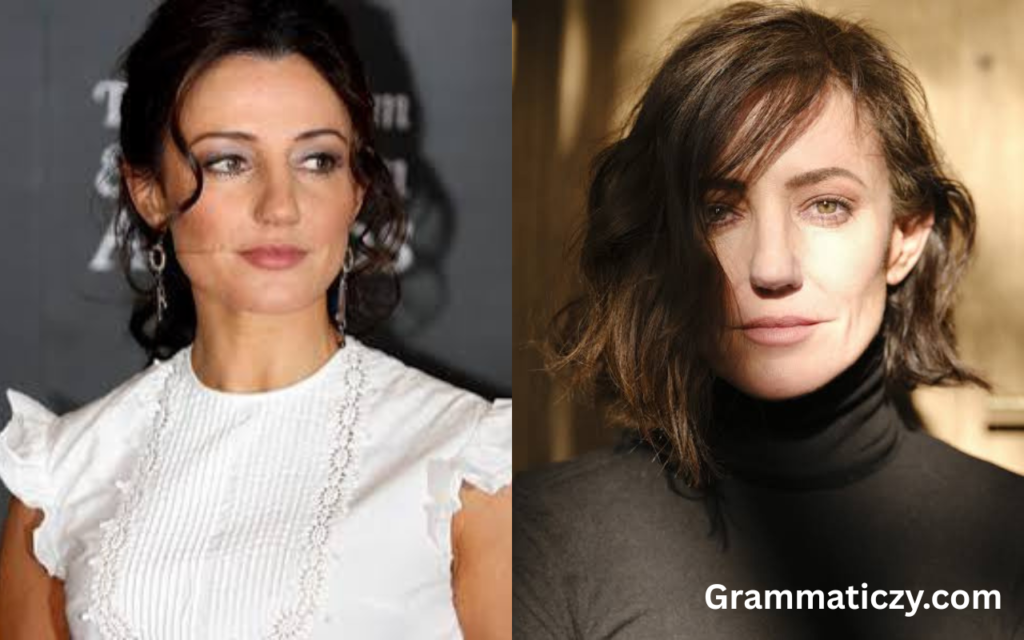
Some actors become famous because of one unforgettable role. Orla Brady took a different route. Her career has been built over decades, through theatre, television and film, with performances that have carried her from Dublin stages to internationally recognized productions. She has played emotionally complex women in dramas, formidable figures in action series and memorable characters in some of television’s biggest science-fiction franchises. From Mistresses and Fringe to Doctor Who, Into the Badlands and Star Trek: Picard, Brady has demonstrated an unusual ability to move between genres without losing the emotional depth that defines her acting style. Her next major chapter comes with Marvel Television’s VisionQuest, where she plays F.R.I.D.A.Y., placing her inside another enormous global entertainment franchise.
What makes Orla Brady’s story particularly compelling is the distance between her early ambitions and the international career she eventually created. Born in Dublin and raised partly in County Wicklow, she did not begin with the profile of a conventional Hollywood star. She trained seriously, including studying theatre in Paris, worked extensively on stage and gradually built a screen career through challenging roles. Along the way, she overcame the shyness she has spoken about from her younger years and developed the confidence to work across different acting traditions and production environments. Her career is therefore not simply a story of celebrity; it is a story of patience, craft, reinvention and continued curiosity.
Orla Brady Quick Facts
| Fact | Details |
|---|---|
| Full Name | Orla Brady |
| Date of Birth | March 28, 1961 |
| Age | 65 in 2026 |
| Birthplace | Dublin, Ireland |
| Nationality | Irish |
| Profession | Actress |
| Parents | Patrick Brady and Catherine Brady |
| Siblings | Second of four children |
| Height | Approximately 5 ft 4 in / 1.63 m |
| Education & Training | École Philippe Gaulier, Paris; Marcel Marceau’s École Internationale de Mimodrame de Paris |
| Husband | Photographer Nick Brandt |
| Marriage | December 2002 |
| Years Active | 1991–present |
| Best Known For | Fringe, Mistresses, Doctor Who, Into the Badlands, Star Trek: Picard |
| Upcoming Project | VisionQuest |
| Upcoming Marvel Role | F.R.I.D.A.Y. |
| Estimated Net Worth | No independently verified public figure |
| Instagram/X | Social profiles are listed in entertainment databases; users should verify current accounts |
Biographical sources identify Brady as the daughter of Patrick and Catherine Brady and the second of four children. IMDb records her birth in Dublin on March 28 and lists her husband as photographer Nicholas Brandt, whom she married in December 2002. It also records her Paris theatre training and her early childhood in Bray, County Wicklow.
Her career is documented particularly well by the Irish Film & Television Academy, which lists major credits including Mistresses, Fringe, Into the Badlands, American Horror Story: 1984, Star Trek: Picard, Rose Plays Julie, The Foreigner and Freud’s Last Session. The academy also records multiple IFTA nominations, underlining her standing within Ireland’s film and television community.
One point worth treating carefully is Orla Brady’s net worth. Celebrity websites frequently publish estimated fortunes, but there is no reliable public financial disclosure that establishes an exact figure. A responsible biography should therefore avoid presenting an internet estimate as fact. Her income has naturally come primarily from her long-running acting career across theatre, television and film, but individual salaries and private financial arrangements remain confidential.
Early Life and Family Background
Orla Brady was born in Dublin, Ireland, into a family headed by Patrick and Catherine Brady. She was the second of four children and spent the early part of her childhood in Bray, County Wicklow, before continuing her upbringing in Dublin. Her father ran a pub, an experience that placed Brady in a distinctly Irish social environment during her formative years. These early surroundings were far removed from the international television sets on which she would eventually work, but they provided the cultural foundation that remained important throughout her life.
Brady has spoken openly about the Ireland of her youth and about the way society changed during her lifetime. Her reflections suggest that she became increasingly conscious of questions surrounding independence, identity, expectations placed on women and the restrictions of the environment in which she grew up. Those experiences are interesting when viewed alongside her later acting career because many of her most memorable characters are women who possess intelligence and determination while negotiating difficult social or personal circumstances.
Another important element of her early life was her own struggle with confidence. Brady has recalled being extremely self-conscious as a young person and later described acting and theatre training as part of the process through which she discovered a stronger sense of herself. Instead of allowing that shyness to become a permanent limitation, she moved toward a profession that demanded exactly the qualities she initially found difficult: physical expression, communication, emotional openness and the willingness to stand in front of an audience.
Theatre Training in Paris
A major turning point arrived when Brady went to Paris to study theatre. According to biographical records, she moved there at around the age of 25 and studied at École Philippe Gaulier, a school known for its distinctive approach to performance, clowning and physical theatre. She also secured a place at Marcel Marceau’s École Internationale de Mimodrame de Paris. The experience exposed her to a very different theatrical discipline from the one she might have encountered by remaining in Ireland.
Her Paris education was not simply about learning how to deliver lines. Brady has described an environment involving clowning, buffoonery and fencing, experiences that encouraged performers to explore movement and instinct. That kind of training can be particularly valuable to an actor because it teaches awareness of the body as well as the voice. Brady’s later performances often demonstrate that physical awareness, whether she is playing a restrained dramatic character or participating in the more demanding action world of Into the Badlands.
The period also appears to have been personally transformative. For someone who had struggled with self-confidence, theatre provided a structured environment in which experimentation was encouraged. Rather than trying to hide her personality, Brady learned to use observation, movement and emotional expression as tools. That foundation became an important part of her professional identity and helped prepare her for the varied demands of a career that would eventually move between classical theatre, British television, American drama and large-scale genre productions.
Building a Career on the Irish Stage
After her Paris training, Brady returned to Ireland and began establishing herself professionally. She worked with Balloonatics Theatre Company and toured productions including Hamlet and Finnegans Wake. She then performed at Dublin’s Gate Theatre, where she played Adela in The House of Bernarda Alba and Natasha in Three Sisters. These early credits gave her an opportunity to develop the stage presence and discipline that would later become hallmarks of her screen work.
Her career then expanded toward London. One notable stage production was Brian Friel’s Philadelphia, Here I Come!, in which Brady played Kate. The production moved from the King’s Head Theatre to the West End, representing an important step from the Irish theatre scene into a much larger theatrical market. This transition demonstrated that her ambitions were never limited to working within one national industry.
The theatre years are essential to understanding Brady’s later success. She did not become an international television performer without a foundation. Instead, she spent years learning how to inhabit characters in front of live audiences, where an actor cannot simply repeat a scene after a mistake or rely on extensive editing. That background gave her a technical grounding that she could carry into television and film, where subtle expressions and controlled performances became increasingly important.
Breakthrough on Television and Film
Brady’s screen career developed through a combination of television dramas and films. Among her early film appearances was Words Upon the Window Pane, followed by projects such as The Luzhin Defence, How About You and 32A. Her television résumé also expanded through productions including Proof and Out of the Blue. Rather than immediately becoming identified with one genre, she gradually established herself as an actress capable of handling different kinds of material.
A particularly significant milestone was A Love Divided, in which Brady played Sheila Cloney. The television film explored religious and social divisions in Ireland and required Brady to carry a demanding dramatic role. Her performance brought substantial recognition, including the Best Actress award at the Monte Carlo International Television Festival. That achievement helped confirm that her screen career could reach well beyond the theatre world in which she had first developed her craft.
The significance of this period is easy to underestimate because Brady would later become associated with internationally popular genre productions. Yet the dramatic credibility developed during these earlier years remained visible in her later work. Whether she was playing a mother, political figure, caretaker, scientist or science-fiction character, she brought an understanding of emotional motivation that prevented her performances from becoming purely functional.
Mistresses and Growing Television Recognition
One of Brady’s most recognizable British television roles came with the BBC drama Mistresses. She played Siobhan Dillon, one of the four central women whose relationships and personal decisions formed the emotional heart of the series. The show allowed Brady to demonstrate her ability to handle relationship drama while working within an ensemble cast, and it helped make her familiar to a much wider television audience.
Her work on Mistresses also brought recognition from the Irish Film & Television Academy. Brady was nominated in both supporting and lead categories associated with the series, showing the degree to which her performance had made an impression. The IFTA’s records list Mistresses among the projects for which she received nominations.
The series became another stepping stone toward international television. Brady was increasingly established as an actress who could anchor complicated adult drama while maintaining the emotional realism that had characterized her theatre work. This balance would become especially useful when she entered American television, where her next major chapter would introduce her to one of science fiction’s most devoted audiences.
Orla Brady in Fringe
In 2009, Brady began portraying Elizabeth Bishop in the Fox science-fiction series Fringe. Elizabeth is the wife of Walter Bishop and mother of Peter Bishop, placing Brady within one of the show’s central family relationships. The role was emotionally significant because Fringe combined speculative science with complicated questions about memory, identity, family and loss.
Working on Fringe also represented a major international step. The series was produced for a large American television audience and connected Brady with a genre community that would continue to follow her work long after her appearance on the show. Her performance demonstrated that she could move from British and Irish character drama into American science fiction without losing the grounded quality of her acting.
The role also foreshadowed an important pattern in her career. Brady increasingly became an actress whom genre productions could trust with emotionally meaningful characters. Rather than being cast simply because she could fit a science-fiction setting, she brought a dramatic sensibility that made the characters feel like people rather than plot devices. That quality helped prepare the way for later roles in Doctor Who, Into the Badlands and Star Trek: Picard.
Doctor Who and the Science-Fiction World
Brady entered the Doctor Who universe in 2013 as Tasha Lem in The Time of the Doctor. Appearing opposite Matt Smith’s Eleventh Doctor, she became part of one of the franchise’s major holiday specials. For an Irish actress whose career had begun in theatre, appearing in one of Britain’s most recognizable television institutions was another indication of how far her career had travelled.
Tasha Lem was very different from the grounded characters Brady had played earlier. The role demanded a heightened performance suited to the scale and mythology of Doctor Who, while still requiring emotional credibility. Brady’s ability to embrace that style without allowing it to overwhelm her performance demonstrated her versatility.
Her appearance also strengthened an unexpected connection that would later become one of the most interesting aspects of her résumé. Brady would go on to become part of the Star Trek universe as well, meaning her career eventually crossed two of the most recognizable science-fiction franchises in television history. That achievement was not the result of a single genre identity, but rather of a long career in which she repeatedly proved comfortable with ambitious storytelling.
Lydia in Into the Badlands
From 2015 to 2019, Brady took on one of the most distinctive roles of her television career as Lydia in AMC’s martial-arts drama Into the Badlands. The series combined post-apocalyptic storytelling, political conflict, family drama and elaborate fight choreography. Lydia was a powerful and complicated character, and Brady’s performance gave the series one of its more mature emotional perspectives. The IFTA lists the show among her key television credits.
The production also gave Brady an opportunity to work in a physically demanding environment. Into the Badlands was famous for its martial-arts sequences, and Brady’s participation required her to adapt to a style of production that was considerably different from conventional character drama. Her experience reflected the usefulness of the physical theatre training she had received decades earlier.
Lydia became important because the role showed that Brady could command attention in a large-scale genre production without depending solely on dialogue. Her authority came through posture, expression and the emotional history she gave the character. It was another stage in a career defined by the ability to make unusual worlds feel believable through human performance.
Star Trek: Picard and Laris
Brady became part of Star Trek: Picard in 2020, initially appearing as Laris, Jean-Luc Picard’s Romulan housekeeper. The character became part of Picard’s quieter domestic life, providing a contrast to the large-scale science-fiction conflicts surrounding the central character. Brady’s performance brought warmth and emotional restraint to the role.
In the second season, she expanded her presence by playing Tallinn, a Human “Supervisor.” This gave Brady a different kind of opportunity because Tallinn was more directly involved in the season’s science-fiction action and mythology. The distinction between Laris and Tallinn also allowed her to demonstrate the range of her performance within the same franchise.
Her Star Trek experience was particularly meaningful because of the passionate international audience associated with the franchise. Brady’s participation connected her with fans across generations and added another major science-fiction credit to a résumé that already included Fringe, Doctor Who and Into the Badlands. IMDb records her appearances as Laris and Tallinn across 11 episodes of Star Trek: Picard.
Film Work and Freud’s Last Session
Although Brady is strongly associated with television, her film career has remained an important part of her professional identity. She has appeared in films including The Foreigner, The Price of Desire, Rose Plays Julie and Freud’s Last Session. Her film work has allowed her to move between commercial productions and smaller, character-driven projects, giving her a portfolio that is broader than her science-fiction reputation might suggest.
Her performance as Eileen Gray in The Price of Desire was particularly notable. Gray was an important figure in modern design and architecture, and Brady’s portrayal required her to capture both the creative ambition and personal complexity of a woman whose work challenged established conventions. The performance earned her an IFTA nomination for Best Actress in a Lead Role in Film.
In Freud’s Last Session, Brady played Janie Moore, a character connected to the film’s exploration of faith, mortality, relationships and human uncertainty. The Irish Film & Television Academy’s material on the film notes that director Matthew Brown discussed Brady’s preparation and her work portraying Janie across a period of roughly 30 years. The role demonstrates another side of Brady’s talent: the ability to communicate history and emotional change within a relatively contained screen performance.
Awards, Nominations and Recognition
Orla Brady’s career has received consistent recognition, particularly from Ireland’s film and television industry. Her performance in A Love Divided brought her Best Actress recognition at the Monte Carlo International Television Festival, while her later work resulted in multiple IFTA nominations. These distinctions are important because they show that her reputation was established through acting quality rather than simply through appearances in famous franchises.
The Irish Film & Television Academy lists nominations for projects including Mistresses, Sinbad and The Price of Desire. In 2013, she was among the IFTA nominees for Actress in a Lead Role – Television for Sinbad. The academy’s records describe her as an Irish actress who trained in Paris and developed a career across film, television and theatre.
Her recognition has therefore come from several directions. She has received attention from Irish awards organizations, genre audiences and international television viewers. That combination is unusual and reflects the breadth of her career. Brady may not always be the headline name on a production’s poster, but her work has repeatedly placed her alongside major performers and inside important productions.
Orla Brady’s Husband and Personal Life
Orla Brady married photographer Nick Brandt in December 2002. Brandt is known for his photography, particularly his work documenting people, animals and landscapes in Africa. According to biographical information, the couple married in Kenya, in the Chyulu Hills. Their relationship has generally remained outside the intense celebrity spotlight that surrounds many entertainment-industry marriages.
Brady has maintained a relatively private approach to her personal life. She has discussed aspects of her upbringing, career and interests in interviews, but she has not built her public identity around constant exposure of her marriage. That separation between professional visibility and personal privacy has allowed her acting career to remain the primary focus of public attention.
Outside acting, Brady has been associated with interests including horseback riding, reading, travel and animals. IMDb’s biography notes that when she is not filming or travelling on safari, she enjoys horseback riding and reading and has a particular love of animals. These interests provide a glimpse of a life that is considerably quieter than the fictional worlds she frequently inhabits on screen.
Orla Brady Net Worth and Income
Orla Brady’s exact net worth is not publicly verified. Numerous entertainment websites may publish estimates, but there is no authoritative financial statement that establishes a precise personal fortune. Because actors’ contracts, residuals, investments and other financial arrangements are normally private, an exact number would be speculative.
Her principal source of professional income has been acting. Over more than three decades, she has worked in television, cinema and theatre, with credits ranging from Irish productions to major American series. Long-running television work and recognizable franchise appearances can provide valuable income, but the details of Brady’s individual contracts are not public.
A more useful way of understanding her financial position is to consider the longevity of her career. She has continued working consistently across multiple decades and has appeared in productions from Fringe and Doctor Who to Star Trek: Picard and Bosch: Legacy. IMDb’s current filmography also lists her in Marvel’s upcoming VisionQuest, demonstrating that her professional career remains active rather than being based solely on past successes.
Social Media and Public Image
Brady has an online presence associated with both Instagram and X, although social-media usernames and account status can change over time. IMDb lists Instagram and X among her official-site references. Fans looking for her current profiles should therefore verify that an account is authentic before following or interacting with it.
Her public image has traditionally been driven more by her acting than by aggressive personal branding. She is known for discussing her projects, experiences and perspectives rather than constantly turning her private life into entertainment. This fits naturally with the relatively understated public persona she has maintained throughout her career.
Her relationship with audiences has also been strengthened by genre television. Productions such as Doctor Who, Into the Badlands and Star Trek: Picard have particularly active fan communities, and Brady’s appearances in these projects have introduced her to viewers who may not have encountered her earlier theatre or Irish television work. Social platforms provide a modern extension of that connection.
Orla Brady and VisionQuest in 2026
The next major chapter in Orla Brady’s career is Marvel Television’s VisionQuest. Marvel announced that the series will premiere exclusively on Disney+ on October 14, 2026, with Paul Bettany returning as Vision and James Spader returning as Ultron. The cast also includes Orla Brady, Emily Hampshire, James D’Arcy, Henry Lewis, Jonathan Sayer and Ruaridh Mollica.
Brady plays F.R.I.D.A.Y., the artificial-intelligence system associated with Tony Stark in the Marvel Cinematic Universe. The role is particularly intriguing because it places her inside a story concerned with artificial intelligence, identity, memory and the relationship between technology and humanity. Those themes also echo the questions that have appeared throughout Brady’s science-fiction work, making the project a natural extension of her career.
The series is being developed by Terry Matalas, who previously served as showrunner on Star Trek: Picard. That connection is especially notable because Matalas and Brady have already worked together in the Star Trek universe. Marvel describes VisionQuest as the final installment in a trilogy that began with WandaVision and continued with Agatha All Along.
Why Orla Brady’s Career Stands Out
Orla Brady’s career stands out because it has never depended on a single identity. She has been a theatre performer, a dramatic actress, a television lead, a supporting film performer and a genre favorite. She has appeared in stories rooted in Irish history, relationship drama, science fiction, fantasy, horror, action and literary themes.
Her willingness to keep learning has been equally important. The Paris training of her twenties, the years spent on stage, the transition to international television and the physical demands of Into the Badlands all demonstrate an actress who has remained willing to enter unfamiliar territory. Rather than treating experience as a reason to stop experimenting, she has used experience as a platform from which to try something different.
That may ultimately be the strongest lesson from her career. Success in acting is rarely a straight line, and Brady’s journey certainly was not. Her path developed gradually through training, theatre, television, film and increasingly international opportunities. Each chapter prepared her for the next, creating a career that feels both diverse and remarkably coherent.
Conclusion: The Legacy of Orla Brady
Orla Brady’s story is a reminder that a lasting acting career is built through far more than fame. It requires discipline, adaptability and the willingness to keep developing. From her childhood in Ireland and theatre education in Paris to the stages of London and the international sets of Fringe, Doctor Who, Into the Badlands and Star Trek: Picard, Brady has continually expanded the boundaries of what she can play.
Her upcoming appearance in VisionQuest makes the story even more interesting. More than three decades into her professional career, she is still entering major productions and discovering new audiences. Her role as F.R.I.D.A.Y. gives her another opportunity to contribute to a fictional universe with enormous worldwide reach, while also showing that an established actress can continue reinventing herself rather than simply repeating the roles that made her famous.
Ultimately, Orla Brady’s legacy is found in the range and longevity of her work. She has shown that there is no single formula for a meaningful creative career. Sometimes progress comes through a major breakthrough; sometimes it comes through years of smaller opportunities that gradually build into something larger. As Brady continues to add new chapters to her professional journey, her story stands as an inspiring example of perseverance, artistic curiosity and the value of never becoming too comfortable to try something new.