GMTV Presenters: The Famous Faces Who Defined British Breakfast Television
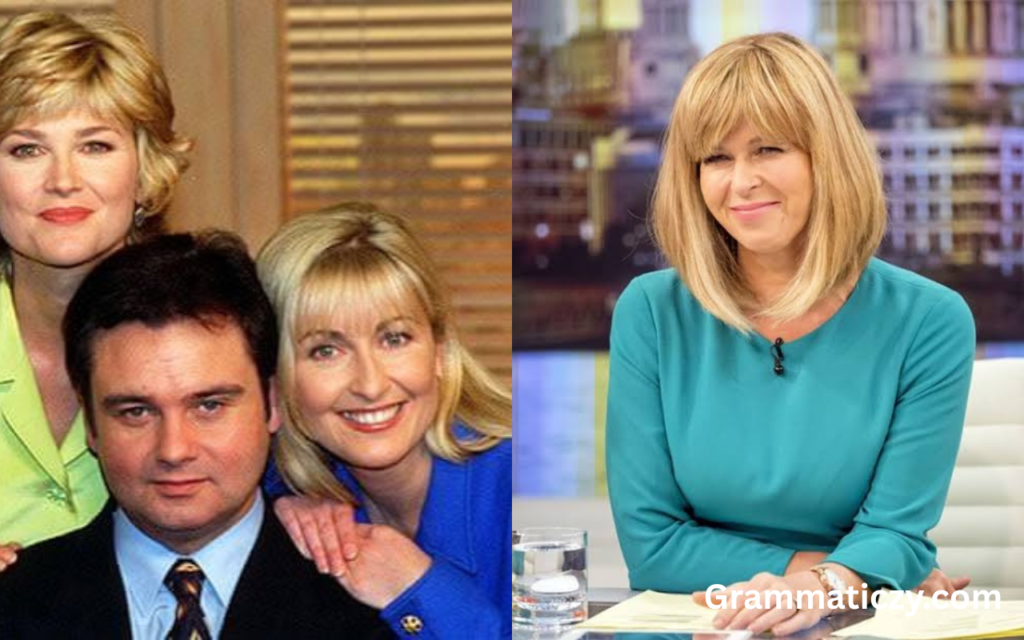
For almost two decades, GMTV was one of the most recognisable fixtures on British television. From its launch in January 1993 to its final broadcast in September 2010, the programme became part of the everyday routine of millions of viewers, combining breaking news with celebrity interviews, entertainment, weather, health, lifestyle features and human-interest stories. Yet GMTV’s greatest strength was arguably its presenters. The familiar faces sitting behind the breakfast desk became trusted companions for viewers, and many of them went on to enjoy remarkably successful careers long after GMTV disappeared from the ITV schedule.
The term GMTV presenters covers a large group of broadcasters rather than one individual. Among the best remembered are Eamonn Holmes, Lorraine Kelly, Fiona Phillips, Penny Smith, John Stapleton, Kate Garraway, Ben Shephard and Andrew Castle. Others, including Fiona Armstrong, Anne Davies, Michael Wilson, Fern Britton, Anthea Turner and Jenni Falconer, also contributed to different periods of the programme’s history. Their backgrounds were remarkably diverse, ranging from journalism and news reporting to sport and entertainment, which helped give GMTV its distinctive personality.
GMTV Presenters Facts and Quick Overview
| Detail | Information |
|---|---|
| Subject | GMTV Presenters |
| Programme | GMTV |
| Network | ITV |
| First broadcast | 1 January 1993 |
| Final broadcast | 3 September 2010 |
| Original presenters | Eamonn Holmes, Anne Davies, Fiona Armstrong and Michael Wilson |
| Notable presenters | Lorraine Kelly, Fiona Phillips, Penny Smith, John Stapleton, Kate Garraway, Ben Shephard, Andrew Castle |
| Programme type | Breakfast television |
| Main content | News, entertainment, interviews, lifestyle, health, weather and human-interest |
| Successor | Daybreak |
| Current status | GMTV ended in 2010 |
| Most enduring legacy | Many presenters continued successful television and radio careers |
| Individual net worth | Varies substantially; no reliable collective figure exists |
| Social media | Former presenters maintain individual public profiles where applicable |
How GMTV Changed British Breakfast Television
GMTV officially began broadcasting on 1 January 1993, with Eamonn Holmes and Anne Davies presenting the first edition. Fiona Armstrong and Michael Wilson were among the main launch presenters, with the programme broadcasting from The London Studios on London’s South Bank. Its concept was ambitious: ITV wanted a breakfast programme that could combine credible journalism with a more relaxed, accessible style suited to viewers starting their day.
The beginning, however, was challenging. GMTV reportedly lost around two million viewers during its first six weeks, forcing executives to reconsider aspects of the format. Michael Wilson moved towards a dedicated early-morning news slot, while changes to the programme’s presentation and editorial approach helped it develop a stronger identity. What eventually emerged was a distinctive mixture of serious journalism and entertainment that became central to ITV’s morning schedule.
The programme eventually became much more than a conventional breakfast news show. Its schedule included national and international news, regional stories, weather, interviews, cookery, health advice, competitions, celebrity coverage and human-interest reports. This broad approach allowed different presenters to develop their own strengths and personalities, which helped create the familiar, companionable atmosphere for which GMTV became known.
Eamonn Holmes and the Beginning of the GMTV Era
Eamonn Holmes was one of the most important figures in GMTV’s history because he was there from the very beginning. Born in Belfast, he had already established himself as a broadcaster before joining the new ITV breakfast programme. On 1 January 1993, he presented GMTV’s first edition alongside Anne Davies, immediately becoming one of the faces associated with the show’s launch.
Holmes brought a confident but conversational style to breakfast television. His background in journalism allowed him to handle serious news, while his natural ability to communicate with guests made him equally comfortable with entertainment interviews. He remained with GMTV until 2005, making his tenure one of the longest and most influential of the programme’s early period.
After leaving GMTV, Holmes continued to build an impressive broadcasting career. He became the presenter of Sky News’ Sunrise and later became strongly associated with ITV’s This Morning. His career demonstrated how the skills developed through live breakfast television could translate into different formats and networks. His GMTV years remain one of the most important chapters in a broadcasting career that has spanned several decades.
Lorraine Kelly’s Extraordinary Television Journey
Lorraine Kelly is arguably the GMTV presenter whose association with breakfast television has lasted the longest. Her relationship with ITV began before GMTV itself, and she subsequently became one of the most recognisable personalities on the network. She first appeared on ITV as a Scotland correspondent for TV-am and later became closely associated with GMTV before developing her own television programme.
Kelly’s early career is particularly interesting because she did not follow a conventional university-to-national-television route. She left school at 17 and began working for the East Kilbride News, discovering a passion for journalism through practical experience. She later joined BBC Scotland as a researcher and progressed into television reporting. Her career illustrates how determination, professional experience and an ability to connect with audiences can be just as important as formal qualifications in broadcasting.
Her greatest achievement came through developing the personality and programme now known simply as Lorraine. ITV notes that she began hosting her own show in September 2010, around the time GMTV ended. In 2024, Kelly celebrated 40 years on screen and received a BAFTA TV Special Award recognising her contribution to television. Her longevity makes her one of the clearest examples of a GMTV presenter successfully transforming a breakfast-TV career into a lasting personal brand.
Fiona Phillips and GMTV’s Entertainment Identity
Fiona Phillips was another hugely familiar GMTV face. She joined the programme in 1993 as an entertainment correspondent and gradually developed into one of its principal presenters. Her work helped strengthen the entertainment and celebrity side of GMTV while retaining the conversational style that made the programme accessible to ordinary viewers.
Phillips became especially associated with interviews and lifestyle coverage, and her career demonstrated how breakfast television could provide a platform for presenters to develop a broad public identity. Rather than being restricted to reading headlines, GMTV presenters were expected to move naturally between serious stories, celebrity conversations, entertainment reports and human-interest features.
Her later life brought a deeply personal chapter when she publicly announced that she had been diagnosed with Alzheimer’s disease at the age of 61. Her openness attracted considerable public attention and showed the other side of television fame: presenters who spent decades interviewing other people could eventually find themselves becoming the subject of major public conversations themselves.
Penny Smith and the News Side of GMTV
Penny Smith was one of the programme’s longest-serving personalities. She was associated with GMTV from 1993 through 2010, making her one of the rare presenters whose career effectively spanned the entire life of the GMTV brand. Her work included newsreading and presenting, giving her an important role in maintaining the programme’s journalistic credibility.
Smith represented the more serious side of breakfast television. While GMTV was famous for celebrity interviews and lifestyle features, viewers also relied on it for the day’s important news. Presenters such as Smith helped provide the calm, authoritative delivery required when the programme was covering major national or international developments.
Her long tenure also illustrates the value of consistency in television. Audiences become attached to familiar presenters because they see them repeatedly, often five mornings a week. For many GMTV viewers, Smith was not simply a newsreader but part of the rhythm of their morning routine.
John Stapleton’s Long Broadcasting Legacy
John Stapleton was another major journalistic presence on GMTV. His association with the programme lasted from the 1990s through its final year, and he became especially linked with GMTV Newshour. His career brought considerable journalistic experience to a programme that increasingly balanced entertainment with serious current affairs.
Stapleton’s professional style was different from that of the entertainment-focused presenters. His strength was credibility, calmness and the ability to explain serious subjects clearly. He demonstrated that breakfast television could remain accessible without sacrificing journalistic standards, particularly when major stories dominated the morning news agenda.
After GMTV ended, Stapleton continued working with ITV, including as a special correspondent and presenter during the Daybreak era. He later appeared as a stand-in presenter for Good Morning Britain. His career therefore provides an important link between GMTV and the subsequent generations of ITV breakfast television. He died in 2025 aged 79, prompting tributes from former colleagues including Kate Garraway, Susanna Reid and Charlotte Hawkins.
Kate Garraway’s Rise From GMTV to Good Morning Britain
Kate Garraway became one of the most recognisable GMTV presenters of the 2000s. Historical programme records show her association with GMTV in several capacities, followed by a long presenting career on Daybreak and Good Morning Britain.
Her presenting style combined journalistic experience with the warmth required for breakfast television. She could conduct serious interviews, discuss current affairs and transition into entertainment or lifestyle stories without making the programme feel disjointed. This versatility became one of the qualities that helped her remain relevant as ITV’s breakfast programming evolved.
Garraway’s career after GMTV demonstrates that the programme was an important stepping stone rather than a career destination. When GMTV was replaced, she was able to carry her experience into Daybreak and subsequently Good Morning Britain. Her continuing presence on ITV reflects the durability of the skills developed during the GMTV era.
Ben Shephard and the New Generation of Presenters
Ben Shephard joined GMTV around the beginning of the new millennium and became one of the programme’s most recognisable younger presenters. His background and style were particularly suited to GMTV’s combination of entertainment, celebrity interviews and live television. He remained with the programme for roughly a decade.
One of Shephard’s strengths has always been versatility. GMTV gave him experience in a demanding live environment where presenters had to work quickly, react to unexpected moments and communicate naturally with a wide audience. Those abilities later helped him move into entertainment programmes, sports broadcasting and other television formats.
Shephard ultimately became one of the presenters associated with Good Morning Britain, continuing the connection between the old GMTV format and modern ITV breakfast television. His career is an excellent example of how the programme helped develop presenters capable of working across several different genres.
Andrew Castle’s Remarkable Career Transition
Andrew Castle brought a particularly unusual background to GMTV. Before becoming a television presenter, he was a professional tennis player, giving him experience in competitive sport and international environments. He later moved into broadcasting and became one of GMTV’s principal presenters during the 2000s.
Castle’s sporting background gave him a different perspective from presenters who had entered television through journalism. He understood elite competition, interviews and live performance, while his broadcasting career developed his skills in news, current affairs and entertainment. His GMTV years helped establish him as a major television personality in his own right.
His later association with Wimbledon further demonstrated his ability to combine sport and broadcasting. Castle’s career is one of the clearest examples of how a person can successfully reinvent themselves, moving from professional athlete to breakfast television presenter and then becoming a major voice in tennis broadcasting.
Other Famous GMTV Presenters and Contributors
The GMTV story was never limited to the biggest names. Fiona Armstrong, Anne Davies, Michael Wilson, Amanda Redington, Ross Kelly, Anthea Turner, Fern Britton, Vanessa Feltz and Jenni Falconer all had associations with different GMTV programmes or periods. Their careers reveal how broad the programme’s presenting team actually was.
Fern Britton, for example, appeared as a presenter of Top of the Morning in 1993 before building an extensive television career that included Ready Steady Cook and This Morning. Anthea Turner was another recognisable television personality who joined GMTV in the 1990s, while Vanessa Feltz presented Top of the Morning during her time with the organisation.
The programme also relied heavily on specialist correspondents and experts. Ross King became strongly associated with entertainment reporting from Los Angeles, while figures such as Mark Heyes developed careers in fashion and styling through television appearances. ITV’s own retrospective material notes that King began working with Lorraine Kelly in 1993 as GMTV’s Los Angeles correspondent, illustrating how the programme created long-term professional relationships that continued for years.
GMTV Presenters’ Education and Career Backgrounds
One fascinating aspect of the GMTV presenting team is how different their routes into television were. There was no single formula for becoming a breakfast presenter. Some came through journalism and regional news, while others developed careers in entertainment, radio, sport or specialist reporting.
Lorraine Kelly’s path from a local newspaper job to national television is one example of practical journalism opening doors. Andrew Castle’s transition from tennis to broadcasting is another. Eamonn Holmes developed through journalism and regional broadcasting, while other GMTV personalities brought experience from established television programmes before joining ITV’s breakfast schedule.
That variety ultimately strengthened GMTV. Viewers were presented with different personalities, voices and areas of expertise. The programme could move from a political interview to a celebrity discussion, from a breaking news report to a cooking feature, without relying on a single type of presenter.
Personal Lives and Public Personalities
The private lives of GMTV presenters have naturally attracted public interest because breakfast television creates an unusually intimate relationship between broadcasters and viewers. Seeing the same people regularly in one’s home can create a feeling of familiarity, even when viewers have never met them personally.
Lorraine Kelly is perhaps the strongest example. Her public identity has always been closely connected with warmth, humour and family. A 2025 Guardian profile described her home life with her husband Steve and daughter Rosie while also examining the distinction between her television persona and private identity.
Other presenters have similarly developed public identities beyond the GMTV studio. Their careers have included radio, writing, sports broadcasting, entertainment programmes, journalism and charity work. This ability to develop interests outside breakfast television has helped many of them maintain successful careers long after the original programme disappeared.
GMTV Presenters’ Net Worth and Income Sources
There is no single reliable figure for the net worth of GMTV presenters because the term refers to dozens of individuals whose careers, earnings and investments differ considerably. Online celebrity websites sometimes publish estimated fortunes, but these figures are often unsupported by financial documentation and should not be treated as confirmed facts.
The leading presenters have earned income through a combination of television contracts, presenting work, radio, journalism, books, commercial appearances and other media opportunities. Some developed their own television programmes, while others moved into specialist broadcasting or entertainment. Lorraine Kelly’s decades-long ITV career is a particularly strong example of how a presenter can turn television experience into a long-term media career.
The most accurate conclusion is therefore that many leading former GMTV presenters have achieved significant professional and financial success, but individual net-worth estimates should be regarded cautiously unless the figures have been publicly verified. Their real achievement is perhaps better measured through career longevity, major broadcasting roles and their continuing influence.
Social Media and the GMTV Legacy Today
GMTV existed before social media became central to celebrity culture. During its original run, viewers interacted with presenters through letters, telephone competitions and live studio features. Today, former GMTV presenters can maintain direct relationships with audiences through platforms such as Instagram, Facebook and X.
Lorraine Kelly’s long-running public profile is particularly notable. Her career has continued to evolve alongside changes in media consumption, allowing her to communicate with audiences beyond traditional television. ITV has also documented the continuing presence of people who worked with her during the GMTV years, including Ross King and Mark Heyes.
Social media has therefore helped preserve some of the nostalgia surrounding GMTV. Former viewers who grew up watching the programme can now follow presenters as they move through later stages of their careers. In that sense, the GMTV generation has successfully crossed from traditional broadcast television into the digital age.
Why GMTV Ended in 2010
GMTV’s final broadcast took place on 3 September 2010, bringing an end to a television brand that had been part of British mornings for more than 17 years. The final presenting team included Andrew Castle and Emma Crosby, while Kate Garraway and other familiar figures had also been part of the final period.
The programme was replaced by Daybreak as ITV attempted to create a new identity for breakfast television. The change reflected a wider transformation in British broadcasting, with networks increasingly experimenting with new formats, presenting partnerships and approaches to morning news and entertainment.
Yet ending GMTV did not mean ending its influence. Many of its presenters simply moved into the next generation of ITV breakfast television. Lorraine Kelly developed her own long-running programme, while Kate Garraway and Ben Shephard became associated with Good Morning Britain. The transition demonstrates just how deeply GMTV’s talent had become embedded in British broadcasting.
The Lasting Legacy of GMTV Presenters
The legacy of GMTV is ultimately found in its people. The programme introduced viewers to presenters who could deliver breaking news one moment and have a relaxed celebrity conversation the next. It helped establish breakfast television as a genre in which personality was almost as important as information.
Its presenters also demonstrated the importance of adaptability. Eamonn Holmes moved between breakfast television, news and entertainment. Lorraine Kelly built one of ITV’s most recognisable presenter-led brands. Andrew Castle transformed an athletic career into a broadcasting career. Kate Garraway and Ben Shephard successfully moved into the modern ITV breakfast era, while many other presenters continued working across television, radio and journalism.
Perhaps that is why GMTV remains so memorable more than a decade after its final broadcast. The logo may have disappeared and the studio may have changed, but the presenters became part of British television history. Their journeys show that successful broadcasting is not simply about appearing on screen; it is about building trust, adapting to change and creating a connection strong enough to survive even when the programme itself is gone.
GMTV was ultimately a chapter in British television, but its presenters became the lasting characters in that story. Their careers remind audiences that television history is shaped not only by programmes and ratings, but by the people who welcome viewers into their homes every morning. From the pioneering days of Eamonn Holmes and Lorraine Kelly to the later generation of Kate Garraway, Ben Shephard and Andrew Castle, the GMTV presenters demonstrated how perseverance, versatility and genuine communication can create careers that last for decades. As their individual journeys continue to evolve, the GMTV legacy remains a powerful reminder that when talent meets opportunity and the courage to reinvent oneself, one television chapter can become the foundation for an extraordinary professional life.