Pan’s People: The Untold Story of the Top of the Pops Dance Troupe That Changed British Television
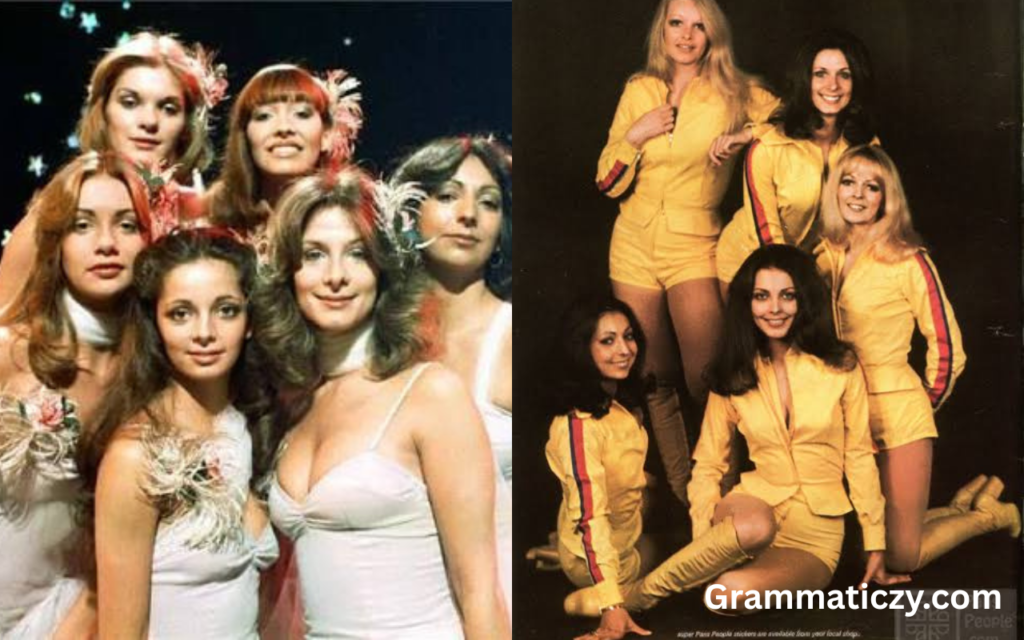
Long before music videos became a normal part of everyday pop culture, television audiences had to find other ways to see their favourite songs come alive. That was where Pan’s People entered the picture. With energetic choreography, distinctive costumes, carefully rehearsed formations and a remarkable understanding of the television camera, the all-female British dance troupe became one of the most recognisable acts associated with the BBC’s Top of the Pops. From the late 1960s through the mid-1970s, they helped turn recorded music into a visual spectacle and became so familiar to viewers that their performances could sometimes be remembered as strongly as the songs themselves.
Pan’s People were not a conventional pop group. They did not primarily sing the songs they performed to, and their members changed over the years. Instead, their particular talent was interpreting popular records through dance. The group was founded in London in December 1966 by American dancer and choreographer Felicity “Flick” Colby, and its eventual association with Top of the Pops gave its members a level of national exposure that was unusual for television dancers at the time. Their story is therefore also a story about the birth of televised pop performance, the changing role of women in entertainment and the creative possibilities of choreography.
Pan’s People Facts at a Glance
| Fact | Details |
|---|---|
| Name | Pan’s People |
| Founded | December 1966 |
| Founded in | London, England |
| Type | All-female dance troupe |
| Founder | Felicity “Flick” Colby |
| Main Choreographer | Flick Colby |
| Best Known For | BBC’s Top of the Pops |
| Top of the Pops Era | 1968–1976 |
| Original Famous Members | Flick Colby, Babs Lord, Dee Dee Wilde, Ruth Pearson, Louise Clarke, Andi Rutherford |
| Later Members | Cherry Gillespie, Sue Menhenick, Mary Corpe, Lee Ward |
| Only Member Across Entire TOTP Run | Ruth Pearson |
| First Full-Sextet TOTP Performance | 30 May 1968 |
| Final TOTP Performance | 29 April 1976 |
| Final Song | “Silver Star” – The Four Seasons |
| Founder’s Profession | Dancer and choreographer |
| Official Group Social Media | No reliably established official accounts |
| Collective Net Worth | No reliable public figure |
| Notable Book | Pan’s People – Our Story (2013) |
The facts surrounding Pan’s People sometimes vary slightly between sources because the troupe existed for a decade before its television career ended and underwent several lineup changes. The group began as a smaller formation before expanding into a six-member troupe, while different dancers appeared in different periods. The most consistently documented core members include Flick Colby, Babs Lord, Dee Dee Wilde, Ruth Pearson, Louise Clarke and Andi Rutherford, followed by later members such as Cherry Gillespie and Sue Menhenick.
It is also important to distinguish Pan’s People from its individual dancers. Because the group was a collective, there is no single age, birthplace, family background or personal net worth that accurately describes “Pan’s People.” Likewise, claims about a group-wide fortune or official Instagram account are difficult to substantiate. A responsible biography therefore focuses on documented careers, performances and achievements rather than repeating unsupported celebrity-style estimates.
The Formation of Pan’s People and Flick Colby’s Vision
The story began with Flick Colby, who had already gained professional experience as a dancer before establishing Pan’s People. Colby was born Felicity Isabelle Colby in Danville, Pennsylvania, in 1946 and developed an interest in dance from an early age. She studied ballet and other forms of dance, performed in musical productions and eventually travelled to Europe, where she became involved in television entertainment. Her move to London in 1966 proved particularly important because it placed her in the environment from which Pan’s People would emerge.
Colby had previously been connected with the Beat Girls, a dance ensemble associated with the BBC2 programme The Beat Room. According to later accounts from Dee Dee Wilde and Babs Powell, Colby and several other dancers were dissatisfied with their existing situation and decided to establish a new group. Colby joined forces with Babs Lord, Dee Dee Wilde and other dancers, eventually creating the troupe that became Pan’s People.
The name itself had an unusual beginning. The group initially considered the name “Dionysus’ Darlings,” but it was eventually changed to the much more memorable Pan’s People. Wilde later recalled the group’s late-night naming session and Colby’s reference to Pan, the ancient Greek god associated with music. The new name proved much easier to remember and soon became synonymous with a particular style of British television dance.
Early Career Before Top of the Pops
Pan’s People did not become famous overnight. After forming in 1966, the dancers worked to establish themselves through television appearances and international opportunities. They appeared on programmes in Britain and mainland Europe, including work in the Netherlands, Switzerland and Belgium. These experiences were valuable because they helped the dancers understand how to perform specifically for television rather than relying solely on traditional stage techniques.
The group’s early career also required considerable flexibility. Television producers wanted performers who could learn routines quickly and adapt to different musical styles. Pan’s People developed exactly that ability. Their work could move from soul and pop to rock, disco, glam and other popular sounds, requiring choreography that reflected the mood and rhythm of each individual recording.
This adaptability became one of the troupe’s greatest professional advantages. Instead of developing one signature dance style and repeating it, Colby and her dancers created routines around the records themselves. That approach was especially valuable on Top of the Pops, where a new chart song could require a completely different visual interpretation from one week to the next.
Pan’s People and Their Breakthrough on Top of the Pops
The crucial breakthrough came in 1968. Top of the Pops had a practical problem: many major recording artists were unable to appear in the studio. At a time when music videos were not yet the standard promotional tool they would later become, television needed another way to make recorded songs visually interesting. Dance offered a solution, and Pan’s People were ideally positioned to provide it.
Pan’s People first appeared on Top of the Pops in April 1968. Their earliest appearance involved only three dancers—Flick Colby, Dee Dee Wilde and Ruth Pearson—and they were brought in at relatively short notice. Later that year the complete six-member group appeared, with their first official full-sextet performance dated 30 May 1968, dancing to Elvis Presley’s “U.S. Male.”
Initially, Pan’s People were not a weekly fixture. They appeared periodically, but the audience response was strong enough to change their status. Fan mail and viewing figures helped demonstrate that viewers enjoyed having the dancers on the programme. Following the Top of the Pops revamp and expansion in January 1970, Pan’s People became a regular weekly feature and remained closely associated with the show for the next several years.
Why Pan’s People Became So Popular
One of the secrets behind Pan’s People’s success was their ability to make a recorded song feel like a live event. When a performer could not be physically present, the dancers gave the audience movement, energy and visual excitement. They effectively created an early form of music-video interpretation at a time when the modern music video had not yet become an established promotional format.
Their performances also benefited from the personalities of the individual dancers. Viewers began recognising particular members, and the group itself became part of the culture surrounding Top of the Pops. They were not simply anonymous background performers. Their costumes, hairstyles, formations and choreography became familiar elements of the weekly programme.
The dancers also understood that television was different from theatre. A stage audience might see the complete formation from a distance, whereas a television viewer could suddenly be given a close-up of one dancer or a wider shot showing the whole group. Choreography therefore had to work with cameras as well as with music. Colby’s ability to create routines for that environment was one of the most important reasons Pan’s People stood out.
Flick Colby as the Creative Force
Flick Colby’s influence extended far beyond founding the group. She became the principal choreographer responsible for turning songs into television performances. Her work required speed, imagination and an unusually broad musical vocabulary. According to accounts of her career, she sometimes had only a matter of hours to create a routine for a song whose performer could not attend the programme.
That pressure meant Colby could not rely on elaborate stage production. She needed choreography that communicated immediately and could be rehearsed efficiently. Her routines had to work within studio limitations while still looking exciting on television. This made her a specialist in a relatively new form of entertainment choreography.
By around 1971–1972, Colby increasingly moved away from dancing herself and concentrated on choreography. Although she stopped performing as a Pan’s People dancer, she remained creatively involved with the troupe. She later continued choreographing other Top of the Pops dance groups, including Ruby Flipper, Legs & Co. and Zoo, demonstrating that her influence extended well beyond the original troupe.
The Classic Pan’s People Lineup
The lineup of Pan’s People changed repeatedly, but the best-known formation developed during the early 1970s. When Cherry Gillespie joined in 1972 and Colby stepped away from dancing to concentrate on choreography, the group was associated with Babs Lord, Dee Dee Wilde, Ruth Pearson, Louise Clarke and Cherry Gillespie. This quintet is often regarded as the classic Pan’s People lineup.
Ruth Pearson occupies a particularly important position in the troupe’s history. She was the only dancer who remained with Pan’s People throughout its complete Top of the Pops period. While other members departed for family reasons, new opportunities or different stages of their careers, Pearson remained a constant presence.
The changes also reveal something about the realities of professional dance during the period. Several dancers left after starting families, while others moved toward different forms of entertainment work. The group was therefore never a completely fixed institution. Its identity evolved as new women entered the lineup and inherited the established Pan’s People style.
Babs Lord, Dee Dee Wilde and the Other Members
Babs Lord was one of the founding members and remained with Pan’s People until 1975. After leaving the group, she developed a very different public profile as a charity fundraiser and adventurer. Her later achievements included expeditions to both the North and South Poles, demonstrating the adventurous personality that existed beyond her television career. She was also the subject of This Is Your Life in 2001.
Dee Dee Wilde was another founding member who later developed a career connected with music therapy and dance. She co-founded the Nordoff-Robbins Music Therapy organisation and founded Dance Attic studios in London. Her post-Pan’s People work demonstrates how professional dancers could use their creative experience in education, therapy and community-oriented projects.
Cherry Gillespie joined the troupe in 1972 and remained until the end of its Top of the Pops era. Afterward, she continued working in entertainment and choreography and appeared alongside Roger Moore in the James Bond film Octopussy. She also appeared in The Hot Shoe Show, further extending her career beyond the dance troupe.
Louise Clarke, Andi Rutherford and Later Members
Louise Clarke was part of the original television lineup and remained with Pan’s People until 1974. She subsequently left to start a family. Her departure was one of several lineup changes that gradually transformed the group during the 1970s. Clarke died in 2012 at the age of 62.
Andi Rutherford was another important early member. She joined the group during its formative period and remained until 1972, when she left to raise a family. Her departure coincided with the arrival of Cherry Gillespie, one of the dancers who would become strongly associated with the later years of Pan’s People.
Sue Menhenick subsequently joined in 1974, while Mary Corpe and Lee Ward became members in 1975. These later dancers inherited a troupe that already carried considerable public recognition. By this stage, however, the group was approaching the end of its original Top of the Pops journey.
Pan’s People’s Television Career Beyond Top of the Pops
Although Top of the Pops remains their defining association, Pan’s People appeared on numerous other television programmes. Their credits included entertainment productions such as The Bobbie Gentry Show, Happening for Lulu, Sez Les, The Two Ronnies and The Benny Hill Show. They also appeared in productions connected with performers and musical entertainment outside the weekly chart programme.
These appearances demonstrate how significant the troupe had become within British television. Once audiences knew the dancers from Top of the Pops, producers could use their established reputation elsewhere. Their professional identity expanded from “dancers who appear with songs” into that of recognised television entertainers.
The group also worked internationally and performed nightclub cabaret. This broader professional activity is important because it shows that Pan’s People were working performers rather than television personalities whose careers existed only inside one programme. Their television fame was built on a wider foundation of dance experience and entertainment work.
Pan’s People and Their Recording Career
Although Pan’s People were primarily known for dancing rather than singing, they also made an attempt to enter the recorded-music market themselves. In 1974, the group released a single called “You Can Really Rock and Roll Me.” The record did not transform them into a major recording act, but its existence is an interesting footnote in their career because it showed their willingness to explore opportunities beyond choreography and television dance.
Their limited recording career also highlights what made Pan’s People distinctive. Their real strength was not competing with the singers and bands appearing on the charts. Their strength was interpreting those artists through movement. Their legacy was consequently created primarily through television performances rather than record sales.
In many ways, this makes their achievements even more interesting. Pan’s People became famous without needing to become a conventional pop act. Their brand was built around dance, personality, visual presentation and television exposure.
The Reality Behind the Fame and Their Earnings
Pan’s People became nationally famous, but their financial rewards were not necessarily comparable to the level of recognition they received. Historical accounts of Top of the Pops indicate that dancers were paid the minimum Equity rate, with figures reported at around £56 per week during the early 1970s.
That detail provides useful context when discussing Pan’s People’s net worth. Modern websites sometimes attach impressive-looking financial estimates to famous historic performers, but there is no dependable collective “Pan’s People net worth” figure. The members were separate individuals with different careers, earnings and financial circumstances.
Their income would have come from a combination of television work, performances, choreography, stage appearances and later professional activities. Some members moved into other fields after Pan’s People, meaning their financial stories cannot sensibly be combined into one number. It is therefore more accurate to describe Pan’s People as a commercially successful and highly visible television troupe without assigning an unsupported collective fortune.
Personal Lives and Life After Pan’s People
The personal lives of the dancers were often intertwined with the practical realities of their careers. Family commitments played a significant role in several lineup changes. Andi Rutherford and Louise Clarke, for example, left the group as they moved into family life. These departures demonstrate that the women’s identities extended well beyond their television work.
After leaving Pan’s People, the dancers followed remarkably varied paths. Some continued in entertainment, others entered dance education or choreography, while others developed careers in charity, adventure or related fields. Their later lives therefore provide a more complete picture of women who had achieved television fame at a young age but were not defined by it forever.
Their 2013 memoir, Pan’s People – Our Story, offered an especially valuable opportunity to look back on these experiences. The book was written by former members including Babs Lord, Ruth Pearson and Dee Dee Wilde, with Cherry Gillespie also associated with the classic lineup. It was published by Titan Books and provides personal recollections of the troupe’s years in popular entertainment.
The Final Years and Last Top of the Pops Appearance
By the middle of the 1970s, Pan’s People had undergone substantial changes. Babs Lord and Dee Dee Wilde left in 1975, while Mary Corpe and Lee Ward joined. Ruth Pearson remained the only original member still present as the group approached its final appearance.
The end came on 29 April 1976. The final lineup consisted of Mary Corpe, Cherry Gillespie, Sue Menhenick and Ruth Pearson. During the programme, they danced to “Silver Star” by the Four Seasons. Their final appearance brought approximately eight years of regular Pan’s People involvement with Top of the Pops to a close.
Interestingly, the programme did not give the troupe a major farewell ceremony. Their departure simply marked the end of one era and the beginning of another. The following week, the BBC introduced Ruby Flipper, a mixed-gender dance group that was also choreographed by Flick Colby.
What Happened to Pan’s People After 1976?
The end of Pan’s People did not mean the end of the creative legacy created by Flick Colby and the dancers. Colby immediately continued her work within Top of the Pops, becoming involved with Ruby Flipper and later Legs & Co. and Zoo. Her influence therefore survived through successive generations of television dancers.
Ruth Pearson also continued to have an important role behind the scenes. She became involved in managing later dance groups including Ruby Flipper and Legs & Co. This represented an interesting transition from performer to manager and showed how experience gained during the Pan’s People years could be applied to other aspects of television production.
The former members also remained connected through memories, reunions and historical retrospectives. Their story has survived because audiences continue to rediscover archived performances and because the dancers themselves have contributed recollections of the era. The 2013 memoir was particularly important in preserving that first-hand perspective.
Flick Colby’s Death and the Loss of a Pioneer
Flick Colby died on 26 May 2011 at the age of 65. Her death marked the passing of the woman most responsible for creating and shaping Pan’s People. She had not simply founded a dance troupe; she had developed a practical choreography style for a new television environment and subsequently influenced multiple generations of Top of the Pops dancers.
Louise Clarke died in 2012 at the age of 62, while Ruth Pearson died in 2017 at the age of 70. With time, the passing of these important members has made archival footage and first-hand accounts increasingly valuable for preserving the history of Pan’s People.
Their deaths also remind audiences that Pan’s People was a real working community of dancers rather than simply a nostalgic television image. Behind the costumes and choreography were women who spent years rehearsing, touring, adapting to changing entertainment fashions and building careers in an industry that could be demanding and unpredictable.
Pan’s People’s Lasting Influence on Dance and Pop Culture
Pan’s People helped establish an important connection between popular music and visual performance. At a time when the modern music video was still developing, they demonstrated how choreography could give a record an immediate visual identity. Their performances anticipated aspects of the music-video culture that would become increasingly important during the 1980s and beyond.
Their influence can also be seen in the continuing use of specialist dance troupes on television. Ruby Flipper, Legs & Co. and Zoo all followed within the Top of the Pops tradition, with Flick Colby remaining involved in the choreography. The lineage shows that Pan’s People was not an isolated phenomenon but part of a developing television dance format.
Most importantly, Pan’s People demonstrated that dancers could become memorable television personalities in their own right. They were not merely decoration surrounding a singer. They became part of the entertainment itself, building an identity that audiences recognised week after week.
Pan’s People on Social Media and Online Today
Unlike contemporary entertainment groups, Pan’s People did not have the benefit of social media during their active years. There is therefore no well-established official Instagram, X/Twitter or LinkedIn presence comparable to that of modern performers. Online interest today is instead sustained through archive footage, fan communities, biographies, interviews and retrospective publications.
This distinction matters when researching Pan’s People because unofficial social-media pages can easily be mistaken for official accounts. Anyone looking for information about the dancers should pay particular attention to established archives, published interviews and books rather than assuming that an account using the group’s name represents the original organisation.
Their strongest digital presence is therefore cultural rather than promotional. Clips and photographs from Top of the Pops continue to circulate, while historical websites and publications keep their story accessible to younger audiences who may never have watched the original broadcasts.
Pan’s People – Our Story and Preserving Their Legacy
The publication of Pan’s People – Our Story in 2013 was an important moment in preserving the group’s history. Rather than presenting the dancers only through the memories of fans or television historians, the book allowed members of the classic lineup to tell their own story. The publisher describes it as a memoir covering their experiences during the golden era of British pop television.
The book is particularly valuable because Pan’s People belonged to a period when television archives were not always preserved as comprehensively as modern viewers might expect. Many historic performances disappeared or survive only in incomplete form. Written recollections can therefore add context that old footage alone cannot provide.
For modern readers interested in British television history, 1970s dance, Top of the Pops, female performers and the development of music television, the story of Pan’s People offers a fascinating window into a rapidly changing entertainment industry.
Conclusion: The Legacy of Pan’s People
Pan’s People earned their place in British television history by doing something that now seems simple but was remarkably innovative for its time: they made popular music visible. Before music videos became an essential part of the industry, they transformed songs into choreographed television performances and gave audiences a visual reason to remain engaged even when the recording artist was absent. Their weekly appearances helped make Top of the Pops more than a chart countdown; they made it a visual entertainment programme.
The story of Pan’s People is also the story of individual ambition. Flick Colby turned her experience as a dancer into a pioneering choreography career. Babs Lord went on to become an adventurer and charity fundraiser. Dee Dee Wilde pursued dance and music therapy, Cherry Gillespie continued in entertainment, Ruth Pearson moved into management, and other members developed careers and family lives beyond the spotlight.
Their greatest legacy, however, may be the proof that a performer does not have to hold a microphone to change popular culture. Pan’s People helped define an era in which dance, television and pop music became increasingly inseparable. Their routines may have lasted only a few minutes, but their influence lasted for decades.
As Pan’s People continue to be rediscovered through archive footage, biographies and personal recollections, their journey remains a powerful reminder that creativity, discipline and the courage to build something new can create a legacy far greater than anyone initially imagines.