
Jacqueline Pearce: The Extraordinary Life, Career and Legacy of the Actress Who Became Servalan
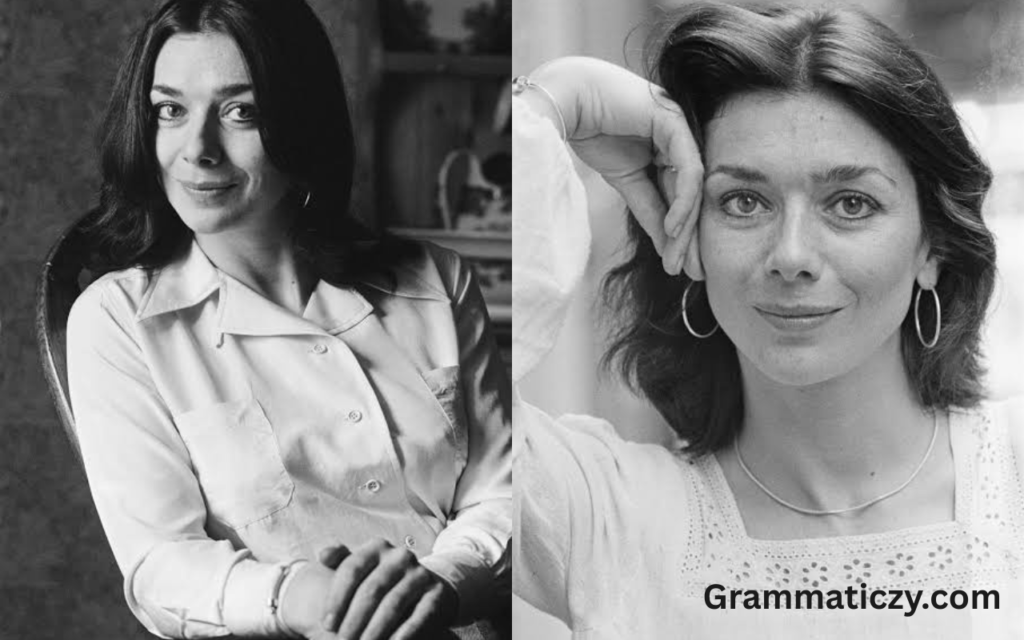
Jacqueline Pearce had the kind of screen presence that could command attention without raising her voice. Elegant, intense and unmistakably distinctive, she became a familiar face to British television audiences long before science fiction turned her into a cult icon. Yet her journey to fame was anything but straightforward. Born in Surrey during the Second World War, Pearce experienced an unconventional childhood, trained alongside future acting legends at RADA, appeared in some of Hammer’s best-known horror productions, crossed the Atlantic in search of a new beginning, and eventually found lasting fame as the ruthless Supreme Commander Servalan in Blake’s 7.
What makes Jacqueline Pearce’s biography particularly fascinating is the contrast between her public image and her private life. Audiences saw an assured actress who could portray powerful women with extraordinary confidence, but Pearce’s own memoir revealed years of insecurity, emotional struggles, financial difficulties and searching for somewhere she could truly belong. Her story was one of constant reinvention, taking her from British television and cinema to the West End, Cornwall, South Africa and eventually back to the audio dramas that allowed her to revisit some of her most celebrated characters.
Jacqueline Pearce Biography and Quick Facts
| Fact | Details |
|---|---|
| Full name | Jacqueline Kay Pearce |
| Date of birth | December 20, 1943 |
| Birthplace | Woking/Byfleet, Surrey, England |
| Date of death | September 3, 2018 |
| Age at death | 74 |
| Profession | Actress and memoirist |
| Best known for | Servalan in Blake’s 7 |
| Parents | Stella Pearce and Reginald Pearce |
| Siblings | No known siblings |
| Education | Royal Academy of Dramatic Art; Lee Strasberg Actors Studio |
| Years active | 1964–2018 |
| Famous films | The Reptile, The Plague of the Zombies, White Mischief, How to Get Ahead in Advertising |
| Famous TV roles | Servalan, Rosa Dartle, Chessene and others |
| Memoir | From Byfleet to the Bush |
| First husband | Drewe Henley |
| Second husband | Michael Rudman |
| Net worth | No reliable public estimate available |
| No verified official account known | |
| Twitter/X | No verified official account known |
| No verified official account known |
Jacqueline Pearce’s Early Life and Family Background
Jacqueline Kay Pearce was born on December 20, 1943, in Surrey, and grew up in Byfleet. Her father, Reginald Pearce, worked at the Vickers Armstrong aircraft factory in nearby Weybridge, while her mother was Stella Pearce. Her family circumstances were unusual from the beginning because her mother left when Jacqueline was only about 16 months old. Her father subsequently shared the family home with May and George Wilcox, who also became involved in raising the young Jacqueline.
Growing up in such an unconventional household had a lasting effect on Pearce. She later wrote about her childhood with remarkable honesty, describing the emotional difficulties and instability that accompanied her early years. Rather than allowing those experiences to remain hidden behind her glamorous professional image, she eventually incorporated them into the story of her life through her memoir From Byfleet to the Bush.
Pearce attended the Marist Convent School in West Byfleet, a period she remembered as deeply unhappy. Yet the school also contained one of the most important influences on her future. A lay teacher recognized her interest in performance, gave her elocution lessons and introduced her to theatre. That exposure helped awaken a passion that eventually redirected her away from a conventional career and toward professional acting.
Education at RADA and the Start of Her Acting Career
Before becoming a professional actress, Pearce briefly attended secretarial college, but she soon realized that office work was not the life she wanted. She successfully gained admission to the Royal Academy of Dramatic Art in London, better known as RADA. There she studied in an environment that would prove extraordinarily important to her career, alongside people who would later become some of Britain’s most celebrated actors.
Among Pearce’s contemporaries at RADA were Anthony Hopkins and John Hurt. Her friendship with Hurt became particularly significant and lasted throughout her life. The connection was more than a footnote in her biography; decades later, the two would work together again in audio drama, giving their long professional and personal relationship a remarkable final chapter.
Pearce graduated from RADA in the early 1960s and quickly began finding professional opportunities. Her television career was underway by 1964, when she appeared in an ITV production alongside John Hurt and Ian McShane. Her early work demonstrated the versatility that would become a defining characteristic of her career, with appearances in television dramas, adventure series and British films arriving in relatively quick succession.
Jacqueline Pearce and Hammer Horror Films
One of Pearce’s earliest major film opportunities came through Hammer Film Productions, the British studio famous for its gothic horror movies. In 1966 she appeared in both The Plague of the Zombies and The Reptile, two productions that have since become important titles in the history of British horror cinema. These roles established Pearce as a memorable genre actress while also showcasing how effectively she could create atmosphere and tension on screen.
In The Reptile, Pearce played the title character, a woman suffering from a horrifying supernatural transformation. Despite the elaborate creature makeup and conventions of Hammer horror, Pearce brought a sympathetic quality to the character. Her performance helped prevent the role from becoming merely a visual horror spectacle and instead gave the tragic figure an emotional dimension.
Her work in The Plague of the Zombies was equally memorable for horror fans. The film included one of the most striking moments of her early career, involving her character’s gruesome fate. Pearce’s association with Hammer subsequently became an important part of her legacy, particularly among classic horror enthusiasts who continued to rediscover her work decades after the movies were released.
Marriage, Divorce and Her Move to America
Pearce married actor Drewe Henley in 1963, shortly after beginning her professional career. The marriage connected her personal life closely with the theatrical world in which she was working, but the relationship ended in divorce in 1967. The breakdown of the marriage became an important turning point, and Pearce subsequently left Britain for the United States.
Her arrival in Los Angeles represented an attempt to begin again. She studied at the Lee Strasberg Actors Studio, exposing herself to a different acting tradition from the formal British training she had received at RADA. She also became acquainted with entertainer Sammy Davis Jr., for whom she worked for a period.
However, America did not immediately deliver the Hollywood breakthrough Pearce might have hoped for. Her time there included serious personal difficulties, and her career temporarily lost momentum. Nevertheless, the experience became another formative chapter in her life. When she eventually returned to Britain, she brought with her additional acting training, professional experience and a much more complicated understanding of the entertainment industry.
Jacqueline Pearce’s Return to British Television
After returning to Britain, Pearce gradually rebuilt her career. During the 1970s she became a familiar presence on British television, appearing in a wide range of dramas and productions. One of her most respected performances came as Rosa Dartle in the BBC’s adaptation of Charles Dickens’s David Copperfield in 1974–75.
The role of Rosa Dartle demonstrated that Pearce could handle serious literary drama just as effectively as horror and genre material. Her performances during this period helped establish her as a dependable character actress rather than someone remembered only for her early Hammer appearances. She continued to appear in television productions while also maintaining connections with theatre.
Pearce’s theatre career included a 1975 West End production of Simon Gray’s Otherwise Engaged, directed by Harold Pinter. She later appeared in other stage productions, including Dangerous Corner, and performed her one-woman show A Star Is Torn at the Edinburgh Fringe in 1999. Her stage work reflected the depth of her formal training and her continuing desire to explore different forms of performance.
Servalan in Blake’s 7: The Role That Changed Everything
Jacqueline Pearce’s career reached its defining moment in 1978 when she appeared in Terry Nation’s BBC science-fiction series Blake’s 7. She was initially hired for what was expected to be a single episode. Instead, her portrayal of Supreme Commander Servalan was so striking that the character became a recurring presence and eventually the principal villain of the series.
Servalan was the powerful leader of the Terran Federation, an authoritarian regime pursuing the rebels at the heart of the series. Pearce played her with an unusual mixture of elegance, cruelty, intelligence and sensuality. Rather than portraying Servalan as a conventional one-dimensional villain, she gave the character vulnerability and psychological complexity. That interpretation transformed a supporting character into one of the show’s central figures.
The character appeared regularly throughout all four series of Blake’s 7, which ran from 1978 to 1981. Pearce’s striking appearance, cropped dark hair, elaborate costumes and commanding performance made Servalan instantly recognizable. The character became one of British science fiction’s most enduring villains, and Pearce later received letters from viewers who remembered Servalan as one of their earliest television crushes.
What Made Servalan So Memorable?
The success of Servalan was closely tied to Pearce’s understanding of performance. She did not simply rely on dialogue to communicate power. Her posture, facial expressions, movements and voice created a character who could dominate a scene even when she was not physically threatening anyone. That combination of glamour and danger became the defining quality of her portrayal.
Pearce also understood that Servalan needed to be entertaining as well as frightening. There was a theatrical quality to the character that allowed the actress to embrace the extravagant costumes and heightened world of Blake’s 7. Yet underneath the flamboyance was a character driven by ambition, insecurity and an obsessive desire for control. Pearce’s ability to balance those contradictions gave Servalan unusual longevity.
The relationship between Servalan and other major characters, especially Paul Darrow’s Avon, added another layer to the series. Pearce later suggested that the two characters were in some ways dependent upon each other and represented contrasting sides of the same personality spectrum. Her interpretation helped make the Servalan-Avon dynamic one of the most intriguing relationships in the series.
Jacqueline Pearce’s Doctor Who and Other Television Work
Pearce’s connection with British science fiction extended beyond Blake’s 7. In 1985 she appeared in Doctor Who in the serial The Two Doctors, playing the character Chessene. The role gave her another opportunity to work within a major British genre franchise and strengthened her reputation among science-fiction audiences.
She also appeared in productions aimed at younger viewers. Her work in Moondial and Dark Season demonstrated her ability to move between genres and audiences. Dark Season was particularly notable because it was an early television project written by Russell T Davies, who later became one of the most influential figures associated with modern Doctor Who. Davies remembered Pearce with great affection following her death.
Beyond science fiction, Pearce continued to take roles in television drama and feature films. Her film credits included White Mischief, How to Get Ahead in Advertising and Princess Caraboo. These projects reinforced the point that her career was considerably broader than the role of Servalan alone.
Life Away From Acting and Her Years in Cornwall
One of the most interesting aspects of Pearce’s biography is how often she stepped away from conventional show business. In the late 1990s, she moved from London to St Ives in Cornwall. There she worked as an artists’ model, a strikingly different occupation from the television and theatre career for which she was known.
Pearce later explained that her time in Cornwall gave her an opportunity to live independently and discover whether she could manage without the security or expectations associated with her former life. She developed a strong affection for the area and for the artistic community she encountered there.
The Cornwall period also reflected a recurring theme in Pearce’s life: reinvention. She was never comfortable being defined solely by her past achievements. Instead, she repeatedly moved into unfamiliar environments and tested herself in different ways. That willingness to start over became one of the most remarkable features of her personal journey.
Jacqueline Pearce in South Africa
Around 2006, Pearce relocated to South Africa, initially to help care for orphaned vervet monkeys. What began as a relatively temporary experience turned into a stay lasting several years. Her time there became one of the happiest and most meaningful periods of her life.
The contrast was extraordinary. The woman who had once walked through futuristic television sets as Supreme Commander Servalan was now living far away from Britain’s entertainment industry and working with animals. Her experiences with the monkeys gave her a profound sense of companionship and belonging.
Pearce’s years in Africa eventually became the inspiration for the title and much of the material in her autobiography, From Byfleet to the Bush. The book traces the journey from her Surrey childhood through acting, relationships, personal crises, travel and finally her life in Africa.
From Byfleet to the Bush: Jacqueline Pearce’s Memoir
Published in 2012, From Byfleet to the Bush offered readers a much more intimate portrait of Pearce than interviews or television appearances could provide. Rather than focusing exclusively on her acting career, the memoir explored her childhood, relationships, emotional struggles, financial difficulties and search for personal stability.
Pearce was notably candid about her experiences with depression and periods of psychological distress. Her honesty gave the book an unusual quality because she did not attempt to present herself as a flawless celebrity. Instead, she examined the mistakes, disappointments and difficult experiences that shaped her personality.
The memoir also showed why acting had remained so important to her. Performing offered Pearce the opportunity to step outside herself and inhabit other personalities. That ability could be both a professional strength and a personal escape, making her acting career an important part of the way she understood her own identity.
Jacqueline Pearce’s Personal Life and Relationships
Pearce’s first marriage to Drewe Henley lasted from 1963 until their divorce in 1967. She later entered a second marriage, which also ended in divorce. Her relationships were therefore not always stable, and her memoir presented personal life as an area in which she experienced both affection and considerable difficulty.
Her friendship with John Hurt was one of the more enduring relationships in her life. The two had known each other since their RADA days and remained friends for decades. Their eventual collaboration in Doctor Who audio dramas was especially poignant because it brought together two actors whose careers had begun side by side.
Pearce’s personality was often described by friends and colleagues as direct, outspoken and larger than life. She enjoyed glamour and reportedly had a particular affection for champagne, yet her later years also demonstrated that she could find happiness in simple surroundings, nature, artistic communities and caring for animals. This contrast between extravagance and simplicity was another fascinating element of her character.
Jacqueline Pearce’s Return as Servalan in Audio Drama
Pearce’s career received an unexpected later chapter through Big Finish Productions. She returned to the role of Servalan for new Blake’s 7 audio productions, beginning with The Liberator Chronicles. In 2012, Big Finish announced that she had returned from Africa to Britain to record new stories as the character.
The audio format allowed Pearce to revisit Servalan without simply recreating the television series. Her voice, timing and dramatic authority were enough to bring the character back to life, demonstrating just how closely her performance had become associated with Servalan’s identity.
She also worked on Doctor Who audio dramas, including productions featuring Cardinal Ollistra. These later performances reunited her professionally with John Hurt, who played the War Doctor. Pearce’s involvement in audio drama meant that her career continued to evolve even after her most famous television appearances were many years behind her.
Jacqueline Pearce Net Worth and Sources of Income
There is no trustworthy publicly documented figure for Jacqueline Pearce’s net worth. Celebrity websites sometimes publish estimated amounts, but without verified financial records, such numbers should not be presented as established facts. A responsible biography should distinguish between documented career achievements and speculation about private finances.
Pearce earned income from a wide range of professional activities, including television acting, feature films, theatre, audio drama and other performance work. Her memoir also became part of her professional legacy. However, her financial circumstances were not consistently secure throughout her life, and accounts of her career describe periods when she experienced serious money problems.
For that reason, Jacqueline Pearce’s financial story is perhaps more interesting than any supposed celebrity net-worth figure. Her life demonstrates that professional recognition does not necessarily translate into lifelong financial security. Her true legacy rests far more convincingly on the work she created and the influence she had on audiences than on an unverifiable monetary estimate.
Jacqueline Pearce’s Social Media and Online Presence
Unlike contemporary celebrities, Jacqueline Pearce did not build a career around Instagram, Twitter/X, YouTube or other social-media platforms. She died in 2018, before social media had become as deeply integrated into the professional identity of performers as it is today. There is no verified official Instagram, Twitter/X or LinkedIn account that can confidently be attributed to her.
Her digital legacy instead survives through fan communities, archival interviews, streaming services, classic television discussions, Blake’s 7 websites and audio drama catalogues. Big Finish’s continued publication and promotion of productions featuring Pearce has also helped introduce her work to new audiences.
This is particularly important for an actress whose most famous work belongs to an earlier era of television. Online fan communities have preserved photographs, interviews, production information and memories of her performances, ensuring that younger viewers can continue discovering the woman behind Servalan.
Jacqueline Pearce’s Final Years and Death
Pearce returned to Britain from South Africa in 2015 and continued to maintain connections with the acting world. Her later work demonstrated that she still possessed the creative energy and professional confidence that had characterized her career from the beginning. Even after decades in the industry, she remained willing to revisit established characters and explore new dramatic formats.
In August 2018, Pearce was diagnosed with lung cancer. The diagnosis came only weeks before her death. She chose to receive care at home in Lancashire, where she died on September 3, 2018, aged 74. Her death was reported by friends, and tributes quickly followed from colleagues and the science-fiction community.
Big Finish paid tribute to her as an important figure in both Blake’s 7 and Doctor Who. The company emphasized the lasting popularity of Servalan and Pearce’s contribution to its audio productions. Her death marked the end of a remarkable acting career but did not end the public fascination with her work.
Jacqueline Pearce’s Legacy in British Television
Jacqueline Pearce’s legacy is inseparable from Servalan, but it is not limited to her. Her career covered more than five decades and included horror, science fiction, literary drama, children’s television, comedy, theatre and audio performance. Few actors can move so comfortably across such different forms while maintaining such a recognizable presence.
For Blake’s 7 fans, Servalan remains her defining achievement. Pearce took what was initially intended to be a one-episode role and transformed it into a character who became central to the series. Her performance helped demonstrate that a television villain could be glamorous, intelligent, funny, frightening and psychologically complicated at the same time.
Her legacy also has a deeply human dimension. Pearce’s life was not an uninterrupted story of success. She faced childhood difficulties, relationship breakdowns, professional setbacks, emotional struggles and financial uncertainty. Yet she continued to reinvent herself, moving from acting to modelling, from Britain to America and Africa, and eventually back into the recording studio. That resilience is arguably just as important to her legacy as any single performance.
Conclusion: Why Jacqueline Pearce’s Story Still Matters
Jacqueline Pearce was an actress who refused to live a predictable life. She began in an unconventional Surrey household, discovered theatre through a teacher who recognized her potential, trained at RADA beside Anthony Hopkins and John Hurt, and entered professional acting at a time when British television and cinema were undergoing enormous change. Her early film career brought her into the world of Hammer horror, while her later television work established her as a versatile and respected performer.
Then came Servalan. What began as a one-episode appearance in Blake’s 7 became the performance for which generations of viewers would remember her. Pearce gave the character an unusual combination of danger, glamour, intelligence and vulnerability, turning a science-fiction villain into one of British television’s most enduring female antagonists.
But perhaps the most inspiring lesson from Jacqueline Pearce’s biography is what happened outside the spotlight. She repeatedly rebuilt her life when circumstances changed, searched for happiness in unexpected places and ultimately found profound meaning in experiences far removed from celebrity. Her years caring for animals in South Africa, her candid memoir and her return to acting through audio drama all revealed a woman who continued searching for purpose rather than simply resting on past fame.
Jacqueline Pearce died in 2018, but her work remains alive through Blake’s 7, Hammer horror, Doctor Who, theatre archives, her autobiography and the audio dramas that brought her voice to a new generation. Her story is a powerful reminder that a person’s legacy is not created only by fame or awards. It is shaped by courage, creativity, resilience and the willingness to keep becoming someone new. As Jacqueline Pearce’s work continues to be rediscovered, her extraordinary journey remains a reminder that even the most difficult chapters can become part of a meaningful and unforgettable life.