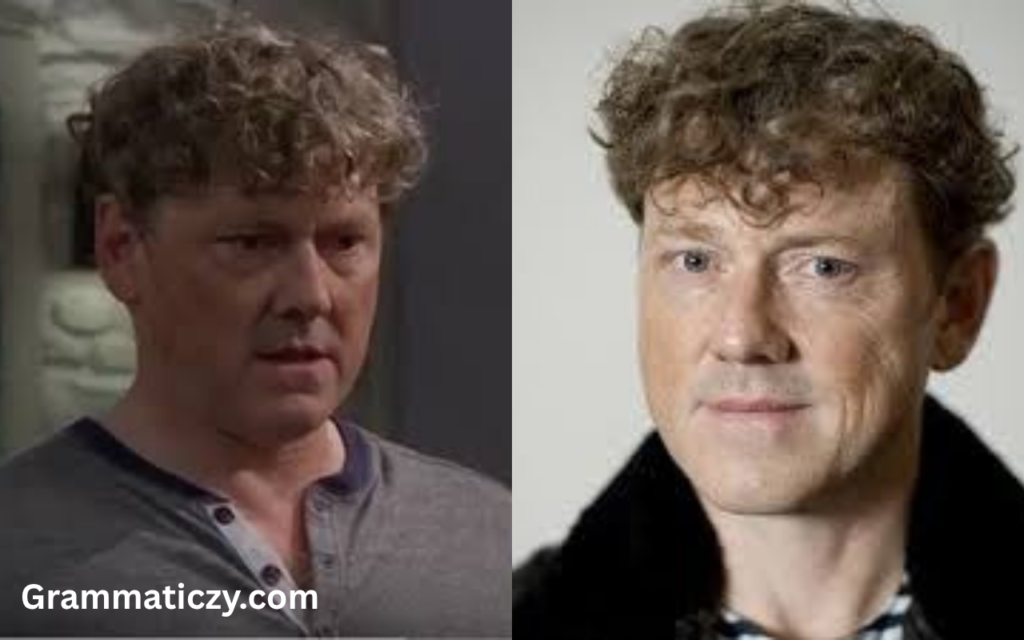
Mark Jordon is one of those British actors whose career has become woven into the fabric of television history. For millions of viewers, his face is instantly associated with PC Phil Bellamy, the dependable police officer he portrayed in ITV’s much-loved period drama Heartbeat for more than a decade. Yet Jordon’s story reaches considerably further than the uniform of one fictional policeman. From his beginnings in Oldham and early work in theatre and television to his later role as Daz Spencer in Emmerdale, he has built a career around persistence, adaptability and an ability to make characters feel authentic.
Born on 25 January 1965 in Oldham, Lancashire, Jordon entered the entertainment industry at a time when establishing yourself as a professional actor often meant taking whatever legitimate opportunities came your way. His early experiences included theatre, street performance, commercials and small television roles before the opportunity arrived that would change his professional life. Heartbeat gave him extraordinary longevity and recognition, but his later career demonstrated that he was never content to be defined entirely by one part.
Today, Jordon’s public identity also includes another important dimension: his work supporting Cure Usher Syndrome. Alongside his family and professional commitments, he has become a patron and trustee of the charity, helping raise awareness and support research connected with a condition that has a direct impact on his family. That combination of acting, family life and advocacy makes his biography much more than a conventional celebrity profile.
Mark Jordon’s Early Life and Childhood
Mark Jordon was born in Oldham, Lancashire, on 25 January 1965. While detailed information about his parents, siblings and childhood household has not been extensively documented in authoritative public sources, his early professional history gives a useful picture of the environment in which his ambitions developed. He grew up with an interest in acting and cinema, and according to his published biography, watching films starring Steve McQueen played an important role in inspiring him to pursue acting.
Rather than following a straightforward academic route into the profession, Jordon gained practical experience while he was still young. He attended Oldham Theatre Workshop, an environment that allowed aspiring performers to experiment with acting and develop confidence before professional opportunities arrived. During this period, he became involved with the Damned Busters and performed in clubs, pubs and street theatre, experiences that gave him a very different education from what might be found in a conventional classroom.
Those early performances were significant because they taught Jordon the realities of working in front of an audience. Street theatre and live entertainment require performers to react quickly, maintain energy and communicate with people without the safety net of repeated television takes. These experiences helped him build the practical foundation that would later support a long career in British television, where adaptability and professionalism are often just as important as raw talent.
Education and First Steps Into Acting
Jordon’s route into acting was shaped heavily by practical training and performance experience. His time at Oldham Theatre Workshop introduced him to the discipline of theatre while giving him the opportunity to perform alongside other aspiring actors. His involvement in live entertainment gradually helped him qualify for his Equity card, an important milestone for a British professional performer of his generation.
His first screen work came through smaller roles rather than an immediate starring opportunity. After appearing in the film Number One, he was cast as Ian in the BBC production Seaview. He subsequently worked for Yorkshire Television, Granada and BBC Manchester, building up credits while continuing to develop his experience in theatre and commercials.
This period of Jordon’s career is easy to overlook because it came before his household-name status, but it was arguably essential to everything that followed. Working consistently, even when roles were relatively small, allowed him to develop the professional resilience necessary for a career in acting. His early years demonstrate that the path to television success was gradual, with each role contributing another piece of experience.
Mark Jordon’s Breakthrough With Heartbeat
The defining moment in Mark Jordon’s career came in 1992 when he joined the original cast of Heartbeat as PC Phil Bellamy. The ITV drama became one of Britain’s best-loved television programmes, combining crime stories with period drama and the distinctive atmosphere of rural Yorkshire. For Jordon, the role transformed him from a working actor into a familiar television personality.
Jordon remained with Heartbeat from 1992 until 2007, an extraordinary sixteen-year run. IMDb records him in 323 episodes as PC Phil Bellamy, while other sources describe his appearance count as more than 300 episodes. Either way, the scale of his contribution is unmistakable. Very few television actors have the opportunity to remain with one major drama for such a long period while becoming so closely identified with a single character.
Phil Bellamy became one of Britain’s recognizable fictional police officers, and Jordon’s performance helped make the character feel dependable and human rather than simply functioning as another member of the show’s police cast. His long association with the series meant that audiences watched both the character and the actor become part of the programme’s identity. Eventually, after sixteen years, Jordon decided it was time to leave the uniform behind and pursue new opportunities.
Life After Heartbeat
Leaving Heartbeat could have been a difficult career decision because the series had become such an important part of Jordon’s professional identity. However, he continued working across British television rather than allowing one famous role to become the endpoint of his career. His post-Heartbeat credits include appearances in established dramas and soaps such as Casualty, Hollyoaks, Doctors, Coronation Street and Holby City.
He also remained connected to the world of Heartbeat through The Royal, where he reprised the character of PC Phil Bellamy. This gave longtime viewers an opportunity to see a familiar figure while allowing Jordon to continue working within the wider universe of the ITV drama. His subsequent guest roles, meanwhile, demonstrated that he could move between different genres and production styles.
Another important part of this period was Jordon’s growing interest in filmmaking itself. He established a production company and made his directorial debut with the short film To the Sea Again. The film screened at festivals and reached the final of the Angel Film Festival London and the Moondance International Film Festival in Hollywood, demonstrating that his creative ambitions extended beyond acting in front of the camera.
Mark Jordon’s Emmerdale Career
In 2014, Jordon joined Emmerdale as Daz Spencer, a former Royal Marine whose return to the village brought tension to his family relationships. ITV’s casting announcement described Daz as an older brother whose arrival could create trouble for Dan Spencer and suggested that his past would become an important part of the storyline.
The role initially began as a short-term appearance, but Jordon returned to the character in 2017 and became a regular member of the cast. Daz was very different from PC Phil Bellamy, allowing Jordon to demonstrate another side of his acting range. Instead of playing a dependable village policeman, he was now portraying a more complicated character whose history and relationships could generate conflict and emotional drama.
Jordon’s regular Emmerdale run ended in January 2019, but the character was not forgotten. In December 2024, he made a brief return as Daz when the character came back to help his daughter Amelia. The unexpected appearance demonstrated how long-running British soaps can preserve connections between former cast members and their audiences years after a character’s regular departure.
His Other Television Roles
Although Heartbeat and Emmerdale are the productions most closely associated with Mark Jordon, his wider television résumé is considerably more extensive. His credits include roles in Casualty, Holby City, Doctors, Hollyoaks and Coronation Street, giving him experience across some of Britain’s most recognizable television franchises.
His appearance as Connor Coleman in Holby City was another opportunity to work within a long-running ensemble drama. Similarly, his appearance as Ray Wood in ITV’s The Long Shadow placed him in a more contemporary crime-drama setting. These roles illustrate how his career has continued to evolve rather than simply repeating the style of work that made him famous.
For an actor with such a strong association with one iconic role, maintaining variety can be difficult. Jordon’s career shows the value of taking different kinds of parts, whether they are recurring soap characters, guest roles, dramatic performances or work behind the camera. His filmography is therefore best understood as a long progression rather than a single success followed by occasional appearances.
Mark Jordon’s Personal Life and Relationships
Jordon’s personal life has attracted attention partly because he has shared his professional world with other actors. He was previously married to actress Siobhan Finneran, and the couple married in 1997 before later divorcing in 2014. They have two children together. Finneran subsequently became widely known for her performances in productions including Downton Abbey and Happy Valley.
Jordon later formed a relationship with actress Laura Norton, whom he met through Emmerdale. Norton played Kerry Wyatt in the soap, creating a relationship that developed within the same professional environment in which both actors were working. Their shared experience of television production has been an important part of their public story, but family has increasingly become the focus of their public advocacy.
Together, Jordon and Norton have two younger children, adding to Jordon’s two older children from his previous marriage. The family has faced a particularly important challenge because the younger children have been diagnosed with Usher syndrome, a rare genetic condition associated with hearing and vision loss. That experience has influenced both Jordon and Norton and has helped shape their commitment to public awareness and research.
Mark Jordon and Cure Usher Syndrome
One of the most meaningful chapters of Jordon’s recent life has been his involvement with Cure Usher Syndrome. The organization lists him as both a patron and trustee, with its mission focused on funding leading research, supporting people affected by Usher syndrome and advocating for meaningful impact throughout their lives.
The cause is particularly personal for Jordon because his two younger children have Usher syndrome. Rather than treating his family’s experience as something that must remain completely separate from his public life, he and Laura Norton have used their visibility to help educate people about the condition. Their involvement demonstrates how a public figure’s personal experience can become a source of motivation for wider advocacy.
Their advocacy has also connected with broader efforts around deaf awareness and inclusion. Recent coverage has highlighted Norton’s involvement in British Sign Language awareness initiatives and explained that the family’s experience has encouraged them to learn and use sign language. For Jordon, therefore, charity work is not simply an occasional fundraising appearance; it is connected to the everyday realities of his family and their hopes for the future.
Mark Jordon’s Personality and Public Image
The public image Jordon developed through Heartbeat has often been associated with warmth, reliability and familiarity. PC Phil Bellamy became such a recognizable figure that audiences naturally connected the actor with the character. That association is a testament to how convincingly Jordon performed the role over many years, but it also meant that later characters were important in demonstrating the breadth of his acting abilities.
His work as Daz Spencer offered a useful contrast. Daz was more complicated and unpredictable, giving Jordon opportunities to explore conflict and emotional tension that were quite different from the steady authority associated with Bellamy. The contrast between these roles is one of the strongest indicators of his range as a performer.
Away from acting, his public profile increasingly reflects his role as a father and charity advocate. His involvement with Cure Usher Syndrome has shifted some of the attention surrounding him from entertainment news toward disability awareness, medical research and family advocacy. That evolution gives his later public life a different kind of significance from his earlier television fame.
Mark Jordon’s Net Worth and Income
There is no verified public figure that can accurately establish Mark Jordon’s current net worth. Online celebrity websites sometimes publish estimated wealth figures, but these numbers are rarely supported by publicly available financial documents. For that reason, any precise net-worth claim should be treated as speculative rather than as a confirmed fact.
Jordon’s professional income has primarily come from his long career as an actor, with earnings generated through television drama, theatre, film and other performance work. His sixteen-year run on Heartbeat represented an especially substantial period of continuous television employment, while his later Emmerdale work and guest appearances across British television provided additional professional income.
He has also worked as a director and producer, creating another potential stream of professional income. However, there is no reliable public breakdown of his salaries, investments, property holdings or private business interests. A balanced biography should therefore avoid presenting an unverified online estimate as established financial fact.
Mark Jordon’s Social Media and Online Presence
Jordon’s online presence is less centered on celebrity promotion than that of many contemporary entertainers. His public profile is instead closely connected to his acting history, family and charitable activities. This is particularly evident in the way his public identity has expanded from television work toward awareness and fundraising connected with Usher syndrome.
Social platforms can provide public figures with a direct way to communicate without relying entirely on traditional entertainment media. For Jordon, that opportunity is particularly useful when supporting charitable campaigns because he can help direct attention toward a cause that matters personally to him and his family.
His online presence therefore reflects a broader change in his public role. While audiences originally encountered him primarily through scripted television, his modern public identity includes actor, family man and charity advocate. That combination allows longtime viewers to remain connected with him while also learning about an issue far removed from the television characters that first made him famous.
Mark Jordon’s Recent Career and Future
Jordon’s brief return to Emmerdale in 2024 showed that the door remains open to revisiting memorable characters when the right storyline appears. Daz Spencer’s return was tied to his daughter Amelia, giving the character a meaningful reason to re-enter the village rather than functioning simply as a nostalgic cameo.
At the same time, his recent public activity suggests that charity advocacy is an increasingly important part of his life. Cure Usher Syndrome continues to identify him as a patron and trustee, placing him alongside people working to support families affected by the condition and advance research.
The next stage of Jordon’s career may therefore involve a combination of acting opportunities and advocacy rather than a single defining project. After more than forty years in entertainment, he has already achieved something many performers spend their entire careers seeking: lasting recognition. His future impact may now be measured as much by the causes he supports as by the characters he plays.
Mark Jordon’s Lasting Legacy
Mark Jordon’s legacy in British television begins with PC Phil Bellamy, a character who remained on screen for sixteen years and became inseparable from the identity of Heartbeat. The sheer number of episodes and years involved makes the role one of the most significant long-term performances in British television drama.
But reducing his career to Heartbeat would overlook the determination required to remain relevant after leaving such an iconic role. His work in The Royal, Casualty, Holby City, Doctors, Coronation Street, Hollyoaks, The Long Shadow and Emmerdale shows an actor willing to keep developing rather than simply relying on past success. His move into directing and producing adds another layer to that creative journey.
Perhaps the most distinctive part of his modern legacy is his involvement with Cure Usher Syndrome. His decision to use his public profile to support research and awareness gives his career a purpose beyond entertainment. It shows how a performer can transform public recognition into an opportunity to help others, making the later chapters of his story every bit as meaningful as the television roles that first brought him fame.
Conclusion
Mark Jordon’s journey is a story of gradual achievement rather than overnight celebrity. From the Oldham Theatre Workshop and early street-theatre performances to his breakthrough as PC Phil Bellamy, he built his career one opportunity at a time. His sixteen years on Heartbeat established him as one of British television’s familiar faces, while his later work as Daz Spencer in Emmerdale proved that he could successfully step outside the character that had defined so much of his early fame.
His story has also developed into something much more personal. Family, parenthood and his involvement with Cure Usher Syndrome have given his public life a new sense of purpose. Working alongside Laura Norton and supporting research into Usher syndrome has allowed Jordon to use the recognition earned through decades of acting for a cause that reaches far beyond the entertainment industry.
As Mark Jordon continues into the next chapter of his life, his career offers a powerful reminder that a meaningful legacy is not created by fame alone. It is built through resilience, reinvention, commitment and the willingness to use one’s opportunities for something larger than oneself. From the fictional streets of Aidensfield to the real-world fight for greater awareness and research, Jordon’s journey reflects how persistence can create a career—and how compassion can give that career a lasting purpose.