Marcheline Bertrand lived a life that began in the American Midwest, passed through Hollywood, and ultimately became defined by family, compassion, and humanitarian work. To many people, she is best known as the mother of Angelina Jolie and James Haven, but that description tells only one part of her story. Bertrand was an actress, producer, mother, and philanthropist who gradually moved away from the entertainment spotlight and toward causes that were deeply personal to her. She was particularly involved in Native American causes and cancer awareness, using her connections in the entertainment world to support projects that could benefit communities and patients.
Her life also contained several dramatic transitions. She moved from Illinois to Beverly Hills as a teenager, studied acting with Lee Strasberg, married actor Jon Voight, became a mother, and eventually stepped back from acting while raising her children. Later, her relationship with activist and musician John Trudell opened another chapter in which filmmaking and humanitarian advocacy became increasingly important. Bertrand died in Los Angeles on January 27, 2007, at the age of 56 after a years-long battle with cancer.
What makes Marcheline Bertrand’s biography particularly compelling is that her influence became greater than the size of her acting résumé. Her screen appearances were relatively limited, but her role as a mother, producer, activist, and advocate left a lasting impression. Her daughter Angelina Jolie later became one of Hollywood’s most recognizable actresses and humanitarian figures, and Bertrand’s influence has frequently been recognized as an important part of Jolie’s personal development.
Marcheline Bertrand’s Early Life and Family Background
Marcheline Bertrand was born Marcia Lynne Bertrand on May 9, 1950, in Blue Island, Illinois. She was the daughter of Rolland F. Bertrand and Lois June Gouwens Bertrand and was the eldest of three children. Her younger siblings were Debbie and Raleigh. Her family background included French-Canadian, Dutch, and German ancestry, giving her a diverse cultural heritage that later became part of the broader story surrounding her family.
The Bertrands eventually left the Chicago area and moved to Beverly Hills, California, in 1965. The relocation was significant because it placed the teenage Bertrand in an environment much closer to the American entertainment industry. She attended Beverly Hills High School, where she completed her secondary education. California offered opportunities that were far removed from her Midwestern beginnings, and Bertrand gradually became interested in performing and acting.
Her interest in acting eventually became a serious professional pursuit. Bertrand studied acting with Lee Strasberg, one of the most influential teachers associated with American Method acting. This training gave her a foundation in performance at a time when Hollywood was changing rapidly. Although she would never become a major box-office star herself, her decision to pursue acting demonstrated that she had ambitions of her own before her identity became closely associated with her famous children.
Marcheline Bertrand’s Education and Path Into Acting
Beverly Hills was an unusual setting for a young woman growing up in the 1960s. The community was closely connected to Hollywood, and Bertrand’s education took place in an atmosphere where the entertainment business was a visible part of everyday life. After attending Beverly Hills High School, she continued developing her acting abilities and eventually pursued professional opportunities in television and film.
Her training with Lee Strasberg was particularly relevant to her ambitions. Strasberg’s approach emphasized emotional preparation and psychological connection with a character, and his influence extended across generations of American performers. Bertrand’s decision to study with him suggests that acting was not simply a casual interest. She wanted to understand the craft and establish herself within an industry that could be extremely competitive.
Her professional breakthrough came through television. IMDb records her appearance as Connie on the television series Ironside in 1971. She later appeared in Lookin’ to Get Out in 1982 and The Man Who Loved Women in 1983. These were relatively small roles, but they established Bertrand as a working actress and gave her a connection to the film industry that continued even after she became less active in front of the camera.
Marcheline Bertrand and Jon Voight
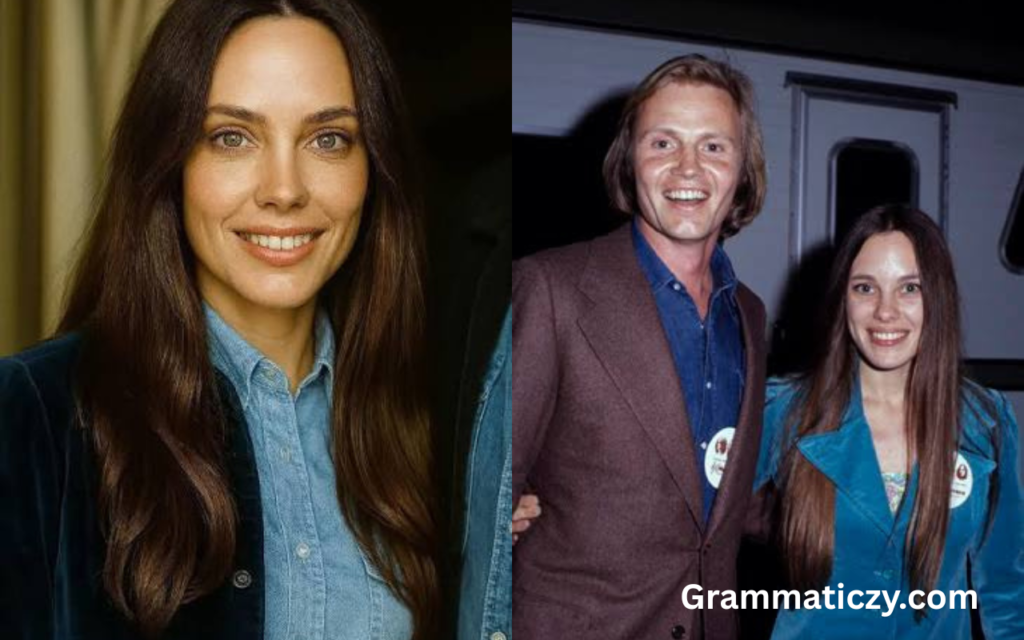
Marcheline Bertrand married actor Jon Voight on December 12, 1971. Voight was already establishing himself as a major Hollywood performer, and the marriage placed Bertrand within one of the industry’s better-known families. Their relationship would eventually produce two children who became actors themselves: James Haven and Angelina Jolie.
The couple experienced personal difficulties, including the loss of a pregnancy before the birth of their children. James Haven was born in 1973, followed by Angelina Jolie in 1975. Their family life, however, did not remain intact. Bertrand and Voight separated in 1976, and their divorce was finalized several years later. By then, Bertrand was becoming the primary parent in her children’s lives.
The separation became a defining turning point. Bertrand’s own acting aspirations had to coexist with the practical responsibilities of raising two children, and over time motherhood became a much larger part of her life. Contemporary reporting described Bertrand as raising Jolie and Haven after the divorce, while Jolie later credited her mother with encouraging her own interest in acting.
Raising Angelina Jolie and James Haven
For all of Bertrand’s professional accomplishments, motherhood became arguably her most influential role. After separating from Voight, she focused heavily on James Haven and Angelina Jolie. The children grew up with their mother’s support while navigating the complexities of having a famous actor as their father and an aspiring actress as their mother.
Bertrand encouraged artistic interests rather than discouraging her children from entering Hollywood. Jolie eventually became a major international actress, director, and humanitarian, while James Haven pursued acting and filmmaking. The fact that both children entered the entertainment world suggests that the creative environment established by Bertrand and Voight remained influential even after their marriage ended.
The emotional relationship between Bertrand and Jolie was especially strong. Reports and later recollections describe Jolie as deeply attached to her mother, while Bertrand was remembered as gentle, compassionate, and supportive. That relationship became even more significant after Bertrand’s cancer diagnosis and during the final years of her life.
Marcheline Bertrand’s Acting Career
Bertrand’s acting career was modest but genuine. Her earliest documented screen work came on Ironside, where she played Connie in one episode in 1971. More than a decade later, she appeared in Lookin’ to Get Out, a 1982 film associated with Jon Voight, and The Man Who Loved Women in 1983. IMDb lists her among the cast members of both films.
Although she did not accumulate a long list of starring roles, her work demonstrates that she had experience within the professional entertainment industry. Her career also illustrates an important distinction between celebrity and creative participation. Bertrand was not a major Hollywood star, but she worked in the industry and understood the demands of acting, production, and filmmaking.
Eventually, Bertrand’s priorities shifted. Her children required attention, and she increasingly focused on family and causes that mattered personally to her. Instead of continuing to chase acting roles, she moved toward producing and advocacy. This transition eventually led to one of the most important professional projects of her later life, the documentary Trudell.
Her Work as a Producer and Trudell
Bertrand’s later involvement in documentary filmmaking represented a new phase of her career. She became closely associated with John Trudell, a Native American activist, poet, musician, and filmmaker. Their relationship brought together entertainment, activism, and Indigenous rights, areas that would become increasingly important in Bertrand’s life.
In 2005, Bertrand was credited as a producer on Trudell, a documentary focused on John Trudell’s life and activism. IMDb identifies the project among her best-known professional credits and lists her as its producer. The film gave Bertrand an opportunity to use her experience in entertainment for a project that had social and cultural significance rather than simply commercial objectives.
This shift from actress to producer is important when understanding Bertrand’s career. She did not simply disappear from the entertainment world after acting. Instead, she found a different way to participate in it. Production allowed her to contribute to stories and causes that were personally meaningful, while her connections within Hollywood and the music community helped her support broader humanitarian initiatives.
Marcheline Bertrand and Native American Causes
One of the lesser-known parts of Bertrand’s legacy is her humanitarian work involving Native American communities. After her divorce from Jon Voight, she became increasingly involved in Native American causes. She later worked with John Trudell, whose activism was centered heavily on Indigenous rights and cultural issues.
Bertrand and Trudell were associated with the All Tribes Foundation, an organization created to provide financial support to reservation-based initiatives and help preserve Native communities and traditions. This work represented a significant departure from the conventional celebrity lifestyle because it focused on practical assistance and community development rather than publicity.
Her humanitarian interests also extended to international causes. Bertrand and Trudell worked with the United Nations High Commissioner for Refugees on a 2003 benefit event supporting Afghan women refugees. The effort showed that Bertrand’s activism was not restricted to one issue. She increasingly used the networks available to her through film and music to bring attention and financial support to vulnerable communities.
Give Love Give Life and Cancer Awareness
Cancer became one of the most painful and defining experiences of Bertrand’s later life. She was diagnosed with ovarian cancer in 1999 and subsequently battled breast cancer as well. Her family history also included cancer, making the disease a deeply personal issue rather than an abstract charitable cause.
Rather than keeping her experience entirely private, Bertrand helped channel it into advocacy. She and John Trudell became involved with Give Love Give Life, an organization designed to raise awareness of ovarian and gynecological cancers through music and entertainment. The first Give Love Give Life concert took place at The Roxy in West Hollywood in February 2004.
The campaign continued after Bertrand’s death. She and Trudell worked to build support for Johanna’s Law, legislation aimed at increasing public education about the signs and symptoms of gynecological cancers. The law was signed on January 12, 2007, only weeks before Bertrand died. A benefit concert was held the following month to support the Women’s Cancer Research Institute at Cedars-Sinai Medical Center.
Marcheline Bertrand’s Personal Life and Relationships
After her divorce from Jon Voight, Bertrand entered a relationship with filmmaker Bill Day. According to biographical accounts, the relationship lasted for many years, although they did not marry. Later, she became involved with John Trudell, whose activism and creative work became closely connected with her own humanitarian interests.
Her later relationship with Trudell was particularly important because it coincided with her transition into activism and documentary production. Their shared interests allowed Bertrand to participate in projects involving Indigenous rights, music, filmmaking, cancer awareness, and charitable work. Rather than simply being known as the former wife of a Hollywood actor, she increasingly developed an identity based on her own values and causes.
Bertrand was also known for protecting her privacy. During the final years of her life, she largely stayed away from interviews and public attention. This means that some details frequently repeated online about her personality, beliefs, routines, and relationships should be treated cautiously. The strongest picture of her character comes from documented work, family recollections, and the causes she chose to support rather than from celebrity gossip.
Marcheline Bertrand’s Battle With Cancer
Bertrand’s cancer diagnosis in 1999 began a battle that lasted for years. She eventually faced both ovarian and breast cancer, and the illness affected not only her physically but also the way she viewed her remaining time. Her response was remarkable because she turned a deeply personal struggle into an opportunity to increase awareness for other women.
Her experience also had a profound effect on Angelina Jolie. Jolie later learned that she carried a BRCA1 genetic mutation and made major preventive health decisions in response to her elevated risk of breast and ovarian cancer. Her public discussion of those decisions brought worldwide attention to hereditary cancer risk, and her mother’s illness was an important part of the context behind those choices.
Bertrand’s health advocacy therefore continued to influence public conversations even after her death. Her work with Give Love Give Life was already focused on awareness and education, while Jolie’s later public health advocacy helped extend the family story into a much broader conversation about genetic testing, cancer prevention, and women’s health.
Marcheline Bertrand’s Death at Age 56
After battling cancer for approximately seven and a half years, Marcheline Bertrand died on January 27, 2007, at Cedars-Sinai Medical Center in Los Angeles. She was 56 years old. Reports at the time said that Angelina Jolie and James Haven were with their mother during her final hours, highlighting the close family bond that had remained central to Bertrand’s life.
Her death was reported internationally because of her connection to Jolie, but the circumstances also brought attention to Bertrand’s own life and accomplishments. The Los Angeles Times described her as a former actress and model and noted her work in entertainment and her role in raising Jolie and Haven after her divorce from Voight.
The family requested donations to the Women’s Cancer Research Institute at Cedars-Sinai rather than traditional floral tributes. That decision was deeply consistent with Bertrand’s final years: even after her death, the family directed attention toward cancer research and the cause she had worked to support.
Marcheline Bertrand’s Net Worth and Financial Legacy
There is no dependable public record establishing Marcheline Bertrand’s exact net worth at the time of her death. Some entertainment websites publish numerical estimates, but these figures generally lack audited documentation or reliable estate records. For that reason, a precise net-worth figure should not be presented as fact.
Bertrand’s known professional income came from acting and production, but her entertainment career was comparatively small. IMDb lists three acting credits and one producer credit among her principal professional work, with Trudell representing her most significant documented production role.
Her more meaningful legacy was arguably not financial. Bertrand devoted substantial energy to philanthropy and advocacy, particularly through Native American causes and cancer awareness. Her story demonstrates that a person’s long-term impact cannot always be measured through box-office earnings, celebrity wealth, or the size of a filmography. Her influence was strongest in the people she raised and the causes she supported.
Marcheline Bertrand’s Social Media Presence
Marcheline Bertrand did not have official Instagram, Facebook, LinkedIn, or X/Twitter accounts because she died in 2007, before today’s social-media environment had developed. Any modern profile using her name should therefore be treated carefully unless it is clearly identified as an authorized memorial or archival account.
Her public presence today exists primarily through biographies, film databases, archival photographs, interviews involving her children, and retrospective articles. IMDb continues to maintain her professional profile, documenting her acting and producing credits and confirming her birth and death information.
Interestingly, Bertrand’s lack of a social-media legacy makes her story feel very different from that of contemporary celebrities. Her reputation was not built through constant online visibility. Instead, it has survived through family memories, professional credits, charitable work, and the continuing public interest in the woman who helped shape Angelina Jolie’s early life and values.
Angelina Jolie and Marcheline Bertrand’s Lasting Bond
The relationship between Bertrand and Angelina Jolie is perhaps the strongest reason the actress’s mother continues to attract public interest. Jolie has spoken about her mother with deep affection, and reports have described Bertrand as a major influence on her daughter’s creative ambitions and worldview.
Jolie’s later career contained several elements that echoed her mother’s life: acting, filmmaking, humanitarian work, concern for vulnerable people, and a willingness to use public visibility to draw attention to important issues. Although Jolie developed her own identity and career, Bertrand’s influence provided an important early foundation.
The connection became especially powerful through cancer awareness. Jolie’s later decisions regarding breast and ovarian cancer risk were directly connected to her family history, particularly her mother’s battle with cancer. In that sense, Bertrand’s influence continued beyond motherhood and became part of an international discussion about women’s health and hereditary cancer.
The Legacy Marcheline Bertrand Left Behind
Marcheline Bertrand’s legacy cannot be reduced to the phrase “Angelina Jolie’s mother.” She was a woman who pursued acting, experienced the difficulties of marriage and single parenthood, supported her children’s creative ambitions, and eventually redirected her energy toward humanitarian work. Her journey from actress to producer and advocate shows how a person’s priorities can evolve dramatically over a lifetime.
Her humanitarian work remains one of the most meaningful aspects of her biography. The All Tribes Foundation connected her to efforts supporting Native communities, while Give Love Give Life transformed her experience with cancer into an awareness campaign. These projects gave her influence a purpose that extended far beyond the Hollywood environment in which she had begun her professional life.
Perhaps most importantly, Bertrand’s legacy lives through the values she passed to her children. Angelina Jolie’s extraordinary career and humanitarian work brought worldwide attention to the family, but behind that public story was a mother who encouraged creativity and compassion while quietly navigating her own struggles. Her life shows that influence does not always come from being the person in the center of the spotlight.
Conclusion
Marcheline Bertrand’s life was filled with chapters that could easily have overshadowed one another: actress, wife, mother, producer, cancer advocate, humanitarian, and mother of one of Hollywood’s biggest stars. Yet when those chapters are considered together, a more complete portrait emerges. Bertrand was not simply connected to Hollywood; she used her experiences within that world as a foundation for a life increasingly devoted to family and meaningful causes.
Her professional acting career may have been brief, but it opened the door to a much broader journey. She eventually found purpose in producing Trudell, supporting Native American communities, raising awareness of women’s cancers, and giving her children the emotional support they needed to pursue their own paths. Her battle with cancer was devastating, but she responded by helping create awareness that could potentially benefit other women.
Marcheline Bertrand died at only 56, but the story did not end there. Her influence continued through Angelina Jolie and James Haven, through the causes she helped champion, and through the memories of those who knew her. Her biography is ultimately a reminder that a meaningful legacy is not determined by fame alone. It is created through the people we nurture, the challenges we face with courage, and the good we choose to leave behind. Bertrand’s journey remains a powerful example of how perseverance, compassion, and purpose can give a life lasting significance long after the spotlight has faded.