
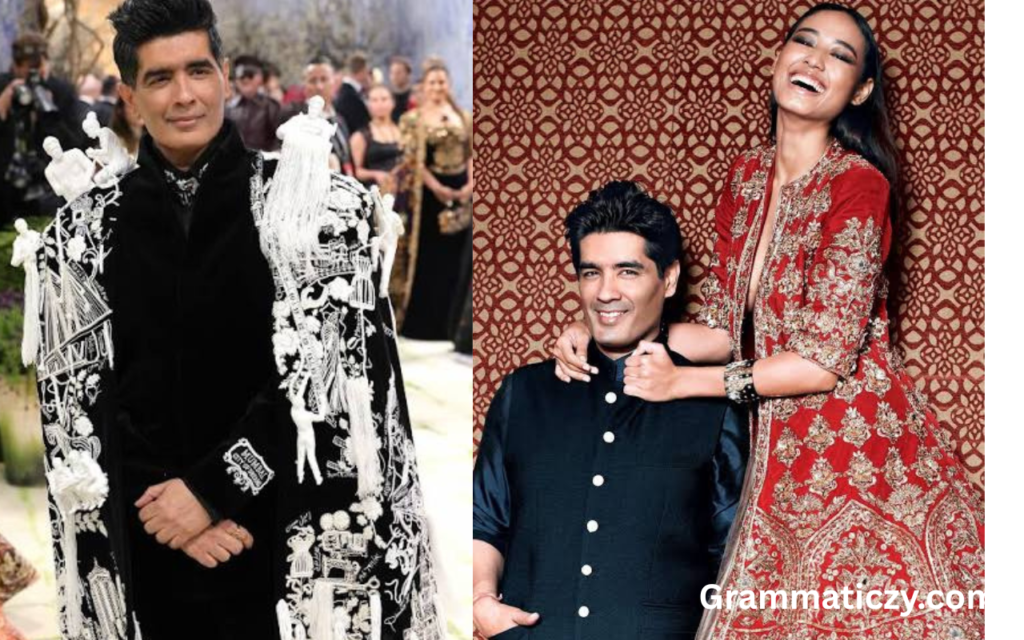
Few Indian designers have influenced popular culture as profoundly as Manish Malhotra. His name is not simply associated with expensive couture, elaborate bridal lehengas, shimmering saris or Bollywood celebrities. Over more than three decades, he has helped change the way India understands fashion in cinema, transforming costumes from background details into powerful tools of character, personality and storytelling. From his self-taught beginnings in Mumbai to the creation of an internationally recognised luxury fashion house, Malhotra has built a career where cinema, craftsmanship, celebrity culture and entrepreneurship continuously intersect.
His story is particularly remarkable because he did not enter the fashion industry through the conventional route. He did not attend a prestigious fashion school, inherit a design house or begin his career with an established luxury brand. Instead, he learned through observation, sketching, modelling, boutique work, cinema and relentless experimentation. He once described himself as completely self-taught, explaining that he could not afford to study fashion abroad and instead treated his early boutique experience as his fashion education. His ability to learn on the job ultimately became one of the defining strengths of his career.
Today, Manish Malhotra represents a much larger creative universe than the costume designer who first became famous in Bollywood. His business encompasses couture, bridalwear, ready-to-wear, jewellery, beauty and film production, while his designs continue to appear on major celebrities and at some of the world’s most visible fashion and entertainment events. The official Manish Malhotra timeline records his return to the Met Gala in 2026 and a presentation of his latest couture collection at Dubai Fashion Week, showing that his ambitions now extend well beyond the Indian film industry.
Manish Malhotra Facts at a Glance
| Category | Details |
|---|---|
| Full Name | Manish Malhotra |
| Date of Birth | December 5, 1966 |
| Age | 59 years old as of August 2026 |
| Birthplace | Mumbai, Maharashtra, India |
| Nationality | Indian |
| Profession | Fashion Designer, Couturier, Costume Designer, Entrepreneur and Film Producer |
| Education | Elphinstone College, Mumbai |
| Father | Suraj Malhotra |
| Mother | Private; limited reliable public information |
| Siblings | Family includes his brother Dinesh Malhotra |
| Marital Status | Unmarried |
| Known For | Bollywood costume design, couture, bridal fashion and celebrity styling |
| Fashion Label | Manish Malhotra |
| Film Production Company | Stage5 Production |
| Breakthrough Film | Rangeela (1995) |
| Major Award | First Filmfare Award for Costume Design for Rangeela |
| Official Website | ManishMalhotra.in |
| @manishmalhotra05 | |
| Estimated Net Worth | Public estimates vary substantially; no independently verified figure is available |
| Current Focus | Couture, global fashion, luxury categories and film production |
The exact details of celebrity wealth and family information can vary considerably across online sources, so figures such as net worth should be treated as estimates rather than confirmed financial statements. Malhotra’s official website and established fashion publications provide stronger evidence for his career milestones, awards and business expansion. His official timeline records major milestones from his cinema debut in 1990 through his international fashion activity in 2026.
Early Life and Family Background
Manish Malhotra was born and raised in Mumbai in a Punjabi family. His childhood environment played an important role in developing his fascination with fashion and cinema. He has recalled being deeply interested in his mother’s clothing from a young age and even giving her advice about how she should wear or style her saris. At a time when fashion was not necessarily considered a conventional career choice, his fascination with clothing already appeared unusually strong.
Cinema became another major influence. Malhotra was captivated not only by stories but by the colours, costumes, music and personalities appearing on screen. He has spoken about watching films almost every day and drawing inspiration particularly from the visual language of Hindi cinema from the 1960s and 1970s. These early experiences eventually became an informal design education, teaching him to understand how clothes could communicate emotion and identity.
His artistic abilities became more obvious when he joined a painting class during his school years. The lessons strengthened his sketching skills, something that would later prove invaluable when he began creating costume concepts. Rather than developing through textbooks or formal fashion theory, his creative education emerged from a combination of painting, movies, clothing, observation and imagination. In many ways, this unusual beginning explains why his later design philosophy remained strongly visual and instinctive.
Education, Modelling and His First Steps Into Fashion
Malhotra studied at Elphinstone College in Mumbai, where his interests expanded beyond Hindi cinema. College exposed him to English-language films and a wider cultural environment, while modelling became a practical way for him to earn money and experience the fashion world from another perspective. He appeared in advertising campaigns and used his earnings to explore the world outside India, including trips to Bangkok and Singapore. Those journeys broadened his understanding of fashion and international retail.
His early professional experiences were far removed from the glamorous image associated with his name today. He worked at a boutique, where he earned around ₹500 per month according to an account he later shared. He spent considerable time sketching and observing garments, draping mannequins and learning how clothing was produced. Because he could not afford formal fashion education abroad, he regarded this period as his real fashion school.
Eventually, Malhotra began working independently. He hired two tailors and started taking orders, gradually attempting to establish himself in an industry where he had neither a famous design-school qualification nor an established fashion family behind him. The beginning was difficult, and financial security was far from guaranteed. Nevertheless, his willingness to keep approaching filmmakers and clients slowly created the professional relationships that would eventually transform his career.
Entering Bollywood and the Importance of Costume Design
Manish Malhotra entered cinema as a costume designer in 1990, with Swarg marking the beginning of his film career according to the designer’s official timeline. At the time, costume styling in Hindi cinema was not treated in quite the same way it is today. Malhotra believed that clothing should contribute to the construction of a character rather than simply make an actor appear glamorous. That approach gradually separated him from conventional costume practices.
His work on Gumrah in 1993 represented another important step. He worked on the complete visual look of Sridevi’s character, including clothing and hair, helping create a more cohesive screen identity. Malhotra has described Gumrah as one of his early major breakthroughs, while his collaboration with Sridevi gave him an opportunity to work closely with one of the most influential actresses of her generation.
His philosophy was simple but transformative: understand the character first and then create the wardrobe. This approach meant asking questions about the script, personality, background and circumstances of the role. Some filmmakers initially found his detailed questions unusual, but his insistence on understanding the story ultimately became one of his greatest creative advantages. He was not simply selecting clothes; he was constructing visual identities.
Rangeela and the Breakthrough That Changed Everything
The defining turning point arrived with Ram Gopal Varma’s Rangeela in 1995. Starring Urmila Matondkar, Aamir Khan and Jackie Shroff, the film gave Malhotra the opportunity to approach costume design as an integral part of storytelling. He created a youthful, contemporary wardrobe for Matondkar that became closely associated with the film and had an influence far beyond the cinema screen.
The success of Rangeela changed how the film industry viewed him and helped establish costume design as a more recognised creative discipline. Most importantly, Malhotra received the first-ever Filmfare Award for Best Costume Design for the film. The official Manish Malhotra recognition archive lists the Filmfare Costume Design award for Rangeela in 1996, making it one of the most important milestones in his career.
For Malhotra, Rangeela was not simply an award-winning project. It proved that clothing could become part of a film’s cultural identity. The looks created for Urmila Matondkar became widely discussed and imitated, demonstrating the extraordinary connection between Bollywood and mainstream fashion. From that point onward, Malhotra’s name became increasingly associated with the idea of using fashion to make film characters memorable.
Building a Reputation Through Bollywood
Following Rangeela, Malhotra continued to work on some of the most influential Hindi films of the 1990s and 2000s. His filmography includes titles such as Raja Hindustani, Dilwale Dulhania Le Jayenge, Kuch Kuch Hota Hai, Mohabbatein, Kabhi Khushi Kabhie Gham, Kal Ho Naa Ho, Jab We Met, Om Shanti Om and many others. His designs became closely connected with the visual identity of Bollywood’s leading actresses and actors.
One of his strengths was his ability to recognise what could become visually iconic. The chiffon sari, fitted western clothing, glamorous bridalwear and youthful college-inspired wardrobes associated with various films helped shape fashion trends outside theatres. His work demonstrated that costume design could influence how ordinary audiences dressed, particularly when a major star became associated with a particular look.
His collaboration with actors also helped strengthen his reputation. Instead of treating celebrities simply as people wearing clothes, he developed long-term creative relationships with many of them. These relationships eventually extended beyond movies into weddings, red carpets, magazine shoots, award ceremonies and private couture. That combination of trust and creative understanding became one of the foundations of his later fashion empire.
The Birth and Growth of the Manish Malhotra Fashion House
After years of working in cinema, Malhotra expanded into fashion retail and eventually established his own label. His official timeline records the launch of the Manish Malhotra label in 2004 and the opening of his first international flagship boutique in Dubai that same year. A Mumbai flagship followed in 2006, marking a major transition from film costume designer to independent luxury fashion entrepreneur.
The fashion house developed a distinctive aesthetic built around Indian couture, elaborate embroidery, rich fabrics, dramatic colour palettes and contemporary silhouettes. Malhotra understood that Indian luxury fashion could be rooted in tradition without appearing old-fashioned. His designs frequently combine traditional techniques with modern cuts, creating garments that feel simultaneously culturally familiar and internationally aspirational.
Bridal fashion became one of the strongest pillars of his business. Manish Malhotra lehengas, saris, sherwanis and couture ensembles became associated with high-profile weddings and celebrity brides. His approach to bridalwear often combines hand embroidery, sequins, metallic detailing, layered fabrics and dramatic silhouettes, creating the kind of visual impact that has become synonymous with Indian luxury weddings.
Indian Craftsmanship and the Mijwan Connection
Although glamour is central to the Manish Malhotra image, craftsmanship has always played an equally important role. His work has incorporated Indian techniques and textiles, including Chikankari, Phulkari, Banarasi weaving, Sozni and other forms of traditional embroidery. This connection to artisans gives his work cultural depth beyond the celebrity appeal of the label.
One particularly important relationship has been with the Mijwan Welfare Society. The official Manish Malhotra timeline records that he began a long-term partnership with the organisation in 2010, working to revive Chikankari while supporting women artisans. This represented a significant development in his career because it connected high fashion with social and craft preservation.
His commitment to Indian craftsmanship also reflects a broader understanding of luxury. For Malhotra, luxury is not only about price or celebrity visibility; it can also be about hours of handwork, heritage techniques and the skill of artisans. By placing traditional embroidery within contemporary couture, he has helped introduce these crafts to audiences who may encounter them through fashion rather than through conventional cultural institutions.
Awards, Recognition and Major Achievements
Malhotra’s career has been recognised through numerous awards across cinema and fashion. His first major milestone was the Filmfare Award for Costume Design for Rangeela. He later received the first IIFA Award for Best Costume Design in 2001, while his official recognition record lists numerous subsequent honours for his contribution to fashion and cinema.
His professional recognition has increasingly moved beyond film. In 2020, he received the Filmfare Special Award for 30 Years of Outstanding Contribution to Bollywood Fashion. He has also received the HT India Most Stylish Style Legend award, the Elle Style Awards’ Stylish Designer of the Year, the ELLE Sustainability Award and recognition from the Fashion Design Council of India, including inclusion in its Couture Hall of Fame.
His influence has also been recognised internationally. He has spoken at institutions including Harvard Business School and New York University, and his work has been exhibited or showcased in international contexts. His career therefore represents more than celebrity styling; it illustrates how Indian fashion has increasingly become part of global conversations about luxury, culture and creative entrepreneurship.
Personal Life and Personality
Despite his celebrity connections, Malhotra has generally maintained a relatively private personal life. He has publicly spoken about not marrying and not having children, choosing instead to focus heavily on his creative career and relationships with family and close friends. His public persona is strongly associated with work, fashion and cinema, while he tends to reveal personal details selectively.
Family has nevertheless remained important in his life. His father, Suraj Malhotra, died in 2019, and Malhotra has spoken about spending meaningful time with his mother and family. These moments provide a different perspective on the designer, whose public life is normally dominated by fashion shows, celebrity events and luxury couture.
His personality is often described through qualities such as energy, discipline, curiosity and emotional commitment to his work. In interviews, he has repeatedly emphasised hard work, focus and passion rather than presenting success as the result of luck alone. He has also described himself as someone who remained focused on his own journey instead of becoming distracted by other people’s opinions.
Manish Malhotra Net Worth and Sources of Income
Manish Malhotra’s net worth is one of the most searched aspects of his biography, but it is also one of the easiest areas to misunderstand. There is no publicly audited document establishing his personal net worth. Online reports offer widely different estimates, so it would be misleading to present any single figure as fact. His actual financial position is better understood by looking at the breadth of his businesses and professional activities.
His income sources extend far beyond designing individual garments. The Manish Malhotra brand generates revenue through couture, bridalwear, ready-to-wear collections, luxury accessories and jewellery. His business has also expanded into beauty and other lifestyle categories, creating a diversified luxury portfolio rather than a company dependent solely on film costumes.
Film production has added another potential revenue and creative avenue. The launch of Stage5 Production with his brother Dinesh Malhotra represents an important evolution from designing clothes for films to helping create films themselves. This diversification illustrates how Malhotra has transformed his personal creative reputation into a broader entertainment and luxury business.
Social Media and Digital Influence
Social media has become a major part of Manish Malhotra’s relationship with fashion audiences. His Instagram presence, under @manishmalhotra05, provides followers with access to couture campaigns, celebrity appearances, fashion shows, bridal looks, new collections and behind-the-scenes moments. This allows the designer to communicate directly with audiences rather than relying exclusively on traditional fashion magazines and television coverage.
The platform also reinforces the aspirational character of the Manish Malhotra brand. A celebrity wearing a couture gown, a close-up of intricate embroidery or a dramatic runway image can become part of the brand’s visual storytelling almost immediately. Social media therefore functions simultaneously as marketing, editorial content and a way of documenting the designer’s creative journey.
His online influence is particularly significant because his audience extends beyond people who can realistically purchase couture. Millions of followers may encounter his designs through celebrities, wedding inspiration, fashion photography or entertainment news. Even when a viewer never enters a Manish Malhotra showroom, the brand can still influence their understanding of contemporary Indian glamour.
Recent Projects and Global Expansion in 2026
Malhotra’s career has continued expanding internationally. His official 2026 timeline records his return to the Met Gala and the presentation of his latest couture collection at Dubai Fashion Week. These milestones demonstrate how his brand has evolved from a Bollywood-linked fashion label into a global luxury name with an international audience.
The previous year had already been significant. In 2025, the fashion house recorded several major milestones, including his Met Gala debut, the launch of ready-to-wear, a World Collection finale at Dubai Fashion Week, attendance at the Golden Globes and work connected with the Cowboy Carter Tour. These activities show how his creative output now operates across cinema, celebrity fashion, international events and commercial collections.
Film production is another important direction for his future. Through Stage5 Production, Malhotra is exploring storytelling from the producer’s perspective. This is a particularly interesting development because his entire career began with the idea that clothing could tell stories. His move into film production effectively brings that original fascination with cinema full circle while allowing him to participate in the creative process at a much broader level.
The Lasting Legacy of Manish Malhotra
Manish Malhotra’s greatest achievement is perhaps the way he changed perceptions of Bollywood costume design. He helped demonstrate that clothes could shape characters, establish moods, influence audiences and become cultural phenomena. His work transformed fashion from something that existed around cinema into something that could actively participate in cinematic storytelling.
His career is also a compelling example of what can happen when formal qualifications are replaced by curiosity, discipline and practical learning. Malhotra began without professional fashion training, worked in boutiques, modelled, sketched constantly and learned from cinema. His first salary was modest, his early path was uncertain and he had to convince an industry that was not accustomed to treating costume styling as a major creative discipline. Yet those limitations did not stop him from developing a distinctive voice.
Today, his legacy extends across Bollywood, Indian couture, bridal fashion, celebrity styling, traditional craftsmanship and global luxury. His official recognition record and 2026 timeline demonstrate a career that continues to evolve rather than simply rest on past achievements.
Conclusion
The story of Manish Malhotra is ultimately a story about seeing possibility where others might see limitations. A young Mumbai boy fascinated by his mother’s saris and Bollywood films grew into a self-taught designer who helped redefine the visual language of Indian cinema. He turned sketches into costumes, costumes into a fashion label, a fashion label into a luxury business, and a lifelong love of storytelling into a new chapter in film production.
His journey also proves that creative careers rarely follow a perfectly designed route. Malhotra did not begin with every qualification, connection or resource that might have made his path easier. Instead, he learned through experience, built relationships, accepted challenges and continued refining his craft. His ability to remain curious while adapting to changing generations of actors, brides, consumers and global fashion audiences has helped keep his work relevant for decades.
As Manish Malhotra continues to take Indian couture onto international stages and explore new possibilities in fashion and film, his story stands as a reminder that passion becomes powerful when it is supported by perseverance, imagination and a willingness to keep learning. His legacy is not limited to the garments he has created; it lives in the way Indian fashion is perceived, the artisans whose techniques continue to receive attention, the filmmakers who understand the importance of costume and the generations of designers inspired to believe that their own creative vision can become something much bigger.