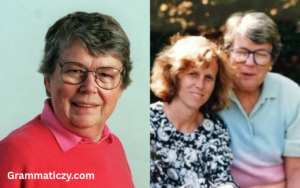
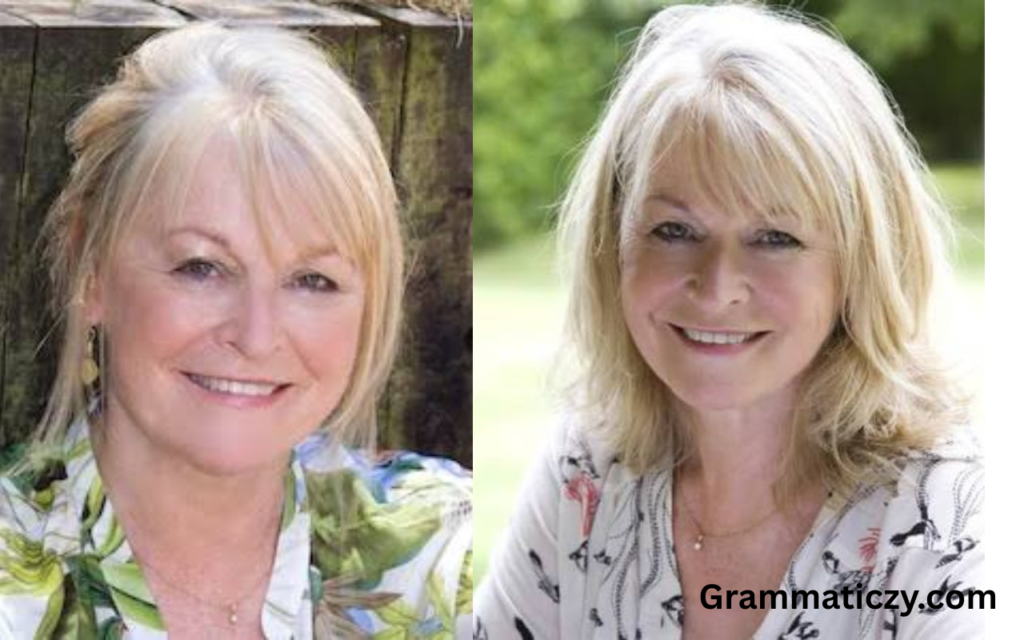
Sue Cook has spent more than five decades doing something that sounds simple but is extraordinarily difficult: making people listen. From the early days of British commercial radio to some of the BBC’s most recognizable live television programmes, she built a reputation for warmth, intelligence and an unusually natural presenting style. Long before social media transformed celebrity culture, Cook became a familiar presence in British homes through programmes such as Nationwide, Breakfast Time, Children in Need, Holiday and, most famously, Crimewatch UK. Her career eventually expanded beyond broadcasting into novel writing, film production and charitable work, giving her professional story a breadth that goes well beyond her television fame.
Born Susan Lorraine Thomas on March 30, 1949, in Ruislip, Middlesex, Sue Cook entered broadcasting at a time when British radio and television were undergoing enormous change. She studied psychology at the University of Leicester and graduated with honours in 1971, before beginning her broadcasting career with Capital Radio in 1974. Her route to television was built on years of practical experience rather than overnight celebrity, and that foundation helped her become one of Britain’s most versatile live broadcasters.
What makes Sue Cook’s biography particularly compelling is the way her career continually evolved. She was a radio producer and presenter, television reporter, live host, interviewer, documentary presenter, charity ambassador, novelist and film producer. Even after becoming strongly associated with Crimewatch, she continued exploring new forms of storytelling. Her journey provides an unusually clear example of how curiosity, adaptability and professional resilience can sustain a career across generations.
Sue Cook Quick Facts
| Fact | Details |
|---|---|
| Full name | Susan Lorraine Thomas |
| Professional name | Sue Cook |
| Date of birth | March 30, 1949 |
| Age | 77 in 2026 |
| Birthplace | Ruislip, Middlesex, England |
| Nationality | British |
| Profession | Broadcaster, television presenter, journalist and author |
| Education | University of Leicester |
| Degree | Honours degree in Psychology |
| Parents | William Thomas and Kathleen Thomas |
| Siblings | Two younger brothers |
| Famous for | Crimewatch UK, Children in Need, Nationwide, Breakfast Time, Holiday, Making History |
| BBC career | Radio and television broadcaster |
| First broadcasting career | Capital Radio |
| First novel | On Dangerous Ground |
| Second novel | Force of Nature |
| Husband | Film director Ian Sharp |
| Children | Two, according to biographical sources |
| Honor | Honorary D.Litt from the University of Leicester |
| Charitable work | King’s Trust, Rainbow Trust, Children’s Liver Disease Foundation, British Wireless for the Blind Fund |
| X/Twitter | @SueC00K |
| No clearly verified official account identified | |
| No clearly verified personal account identified | |
| Net worth | Not reliably publicly disclosed |
The table highlights an important point about Sue Cook’s public profile: although she is a well-known British broadcaster, some personal and financial details have never been officially documented. In particular, there is no reliable public source establishing an exact Sue Cook net worth, so online figures should not be presented as confirmed facts. Her official biography instead emphasizes her long broadcasting career, writing, film work and charitable commitments.
Early Life, Parents and Family Background
Sue Cook was born to William and Kathleen Thomas and grew up with two younger brothers. Her father worked as a senior executive with the Commission on Industrial Relations, later associated with ACAS, while her mother Kathleen became notable in later life for reaching the remarkable age of 105. Cook spent part of her childhood in Ickenham and attended Glebe Primary School before going to the newly opened Vyners Grammar School.
Her upbringing appears to have provided a strong educational foundation. She achieved ten O-levels and three A-levels before going on to university, an indication of an academically successful school career. Her later decision to study psychology at Leicester University is particularly interesting because understanding people would become one of the central skills of her professional life. Interviewing, broadcasting and documentary work all depend heavily on curiosity about human behavior.
Cook’s family remained an important part of her life even after she became a household name. Her mother lived well into old age, and the death of Kathleen in 2025 became a deeply personal moment for the broadcaster. Reports described Cook mourning her mother and reflecting on the difficulty of losing someone who had lived to 105. The story offered a rare glimpse into the private side of a woman who had spent much of her public career interviewing other people about their lives.
Education and Psychology at Leicester
At the University of Leicester, Sue Cook studied psychology and graduated with an honours degree in 1971. Her academic achievement later received further recognition when the university awarded her an honorary Doctor of Letters in 1997 for her contribution to British broadcasting.
Psychology may seem far removed from television presenting, but Cook’s subsequent career shows how useful that background could be. Much of her work required her to understand people quickly, ask appropriate questions and communicate with individuals experiencing difficult or emotional circumstances. These abilities were particularly valuable in factual programmes and later in Crimewatch.
Her university experience also formed part of a wider pattern in her career: Cook has repeatedly combined structured knowledge with communication. She was never confined to a single broadcasting genre. Current affairs, consumer programming, crime, history, charity television and literature all became part of her professional life, and her education gave her an analytical foundation beneath that versatility.
Beginning Her Broadcasting Career at Capital Radio
Sue Cook entered broadcasting professionally in 1974, when commercial radio was still a relatively new force in Britain. She joined Capital Radio before the station officially went on air and quickly became involved in a broad range of broadcasting responsibilities. Her work included presenting and producing programmes covering rock and pop music as well as popular current affairs. She even worked on commercials and sang some early station jingles.
Those early years were an important apprenticeship. Unlike a modern presenter who may build a career through carefully managed social media exposure, Cook had to learn broadcasting by actually doing it. Live radio demanded timing, preparation, improvisation and the confidence to continue talking when unexpected problems occurred.
Cook later remembered her Capital Radio years particularly warmly. In an interview with The Independent, she described that period as a time when she had enormous fun and remembered the people she worked with as generous-spirited. Her affection for those early years says something about the importance of radio in shaping her professional identity.
Move to the BBC and Radio Success
After her commercial radio experience, Cook was recruited by the BBC. She presented programmes across Radios 1, 2 and 4 and became particularly associated with You and Yours, the long-running Radio 4 consumer programme, which she presented for almost five years. She also deputized for Jimmy Young on Radio 2 on numerous occasions.
Her radio career established her as a broadcaster who could handle both information and entertainment. Consumer programming required clarity and authority, while live radio demanded warmth and spontaneity. Cook’s ability to shift between these qualities became one of the defining strengths of her broadcasting style.
Radio also gave Cook a voice that audiences could recognize without seeing her. She was eventually voted one of Britain’s favourite radio voices, reinforcing the idea that her appeal was based not simply on television visibility but on the way she communicated. Her later work on Making History demonstrated that radio remained an important creative outlet throughout her career.
Sue Cook and Nationwide
In 1978, Sue Cook moved to BBC television, initially joining Nationwide as a reporter and presenter. The programme was a major early-evening current affairs show, and Cook worked alongside familiar broadcasting names including Frank Bough, Sue Lawley, Hugh Scully, John Stapleton and Bob Wellings.
Her time on Nationwide was significant because it allowed her to develop the television skills that would define the next stage of her career. She had to interview people, introduce reports, deal with live television and move naturally between serious subjects and lighter stories. This was precisely the kind of environment in which her combination of intelligence and conversational delivery could flourish.
The programme also helped establish her as more than a former radio personality trying television. She had become a television journalist and presenter in her own right. By the beginning of the 1980s, Cook was increasingly being trusted with major BBC live programmes, setting the stage for her best-known roles.
Breakfast Time and BBC Television
When breakfast television arrived nationally in Britain, Sue Cook became part of the BBC’s Breakfast Time presenting team. She regularly shared the famous sofa with Frank Bough, Selina Scott and Debbie Rix.
Breakfast television presented its own challenges. Viewers were waking up, preparing for work or school and receiving news, interviews and features in a fast-moving format. Presenters needed to be informative without appearing overly formal and engaging without becoming distracting. Cook’s relaxed broadcasting style made her well suited to this environment.
Her television portfolio continued to expand. She presented programmes including Out of Court, Daytime Live, Holiday, Having a Baby, Maternity Hospital and Omnibus at The Proms. She also worked for Channel 4 on Collectors’ Lot, the Chelsea Flower Show and a series about Hampton Court Palace.
Crimewatch UK: The Role That Made Her Famous
For a huge number of British viewers, Sue Cook will always be remembered most strongly for Crimewatch UK. In 1984, she and Nick Ross launched the BBC factual crime programme, and Cook remained one of its principal presenters until 1995. The programme reconstructed unsolved crimes and appealed directly to viewers for information that could help police investigations.
Crimewatch was unlike ordinary entertainment television. Its subject matter could involve serious violence, missing people, murder and frightened victims. The presenters had to communicate facts accurately while maintaining empathy. Cook’s calm and natural delivery helped make the programme accessible without trivializing the experiences of the people involved.
Her time on Crimewatch also produced an important moment in her professional history concerning equal pay. Cook later explained that she challenged the BBC because she and Nick Ross had launched the programme together and were doing equal jobs, yet his salary was significantly higher. She eventually negotiated the difference down to £50. Looking back, she acknowledged that workplace attitudes had changed considerably over time.
Children in Need and Terry Wogan
Another defining chapter in Sue Cook’s television career was Children in Need. Beginning in 1982, she co-hosted the BBC’s annual appeal night with Sir Terry Wogan for thirteen consecutive years. The programme became one of British television’s most important annual charity broadcasts, combining entertainment with fundraising for children and young people.
The role required a completely different tone from Crimewatch. Instead of dealing primarily with crime and investigations, Cook had to create warmth, enthusiasm and emotional connection while moving between performances, celebrity appearances, fundraising totals and personal stories.
Her long partnership with Wogan also became an important part of her public image. In later years, Cook paid tribute to her former Children in Need co-host, demonstrating that the professional relationships formed during her television career continued to carry emotional significance long after the programmes themselves had changed.
Making History and Her Return to Radio
Cook’s television fame never erased her connection with radio. From 1998 to 2006, she presented Making History for BBC Radio 4, a weekly programme that combined historical subjects with accessible storytelling. Her work on the programme reinforced her reputation as a broadcaster capable of making information interesting to a general audience.
Radio suited Cook’s style because it allowed her to focus almost entirely on conversation and ideas. Her voice, interviewing technique and ability to create a sense of intimacy became particularly valuable in a medium where audiences form a relationship with presenters without ever seeing them.
She also presented The Write Lines on BBC Oxford Radio, combining her interests in writing, journalism and live broadcasting. The programmes explored the journey from a blank page to publication and included conversations with authors, editors, literary professionals and aspiring writers.
Sue Cook as an Author
After decades of telling other people’s stories on television and radio, Cook turned increasingly toward fiction. Her first novel, On Dangerous Ground, was published by Hodder Headline in 2006. Her second novel, Force of Nature, followed in 2009. Her official website continues to describe her as a novelist and notes her work on adapting On Dangerous Ground for film.
Writing represented a fascinating new chapter because it gave Cook complete control over narrative. Broadcasting involves time limits, producers, scripts, schedules and live audiences. Fiction allows an author to build characters, settings and suspense at a much more deliberate pace.
Her published work also demonstrates that storytelling has remained the central thread of her professional life. Whether she was presenting a crime appeal, interviewing a celebrity, explaining history on Radio 4 or creating a fictional narrative, her work has consistently revolved around understanding people and communicating stories effectively.
Film Production and On Dangerous Ground
Cook’s creative interests have also extended into cinema. She worked as executive producer on Tracker, a 2010 film directed by her husband Ian Sharp and starring Ray Winstone. She also collaborated on the screenplay, further expanding her experience beyond traditional broadcasting.
Her continuing plan to adapt On Dangerous Ground for film represents another connection between her television and literary careers. The project demonstrates that Cook’s interest in storytelling has not been limited to one medium.
This progression—from broadcaster to novelist to film producer—is one of the most distinctive features of her professional biography. Rather than treating each career stage as separate, Cook has gradually built one creative field on top of another.
Personal Life, Husband and Children
Sue Cook has maintained a relatively private personal life compared with the level of exposure associated with many modern television personalities. Her husband is film director Ian Sharp, and her official biography identifies him as her spouse.
Biographical sources report that Cook has two children. IMDb identifies a son, Charlie, from her marriage to classical guitarist John Williams and a daughter, Megan MacQueen, with Billy Macqueen. Family details available online are not as comprehensively documented as her professional credits, so they should be understood as publicly reported biographical information rather than a complete picture of her private family life.
Her approach to privacy contrasts with the highly exposed nature of contemporary celebrity culture. Cook became famous during an era when television presenters could become household names without maintaining a constant stream of personal updates online. Her public identity has therefore remained centered primarily on her work, writing and charitable involvement.
Sue Cook’s Charitable Work and Values
Charitable work has been an important part of Cook’s life beyond her television career. Her official profile identifies her as an ambassador for the King’s Trust and a patron of the Rainbow Trust, the Children’s Liver Disease Foundation and the British Wireless for the Blind Fund.
Her connection with the British Wireless for the Blind Fund has been particularly longstanding. The organization identifies Cook as a patron and says she has been involved with it for around two decades. Her connection is rooted in her belief in the unique intimacy of radio and its importance to blind listeners.
These commitments add an important dimension to her biography. Cook’s career has never been solely about fame. Her professional platform has repeatedly been used in connection with fundraising, public service and organizations supporting vulnerable people.
Sue Cook’s Net Worth and Sources of Income
There is no reliable, publicly verified figure for Sue Cook’s net worth. Although celebrity websites sometimes publish estimated amounts, these figures are generally not supported by audited financial information, official disclosures or credible reporting. A responsible biography should therefore avoid presenting a speculative number as fact.
Cook’s long career has nevertheless provided several potential sources of income. These include television presenting, radio broadcasting, writing, literary work, film production and professional appearances. Her decades of BBC work represent the core of her professional career, while her books and creative projects have provided additional avenues for earnings.
Her financial story is perhaps better understood through career longevity than through an unsupported net-worth estimate. Maintaining a professional broadcasting career across multiple decades, while successfully moving into publishing and film, represents a substantial achievement in itself.
Sue Cook on Social Media
Sue Cook’s social-media presence is relatively modest compared with that of younger public figures. Her public professional profile has identified the X/Twitter handle @SueC00K, and her official website remains the clearest central hub for her professional activities, books and writing-related updates.
There is no clearly verified Instagram account that can confidently be attributed to the British broadcaster, and a similarly verified personal LinkedIn profile was not identified during research. This is worth noting because numerous social accounts can use the names of public figures without necessarily being official.
Her online presence is therefore best understood as professional rather than influencer-driven. Her website contains information about her books, broadcasting work, interviews, literary events and past projects, giving readers an opportunity to follow her career without the constant personal posting that characterizes modern celebrity social media.
Recent Life and Career
In recent years, Sue Cook has remained connected to broadcasting, writing and charitable activities. Her official website continues to describe her as a writer and broadcaster, while her literary work includes the continuing development of On Dangerous Ground and her third novel.
One of the more personal recent developments came in 2025, when Cook’s mother Kathleen died at the age of 105. News coverage described Cook’s grief and the emotional impact of losing her mother after such a long life. The story was a reminder that behind the familiar television personality is a private person experiencing the same family milestones and losses as anyone else.
Cook’s career today is therefore best seen as an evolving creative life rather than a television career that simply ended. Her continued connection with writing, literary projects and charitable organizations reflects the same curiosity that characterized her earliest years in broadcasting.
Sue Cook’s Lasting Legacy
Sue Cook’s legacy in British broadcasting rests on remarkable versatility. She moved comfortably from commercial radio to the BBC, from current affairs to breakfast television, from charity broadcasts to factual crime programming, and from radio history programmes to literature. Few broadcasters have worked across such a broad collection of formats while maintaining such a recognizable and natural style.
Her role in the original Crimewatch is especially significant. Alongside Nick Ross, she helped establish a format that became deeply embedded in British television culture. The programme’s purpose was practical as well as televisual: reconstructions and appeals were designed to encourage members of the public to provide information that could help solve crimes.
Yet perhaps the most impressive part of Cook’s legacy is her ability to reinvent herself. She did not remain dependent on one famous programme. She continued with radio, charity work, journalism, fiction, film and public appearances. Her career demonstrates that professional longevity is often achieved not by repeating the same success but by finding new ways to use the experience gained along the way.
Conclusion
Sue Cook’s biography is ultimately a story about communication, resilience and reinvention. From her beginnings at Capital Radio in the 1970s to her years at the BBC, she became one of Britain’s most recognizable broadcasters, presenting Nationwide, Breakfast Time, Children in Need, Crimewatch UK, Holiday and Making History. Her later transition into fiction and film added another dimension to a career already distinguished by remarkable range.
What makes her journey especially meaningful is the way she has continued to develop rather than simply look backward. Her psychology education, broadcasting experience, literary ambitions and charitable commitments all connect through a common interest in people and their stories. Even her long association with the British Wireless for the Blind Fund reflects her appreciation for the power of communication to reach people directly.
Sue Cook’s story offers a valuable lesson for anyone building a long-term career. Success does not necessarily come from following one predetermined path. Sometimes it comes from being willing to learn, change direction and carry the lessons of one chapter into the next. From radio studios to national television, from crime reporting to children’s charities, and from broadcasting to books, Sue Cook has built a legacy through curiosity, professionalism and an enduring passion for storytelling. As her work continues to connect broadcasting, writing and public service, her career remains a reminder that a meaningful legacy is created not simply by becoming famous, but by continuing to grow, contribute and communicate with purpose.