Cathy Newman Biography: Early Life, Education, Journalism Career, Family and Life at Sky News
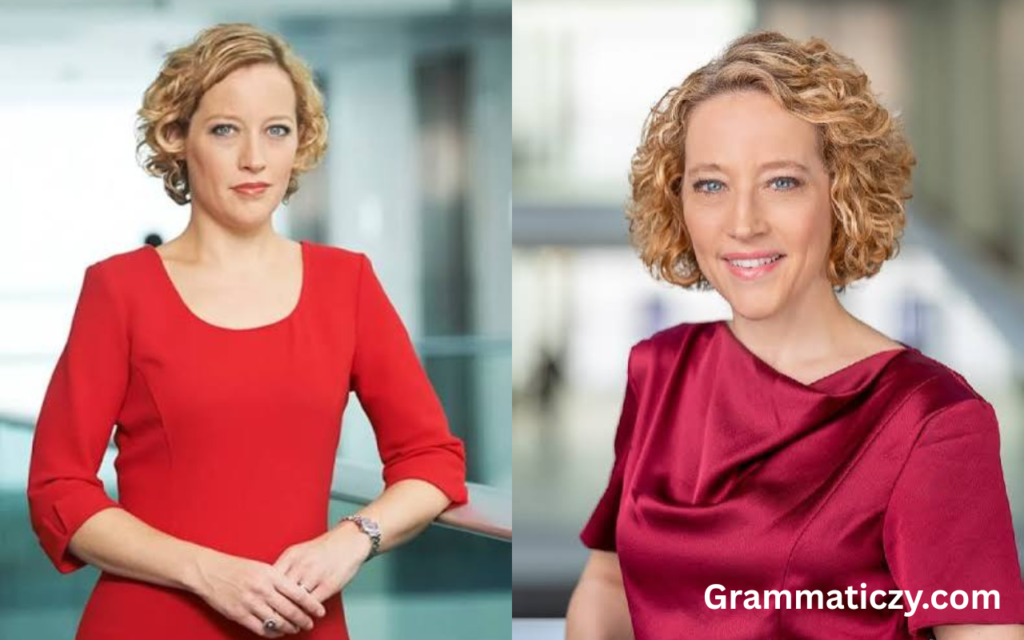
Cathy Newman has spent much of her career asking questions that powerful people would rather avoid. From Westminster politics and newspaper journalism to some of the most consequential investigations of her television career, she has built a reputation around preparation, persistence and an ability to keep pressing when an answer does not quite address the question. After two decades at Channel 4 News, Newman entered a new chapter in 2026, joining Sky News to host The Cathy Newman Show, a programme combining political interviews, investigations and analysis for both television and digital audiences.
What makes her story particularly interesting is the contrast between the public broadcaster viewers see on screen and the unconventional upbringing that helped shape her. Newman grew up in Guildford in an academically focused family, developed a serious interest in music, became a first-class Oxford graduate and initially built her reputation in newspapers before moving into television. Her career has included the Financial Times, The Independent, The Washington Post, Channel 4 News and Times Radio, alongside bestselling books and major investigative journalism awards.
Cathy Newman: Early Life and Family Background
Cathy Newman was born Catherine Elizabeth Newman on July 14, 1974, in Guildford, Surrey, England. She is the younger daughter of David Newman and Julia Worsdall, both of whom worked as chemistry teachers, and she grew up with an older sister. Her parents placed considerable emphasis on education and encouraged their children to develop their own interests, creating a household in which reading, learning and music were taken seriously.
One of the most unusual features of Newman’s childhood was the absence of television. She has recalled that she was not allowed to watch television until she was 16. Rather than being surrounded by television programmes, she grew up reading and playing music, particularly the violin. In retrospect, that restriction seems almost ironic because Newman would eventually make television journalism her profession, but she has suggested that finally encountering television and seeing broadcasters such as Kate Adie had a powerful effect on her imagination.
Her parents’ approach encouraged self-directed learning and personal discipline. Newman became a voracious reader and a committed violinist, and the habits of preparation she developed early in life later became central to her journalism. Her family environment appears to have encouraged intellectual curiosity rather than passive consumption, which may help explain why she eventually gravitated toward a profession where researching a subject and understanding competing arguments are essential.
Education and the Experiences That Shaped Her
Newman attended a girls’ school in Guildford before joining Charterhouse for sixth form, where her father taught chemistry. She was one of relatively few girls in the school’s sixth-form environment at the time. Her experiences there were not always comfortable, and she has spoken publicly about sexism and inappropriate behaviour that she experienced as a young woman. Those experiences later became relevant to her interest in reporting on power, discrimination and institutional culture.
She went on to study English at Lady Margaret Hall, University of Oxford, where she earned a first-class degree. Oxford provided the academic foundation for a career that would eventually depend heavily on close reading, argument, writing and communication. Although journalism does not require a particular university subject, an English degree was particularly well suited to the kind of work Newman would later pursue, where language, evidence and the ability to identify weaknesses in an argument are critical.
Her university years also became personally significant because she met writer John O’Connell, who later became her husband. After graduating, Newman did not immediately become a television celebrity. Instead, she entered the demanding world of newspaper journalism, where she developed the reporting instincts, contacts and professional discipline that would eventually distinguish her work on television. Her route into broadcasting was therefore built on journalism rather than fame.
Beginning Her Journalism Career
Newman’s early career took her through several parts of the British media industry. She briefly worked with the books section of The Guardian, trained at Media Week and became a media business correspondent at The Independent. These positions allowed her to understand how newspapers operated while also giving her experience reporting on business, media and public affairs.
A major turning point arrived when she joined the Financial Times at the age of 23. She initially worked as a media correspondent and later became a political correspondent. The Financial Times was an important environment for developing her analytical style because its journalism demanded detailed research and a strong understanding of institutions, economics and political decision-making. Her experience there helped establish the foundation for the political reporting that became central to her career.
Newman’s journalism also took her across the Atlantic. She received the Laurence Stern Fellowship and spent four months at The Washington Post, where she followed Green Party presidential candidate Ralph Nader during the 2000 US presidential campaign. The experience exposed her to American political reporting and provided an early opportunity to work within one of the world’s most respected newspaper organisations.
Cathy Newman at Channel 4 News
In January 2006, Newman joined Channel 4 News as a political correspondent and deputy to political editor Gary Gibbon. The move represented a major transition from newspapers to television, but her years in print meant she already possessed substantial political knowledge and Westminster contacts. Rather than learning journalism from scratch, she was transferring established reporting skills into a faster and more visual medium.
Over the following years, she became increasingly prominent on screen and eventually became a presenter. Her style was characterised by detailed preparation and direct questioning. She was willing to challenge politicians and public figures when she believed their answers did not adequately address the issue under discussion. This approach helped make her one of Channel 4 News’s recognisable political voices.
Newman’s Channel 4 career lasted roughly two decades, and it ultimately included major political interviews, investigative journalism and work as an investigations editor. Her time at the network placed her at the centre of British public affairs during years dominated by political upheaval, elections, Brexit, leadership changes and debates about social inequality and institutional accountability. In 2026, Sky News described her as an award-winning journalist and one of Britain’s respected broadcasters when announcing her move to the network.
Investigative Journalism and the John Smyth Investigation
One of the most important chapters of Newman’s career was her investigation into John Smyth, a barrister accused of abusing boys and young men. Channel 4’s investigation, led by Newman and colleagues, began after a tip-off and developed into a major investigation spanning several years. The reporting eventually became one of the most significant stories of Newman’s career and exposed serious questions about institutional failures within the Church of England.
The investigation did not end with the original Channel 4 reports. Years later, Newman obtained a leaked copy of the independent Makin Report into the Church of England’s handling of the Smyth scandal. She then interviewed Archbishop of Canterbury Justin Welby about the findings. Welby resigned five days after the interview, following mounting pressure over the institutional response to the scandal.
The story illustrates why investigative journalism can require considerably more patience than ordinary daily reporting. Newman has described how some investigations begin with seemingly small pieces of information and develop through years of maintaining sources and pursuing unanswered questions. Her Smyth reporting ultimately demonstrated how sustained journalism can uncover institutional failures that might otherwise remain hidden.
Awards and Major Recognition
Newman’s work on the Smyth investigation brought significant recognition. In January 2025, Women in Journalism UK named her Woman of the Year for her investigations and reporting on the case. The recognition reflected not simply the popularity of the story but the persistence involved in following it over many years.
Her achievements continued throughout 2025. At the Royal Television Society Journalism Awards, she won Network Interview of the Year and Network Television Journalist of the Year. Later that year, she received additional recognition from the Foreign Press Association, Society of Editors and British Journalism Awards. At the British Journalism Awards, she won Journalist of the Year and Interviewer of the Year.
These awards are particularly significant because they recognise different aspects of her work. Interviewing requires an ability to think quickly and challenge a guest in real time, while investigative journalism demands patience, research and source development. Newman’s recognition across both categories reflects the breadth of her career rather than a reputation built around television presentation alone.
The Jordan Peterson Interview and Online Controversy
Another defining moment in Newman’s career came in 2018 when she interviewed Canadian psychologist and author Jordan Peterson. The interview became a viral sensation, generating intense debate about gender, free speech and political correctness. Clips from the exchange circulated extensively online, exposing Newman to a much larger international audience than a conventional Channel 4 News interview might have reached.
The attention came with a severe downside. Newman experienced intense online harassment, including threats and abusive messages, following the interview. Security concerns became serious enough that Channel 4 sought professional advice to protect her. The episode became part of a broader debate about the abuse faced by women journalists and public figures on social media.
Newman has subsequently treated the episode as a difficult but instructive part of her career. In a 2026 interview, she acknowledged that she had been underprepared for the Peterson conversation and did not want to remain haunted by an interview that had not gone as planned. Her willingness to acknowledge imperfection is revealing: journalism is conducted live and under pressure, and even experienced broadcasters can encounter moments where preparation, timing and argument do not align perfectly.
Cathy Newman as an Author
Newman’s work has never been restricted to television. In 2018, she published Bloody Brilliant Women: The Pioneers, Revolutionaries and Geniuses Your History Teacher Forgot to Mention. The book examined women whose achievements have often received less attention than those of their male contemporaries, reflecting Newman’s broader interest in women’s experiences and overlooked stories.
Her second major book, It Takes Two: A History of the Couples Who Dared to Be Different, was published in 2020. It explored influential partnerships and the ways relationships between two people can shape history. The concept also demonstrated an aspect of Newman’s journalistic curiosity: rather than simply examining famous individuals, she was interested in the dynamics behind achievement and influence.
In 2024, she published The Ladder: Life Lessons from Women Who Scaled the Heights (& Dodged the Snakes). The book draws on conversations and experiences involving successful women and examines the obstacles, choices and lessons that can emerge from demanding careers. It complements her broadcasting work because Newman has long been interested in asking people how they reached important positions and what they learned along the way.
Husband, Children and Personal Life
Cathy Newman is married to writer John O’Connell, whom she met while studying at Oxford. The couple have two daughters. Although Newman is highly visible professionally, she has generally kept much of her private life away from the intense scrutiny that surrounds her television career. Her family has nevertheless occasionally appeared in interviews about balancing work and personal responsibilities.
Her family life has involved a relatively unusual division of responsibilities. Newman has acknowledged that her career can be demanding and that her husband has taken on a substantial role in the home, particularly since the birth of their second daughter. In a 2026 interview, she joked about being a workaholic and acknowledged that her family would probably like her to relax more.
Away from journalism, music remains an important interest. Newman continues to play the violin and has performed with the Westminster-based Statutory Instruments quartet. She has also described interests such as learning Greek and keeping up with current affairs. These details offer a more personal picture of someone whose professional life is often associated with serious political interviews and investigations.
Cathy Newman on Social Media
Social media has played a complicated role in Newman’s career. On one hand, platforms such as X allow journalists to communicate directly with audiences and extend the reach of television journalism. On the other, Newman has personally experienced how quickly online attention can turn hostile, particularly after high-profile interviews. Her experience illustrates both the opportunities and dangers of digital journalism.
Her professional online presence has expanded further through her move to Sky News. Sky News currently describes her as the presenter of The Cathy Newman Show, which airs on Sky News and YouTube. The programme is designed to combine television broadcasting with the digital habits of audiences who increasingly discover political news through online clips and video platforms.
Newman has also recognised that younger viewers consume news differently from previous generations. In discussing her new Sky News programme, she noted that her own daughters and their friends do not necessarily watch traditional television news but instead encounter news through Instagram, TikTok and YouTube. Her move into a more digital-friendly format therefore reflects a wider transformation in the news industry.
Cathy Newman at Sky News in 2026
In January 2026, Sky News announced that Newman would leave Channel 4 News after two decades and join the network as a senior political presenter and journalist. Her new responsibilities included presenting a flagship 7pm politics programme, launching a podcast and contributing investigations and documentaries. It was a substantial change after such a long association with Channel 4.
The Cathy Newman Show subsequently became the centrepiece of her new role. Sky News describes the programme as a platform for interviews with major figures from politics and culture, while also providing space for investigations and wider analysis. The show is broadcast on Sky News and made available through YouTube, giving Newman a format that can reach both traditional television viewers and audiences who prefer online video.
The move also gives Newman greater creative freedom. After spending two decades within an established programme structure, building a show from scratch allows her to experiment with the balance between serious political interviews and a more conversational, digital-friendly style. Her stated interest in long-form investigations and documentaries means that the Sky News chapter is not simply a presenting job; it provides another opportunity to develop the investigative side of her journalism.
Cathy Newman Net Worth and Sources of Income
Cathy Newman’s exact net worth has not been publicly verified. Online celebrity-finance websites sometimes publish estimated figures, but those numbers are generally based on algorithms or assumptions rather than audited financial information, salary disclosures or confirmed statements from Newman. For that reason, any specific net-worth figure should be treated as an estimate rather than an established fact.
Her professional income has likely come from several sources over the course of her long career. These include newspaper journalism, television presenting, investigative journalism, radio broadcasting, book publishing, speaking engagements and other media-related work. Her senior position at Sky News represents another important professional income stream, although the financial terms of her contract have not been publicly disclosed.
The most reasonable conclusion is therefore that Newman has built financial security through a long and successful media career, but her personal wealth remains private. Rather than repeating unsupported internet estimates, it is more useful to focus on the confirmed foundation of her career: decades of professional journalism, bestselling books, award-winning investigations and senior broadcasting positions.
What Makes Cathy Newman’s Journalism Different?
One of Newman’s strongest qualities is preparation. Colleagues and interview profiles have frequently highlighted the extent to which she researches subjects before going on air. Her approach is based on understanding the details behind a story rather than simply memorising a list of questions. That preparation gives her the confidence to challenge an interviewee when the answer moves away from the original issue.
At the same time, Newman has increasingly questioned the value of the traditional four-minute political interview. She has argued that a format dominated by politicians delivering prepared talking points and presenters repeatedly interrupting them can leave audiences without much genuine understanding. Her new programme is intended to create more room for conversation while retaining the probing quality expected of serious political journalism.
Another defining characteristic is her interest in outsiders and institutional accountability. Newman has connected some of her own experiences of feeling like an outsider with her attraction to stories about institutions that fail vulnerable people. Whether reporting on Westminster, workplace culture or the Church of England, her journalism repeatedly returns to the question of how power operates and what happens when powerful organisations fail to protect people.
Cathy Newman’s Continuing Legacy
Cathy Newman’s career represents several generations of British journalism in one professional journey. She began in newspapers, developed political expertise at the Financial Times, worked internationally at The Washington Post, transitioned into television with Channel 4, embraced radio and digital platforms, became an author and eventually launched her own political programme at Sky News. That adaptability has allowed her to remain relevant while the media industry around her has changed dramatically.
Her most important journalistic legacy may be the long-running John Smyth investigation. It demonstrated that journalism does not always produce immediate results. Sometimes a story requires years of source-building, repeated reporting and persistence before institutions are finally forced to answer difficult questions. Newman’s reporting on the case ultimately contributed to extraordinary scrutiny of the Church of England and became one of the most consequential investigations of her career.
Yet her legacy is broader than any single investigation or controversial interview. Newman has shown that a journalist can move between newspapers, television, radio, books and digital media while maintaining a clear commitment to questioning authority. Her career also demonstrates that professional resilience is not about avoiding mistakes or criticism; it is about continuing to learn, adapting to new circumstances and refusing to allow one difficult chapter to define the entire story.
Conclusion
Cathy Newman’s journey from an academically focused childhood in Guildford to the heart of British political journalism is a story built around curiosity, determination and a willingness to ask uncomfortable questions. Her first-class Oxford education, early newspaper career and experience at the Financial Times gave her a strong reporting foundation, while Channel 4 News transformed her into one of Britain’s best-known political broadcasters.
Her career has included extraordinary highs and difficult moments. She has produced major investigations, written books celebrating overlooked women and influential partnerships, endured intense online harassment and received some of the industry’s most significant awards. Her reporting on John Smyth stands as particularly powerful evidence of what persistent investigative journalism can accomplish when reporters continue pursuing answers long after a story has disappeared from the immediate news cycle.
Now, with The Cathy Newman Show at Sky News, she is building another chapter rather than simply looking back at the previous one. Her move toward a programme that combines political interviews, investigations, documentaries and digital storytelling reflects the changing relationship between journalism and its audience. As Cathy Newman continues to develop her career, her story remains a reminder that meaningful influence is rarely created overnight. It is built through preparation, resilience, curiosity and the courage to keep asking questions—and her continuing work suggests that this is a legacy she is still very much in the process of creating.